Table of Contents
After two weeks in Rwanda, we flew from Kigali to Mombasa to start our journey along the Kenyan coast.
We only spent two nights here before continuing to Diani Beach. We weren’t planning to see everything Mombasa has to offer. Instead, we wanted a day to explore the Old Town and get our first taste of coastal Kenya.
Two nights turned out to be just about right for us.
How to Get to Mombasa
We flew from Kigali to Mombasa, via Nairobi, arriving at Moi International Airport. We had arranged an airport transfer with our hotel in advance, so a driver was waiting to take us directly to Nyali.
If you have some flexibility with your arrival time, we’d recommend trying to avoid rush hour. We arrived right in the middle of it, and the heavy traffic meant it took us much longer than expected to reach our hotel in Nyali.
If you’re travelling from Nairobi, you can also reach Mombasa by train on the Madaraka Express, which connects Nairobi with the coast. Buses also operate between Nairobi, Mombasa and other destinations around Kenya.
Where to Stay in Mombasa
We decided to stay in the area of Nyali, rather than central Mombasa, and we’re glad we did.
It’s a much greener and quieter area, while still being close enough to head into the city for the day. Mombasa can be pretty hectic and the traffic can be intense, so we personally wouldn’t have wanted to stay right in the centre.
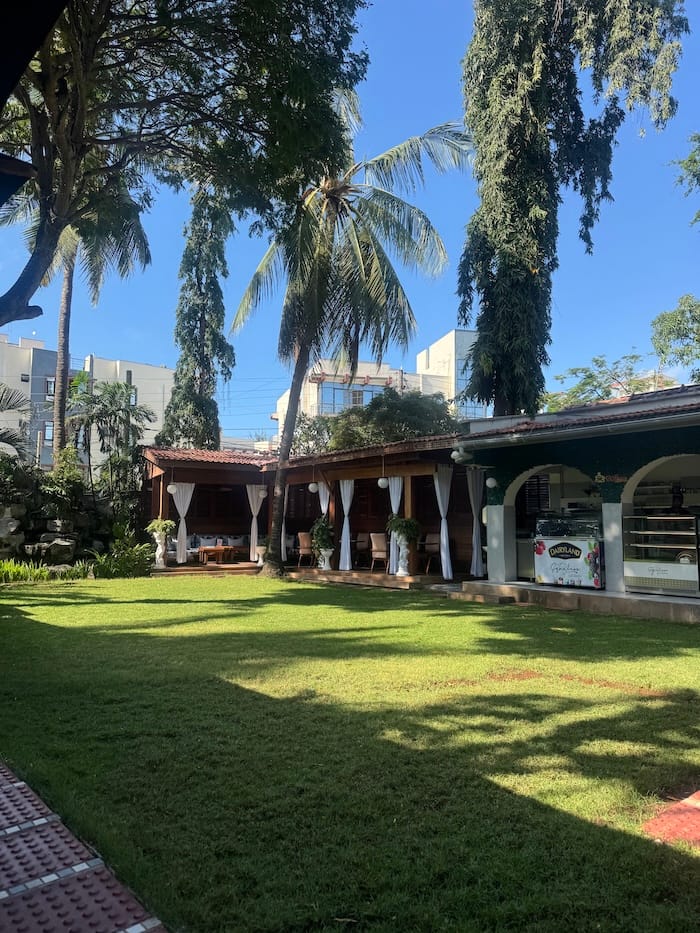
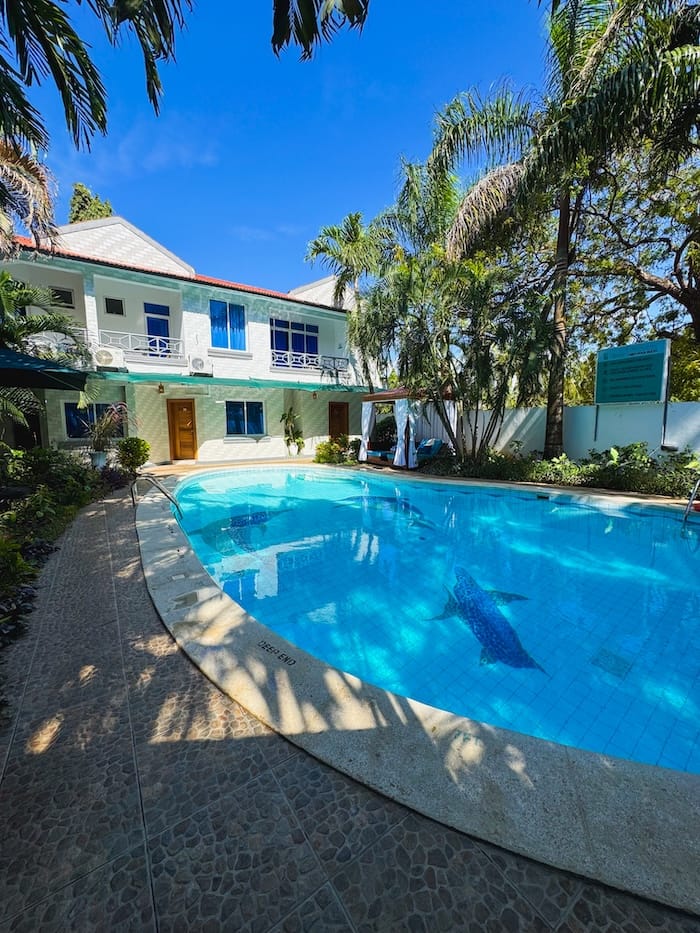
We stayed at La Fattoria Resort for our two nights. It was a nice, peaceful base with a good pool area. The rooms were a little tired and the food was fairly average, but overall it was an okay place to stay. We did think it was a little pricey for what it offered. For a couple of nights, though, it worked well, particularly as we wanted somewhere quiet and clean to come back to after exploring the city.
Getting Around Mombasa
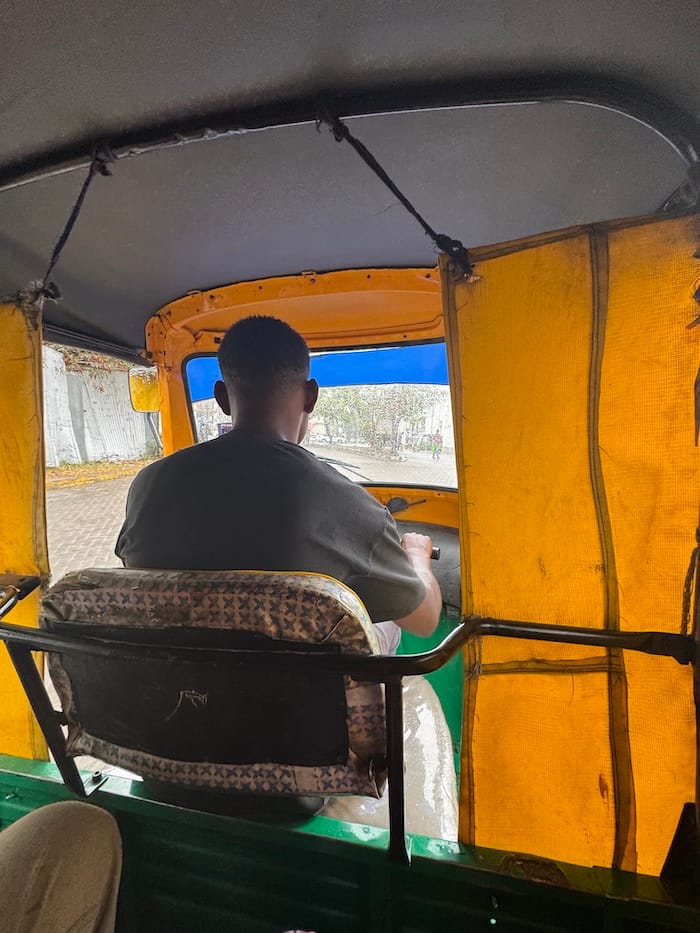
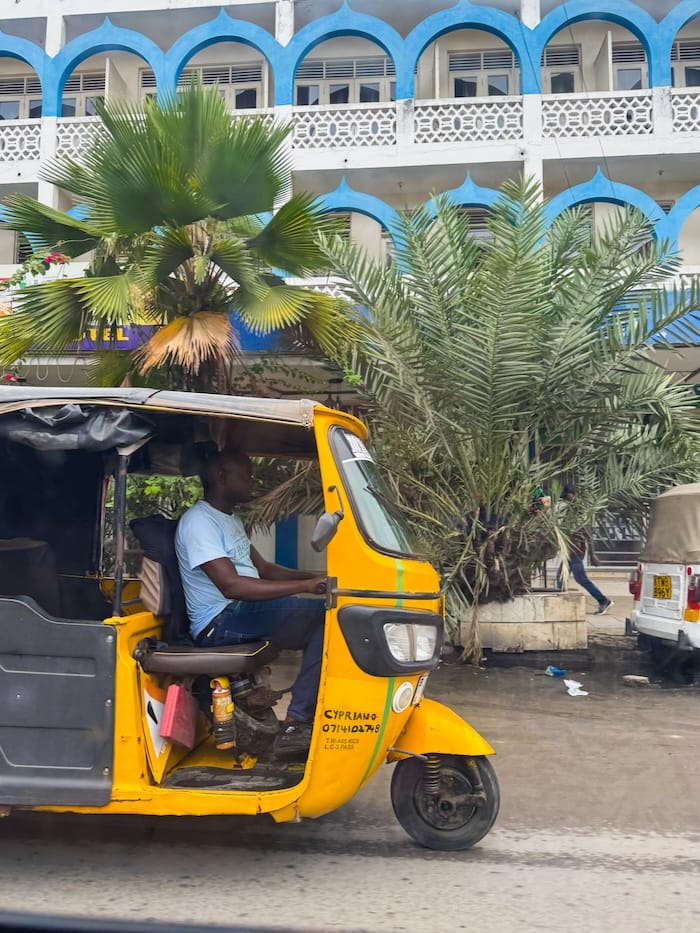
We used a mixture of Bolt, tuk-tuks and walking to get around Mombasa.
For longer journeys, such as travelling between Nyali and the city centre, we used Bolt cars. For shorter trips, we simply hailed tuk-tuks from the street and agreed on a price with the driver before setting off. Read our guide on how to use M-PESA in Kenya for small expenses like tuk-tuks.
Once we reached central Mombasa and the Old Town, we explored almost entirely on foot. The main sights are fairly close together, making it easy to create your own walking route.
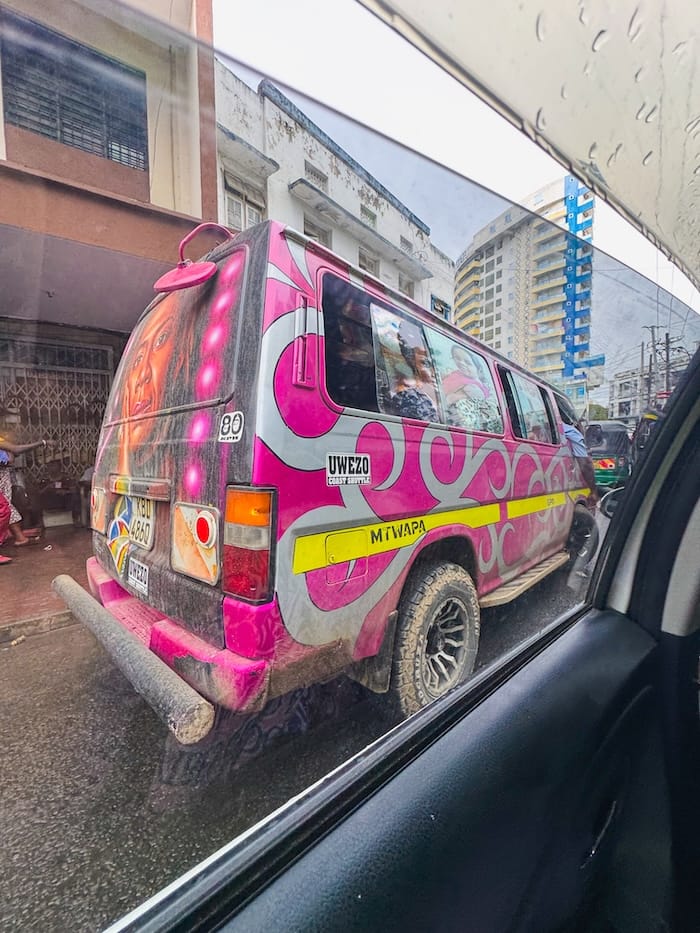
Even if you don’t take one, keep an eye out for Mombasa’s colourful matatus as you travel around the city. These minibuses are often covered in elaborate paintwork and bold designs, and spotting the different ones became a fun part of simply watching the city go by.
Traffic can be heavy, particularly when travelling between different parts of the city, so it’s worth allowing some extra time for longer journeys.
Our Self-Guided Mombasa Walking Route
We dedicated our full day in Mombasa to exploring the centre and Old Town.
You can easily do this independently, and for what we wanted from the day, we didn’t feel the need to book a guide. If you’re particularly interested in Mombasa’s history and architecture, however, a local guide could add much more context to what you’re seeing.
We felt safe walking around during the day and had no issues. A couple of guides approached us around Fort Jesus to offer their services, but there weren’t many and nobody was particularly persistent.
Starting at the Mombasa Tusks
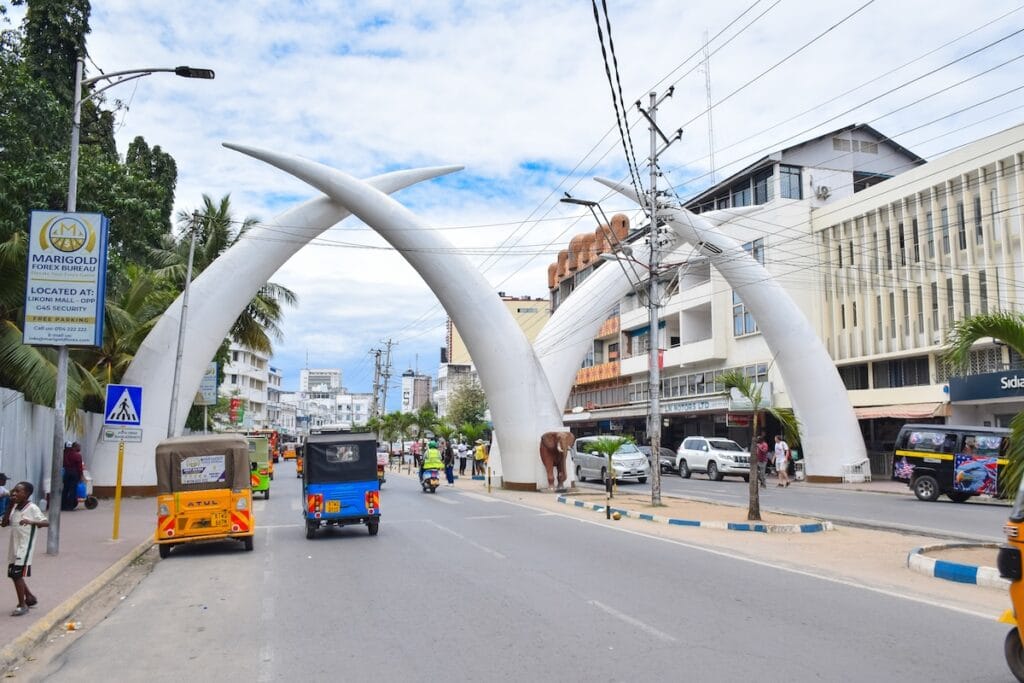
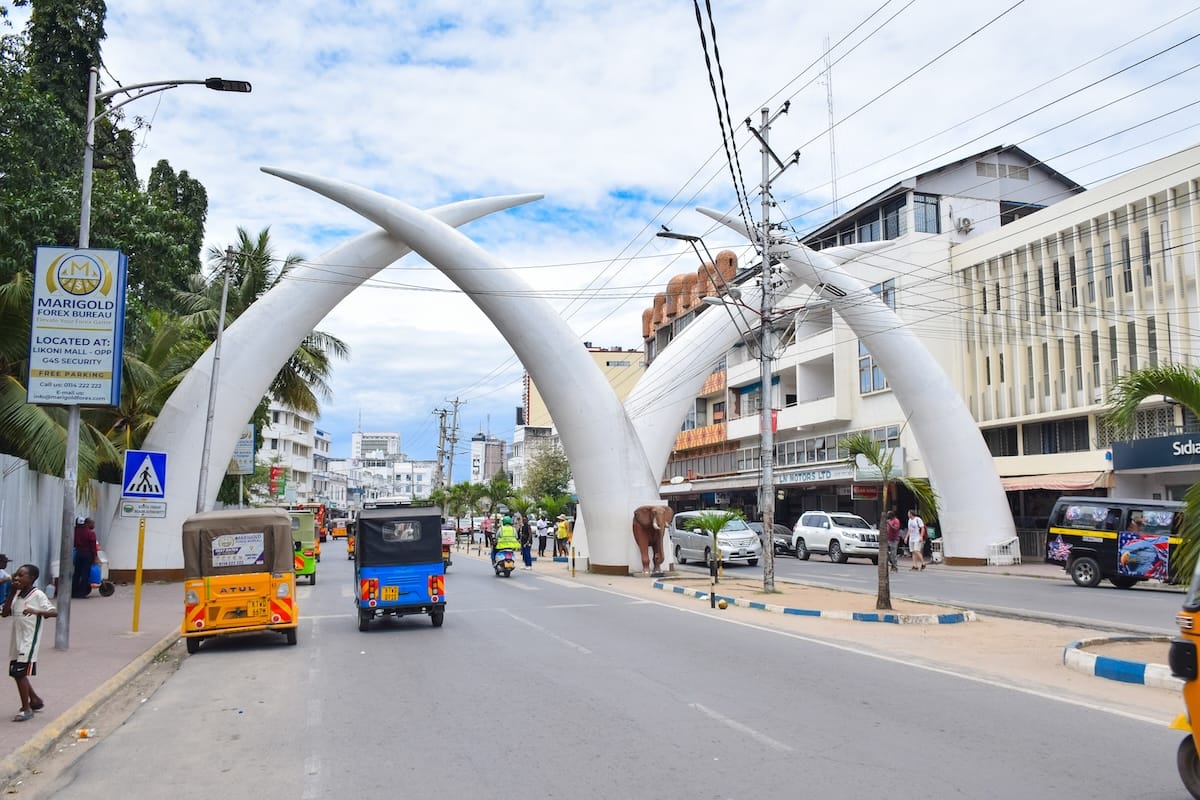
We took a Bolt from our hotel to the Mombasa Tusks on Moi Avenue, where we started our walk.
The giant aluminium tusks are one of the city’s most recognisable landmarks and mark a convenient starting point for exploring central Mombasa on foot.
From here, we walked down Moi Avenue before turning left onto Digo Road towards the spice market.
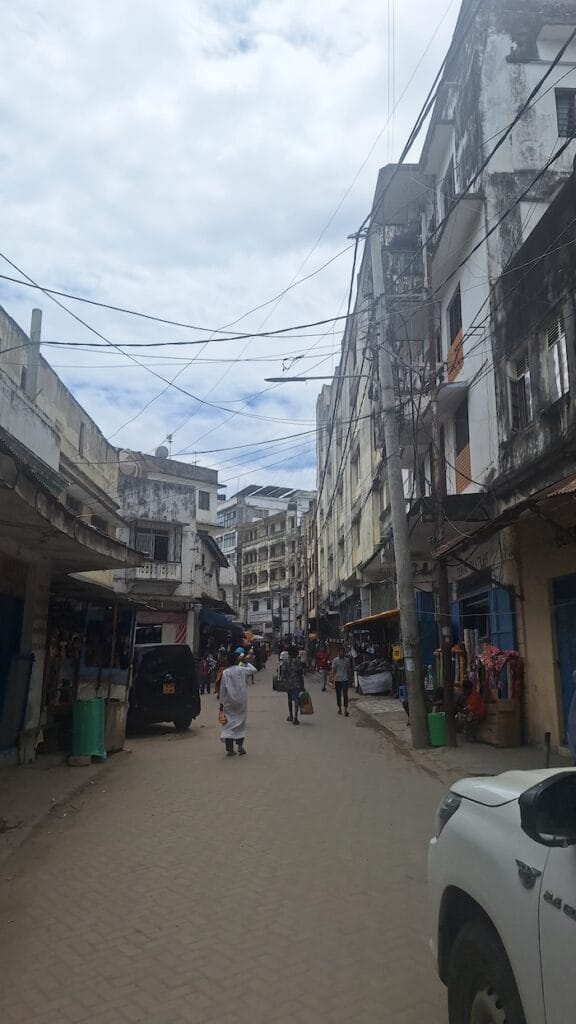
This part of the walk isn’t particularly scenic, but it gives you a glimpse of everyday Mombasa. Expect plenty of traffic, people and activity.
Mombasa Spice Market
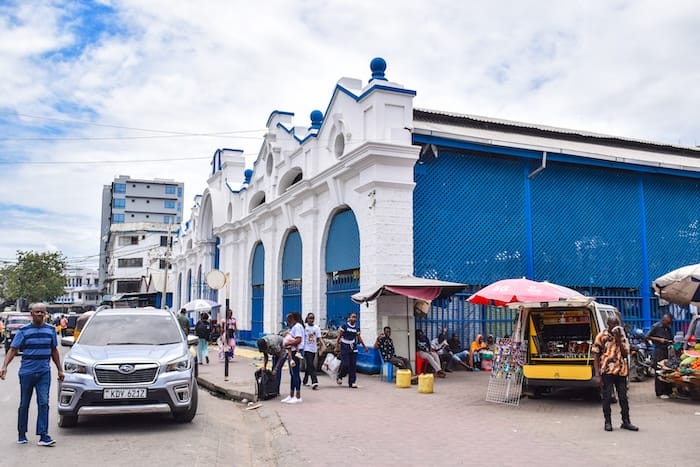
Our next stop was the spice market, where you’ll find stalls packed with spices alongside fruit, vegetables and other goods.
This was one of the few places where we experienced a little more attention, with vendors trying to get us to stop and look at their products. It wasn’t a major issue, but it was noticeably more persistent than elsewhere on our walk.
From the market, we continued towards the Old Town via Nehru Road, passing shops and street stalls along the way.
We turned down Samburu Road towards Treasury Square, although in hindsight we probably should have continued along Nehru Road and turned down Ndia Kuu Road instead. Our route meant we ended up going back and forth a little more than necessary.
Exploring Mombasa Old Town
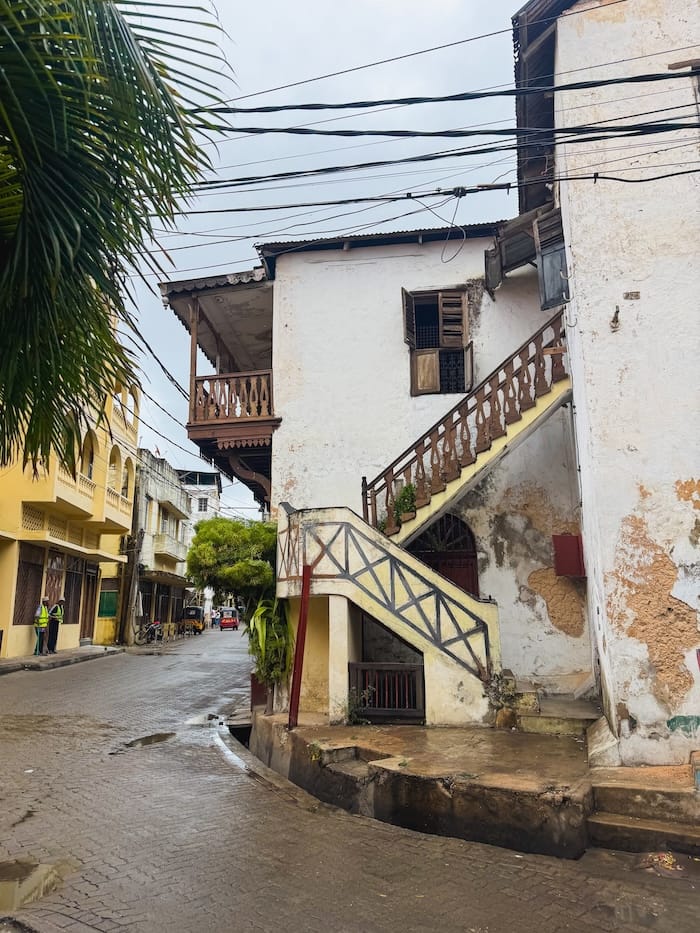
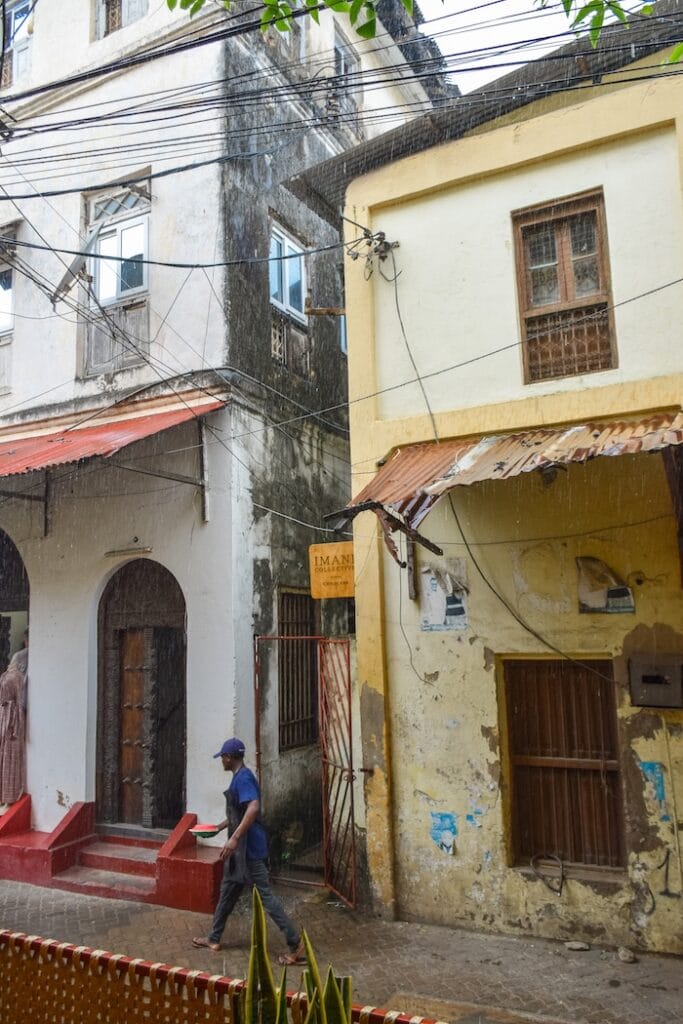
Once you reach the Old Town, the streets become narrower and the architecture starts to change.
Mombasa has been shaped by centuries of trade and different cultural influences, and you can see elements of Swahili, Arab, Indian and European architecture throughout this part of the city.
We enjoyed walking around, although if we’re being completely honest, we found the Old Town itself a little underwhelming. We’ve visited quite a few historic and colonial-era towns during our travels, so perhaps our expectations were a little high. There are some attractive streets and interesting buildings, but it wasn’t somewhere we felt we needed hours and hours to explore.
That said, we’re still glad we went.
Jahazi Coffee House
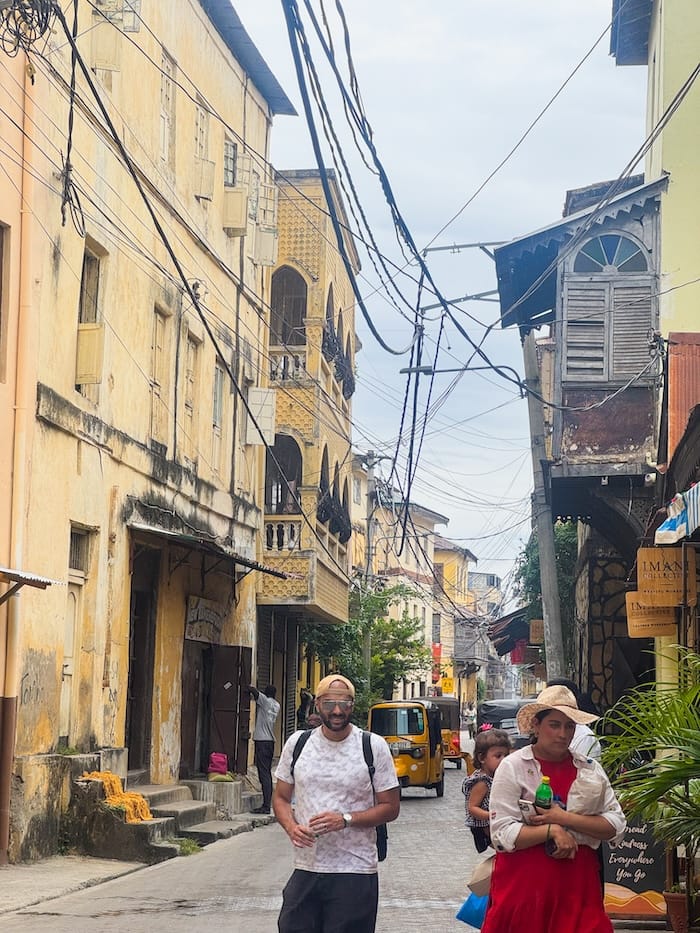
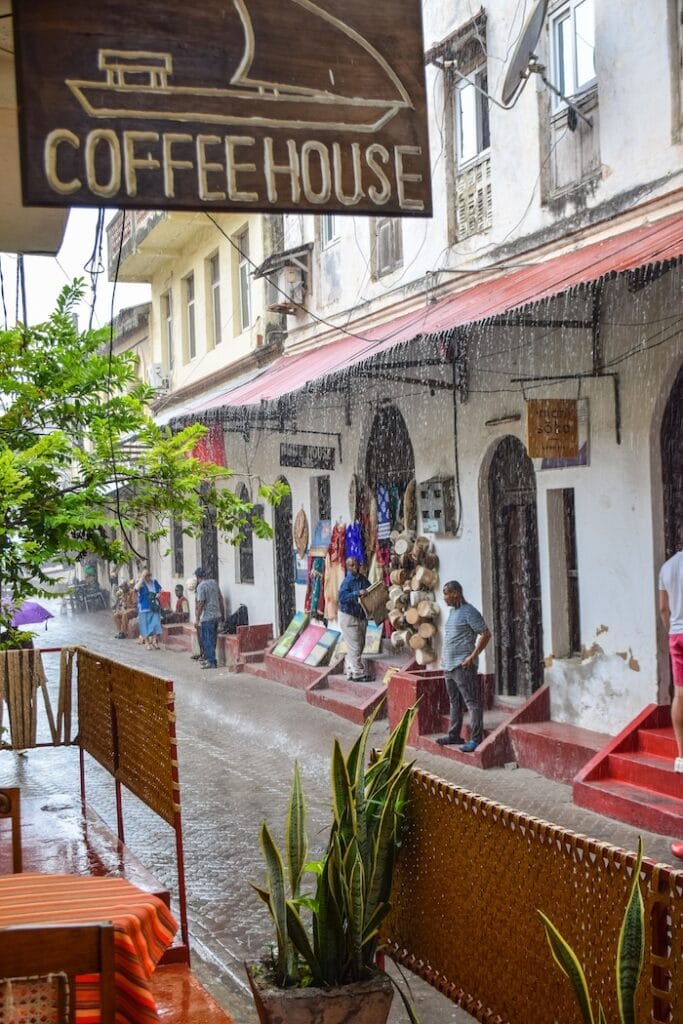
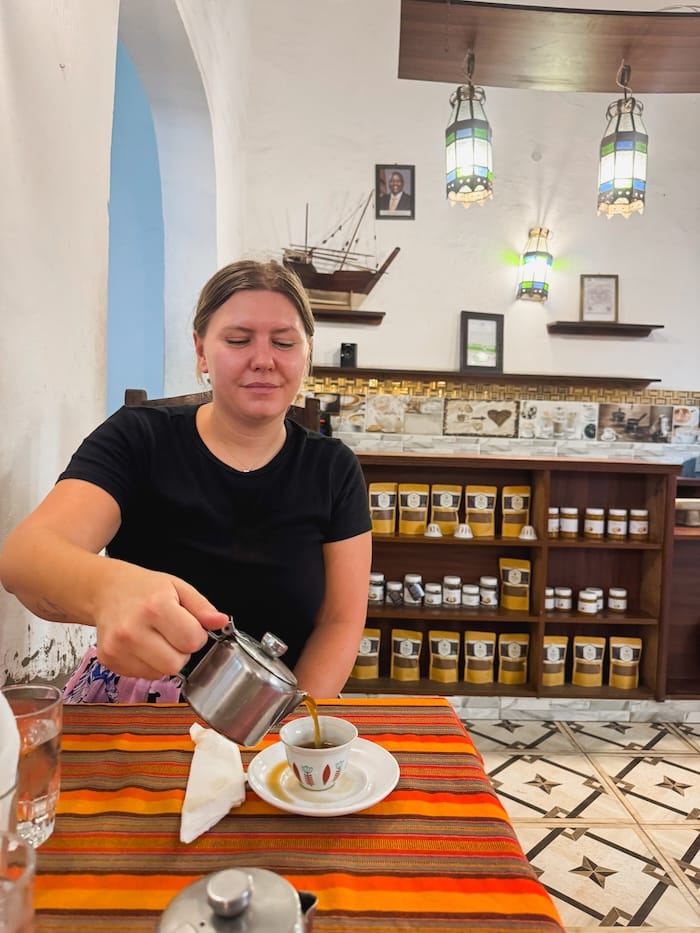
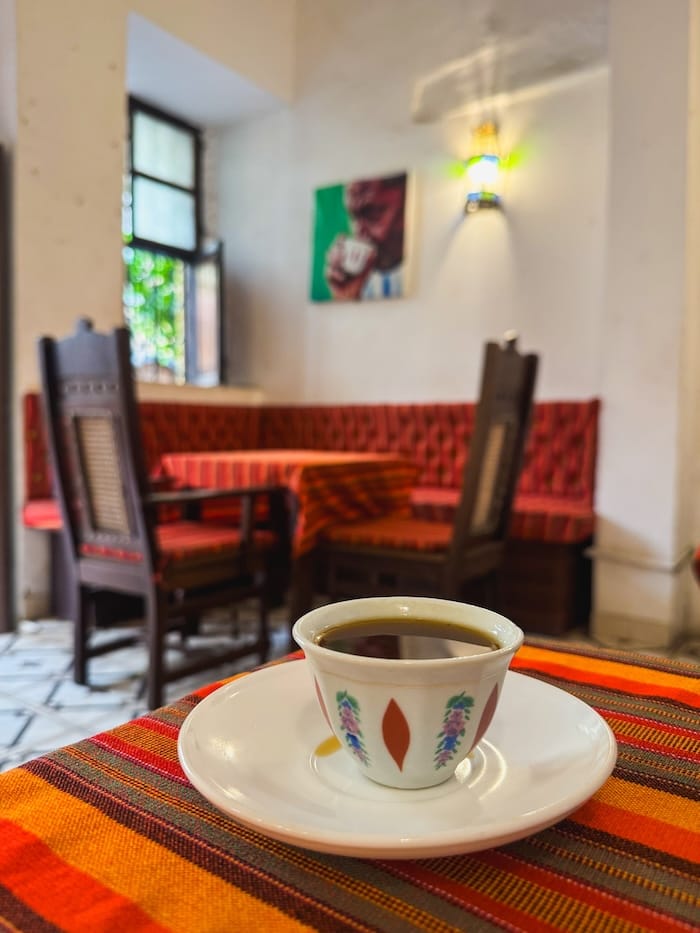
One of the nicest parts of our walk was around Jahazi Coffee House.
The street here is particularly pretty, and the coffee house makes an easy stop while exploring the Old Town.
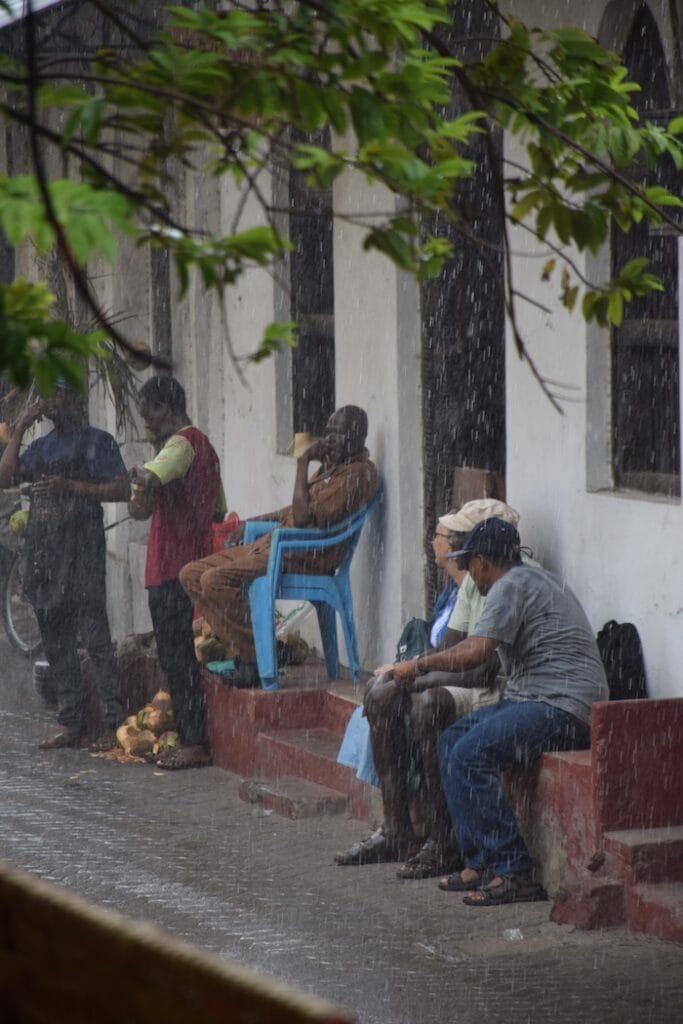
We were also unlucky with the weather, and a big rainstorm rolled in while we were exploring. Jahazi turned out to be a very convenient place to wait it out with a coffee.
Rather than rushing between individual sights, we’d recommend leaving some time simply to wander around the surrounding streets.
Fort Jesus
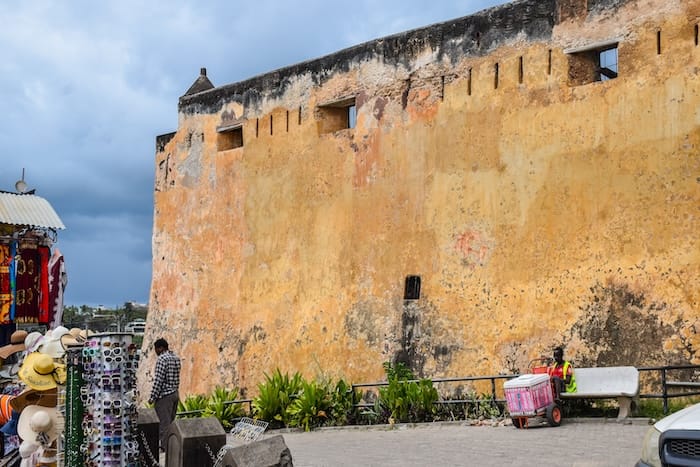
We also stopped outside Fort Jesus, which sits right on the edge of the Old Town. Built by the Portuguese at the end of the 16th century, the fort is one of Mombasa’s best-known historic landmarks.
You can pay to go inside, but we decided to skip it and continued exploring instead.
Treasury Square, English Garden & the Lighthouse
We also passed Treasury Square, and had planned to stop at the English Garden for a coffee. Unfortunately, it rained a lot during our time in Mombasa, so we ended up skipping the English Garden. Another stop you could add is the Mombasa Lighthouse. Again, we skipped it because of the weather, but it looks like a nice spot by the sea, with street food stalls nearby.
If the weather is on your side, both are easy additions to your day.
Lunch at Tarboosh Restaurant
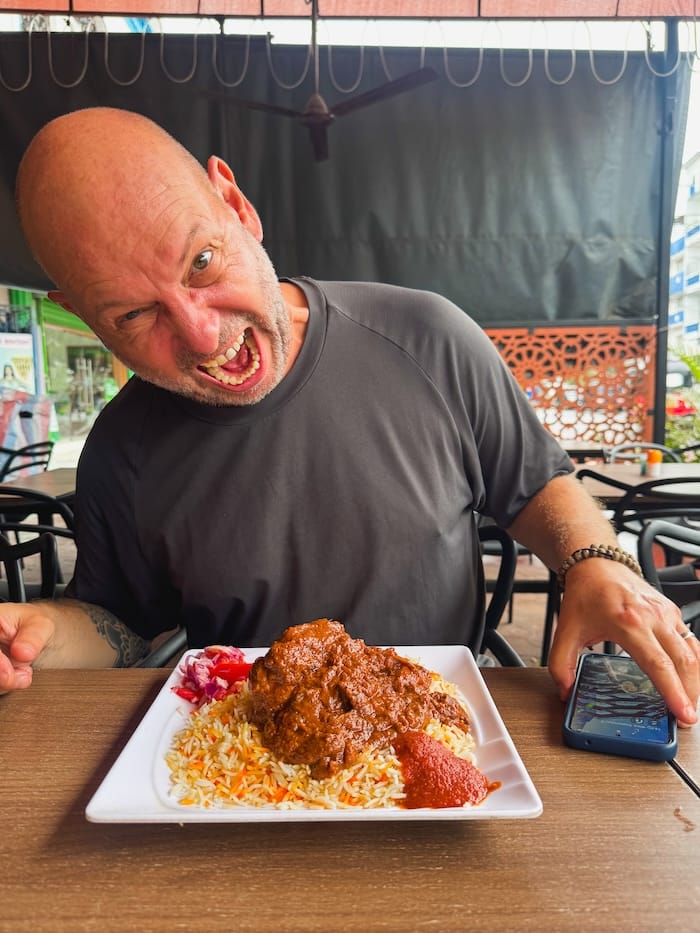
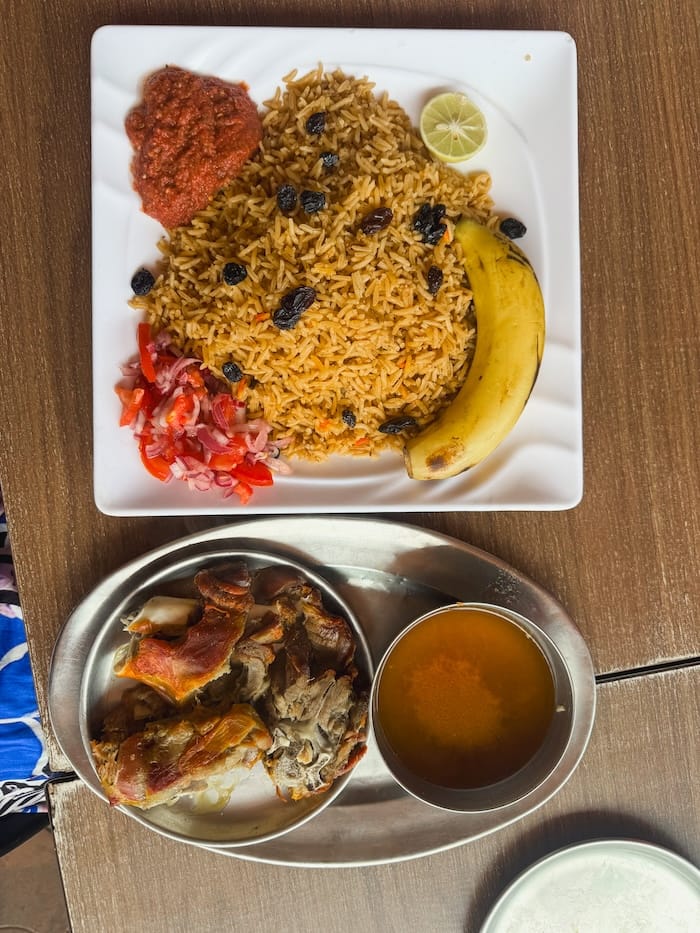
Once we’d finished exploring the Old Town, we took a tuk-tuk from around Fort Jesus to Tarboosh Restaurant.
It’s a casual local restaurant and was a good place to stop for food before heading back to Nyali.
Taking a tuk-tuk also meant we didn’t have to retrace our entire walking route. However, if you continue along Nehru Road rather than turning down Samburu Road as we did, you could turn this into a fairly convenient circular route ending around Tarboosh.
One Thing We Wish We’d Done: A Mombasa Food Tour
One thing we’d planned to do during our stay was a Mombasa Food Tour with Travel4Purpose.
The tour takes you around Mombasa with a local guide, stopping to try different local foods and drinks along the way. It sounded like a great way to experience another side of the city and try some things we probably wouldn’t have known to order ourselves.
We’d been in touch with Chaqula about joining the tour, but unfortunately our travel dates changed and we couldn’t make it happen during our short stay.
It’s definitely something we would have liked to add to our two days in Mombasa, and one we’d keep on the list if we return.
Did We Feel Safe in Mombasa?
During the day, yes.
We walked independently from the Mombasa Tusks through the market area and Old Town and didn’t have any problems.
We were approached by a couple of people offering guiding services around Fort Jesus, and vendors were a little more persistent around the spice market, but that was about it.
As always, we kept an eye on our belongings, particularly around the busy market and central streets, but we never felt uncomfortable during our walk.
We didn’t walk around central Mombasa after dark and were advised not to do so. We can’t comment from our own experience, however, as we returned to Nyali before evening.
Was 2 Nights in Mombasa Enough?
For us, yes.
We had enough time to settle in after flying from Kigali, spend a full day exploring central Mombasa and the Old Town, and then continue down the coast.
If you’re particularly interested in Mombasa’s history, museums or beaches, you could easily stay longer. But if, like us, you’re mainly stopping to see the Old Town before travelling elsewhere along the Kenyan coast, two nights worked well.
We were also happy with our decision to stay in Nyali. Central Mombasa was interesting to explore for the day, but between the traffic and general bustle, we preferred having a quieter base on the other side of the water.
Our Thoughts on Mombasa
Mombasa wasn’t one of those places where we immediately wished we’d booked another week.
The Old Town was a little underwhelming compared with some of the historic towns we’ve visited elsewhere, and the traffic in the centre is intense. But we’re still glad we stopped.
We enjoyed wandering through the spice market and Old Town, stopping for coffee and getting our first introduction to life on the Kenyan coast.
For us, two nights was enough, and then it was time to continue south to Diani Beach.

This site is protected by reCAPTCHA and the Google Privacy Policy and Terms of Service apply.