Table of Contents
After spending time in Chengdu and Chongqing, Shanghai felt very different. We arrived by plane from Chongqing and, after weeks of exploring cities that felt unmistakably Chinese, Shanghai’s international skyline, European architecture and polished shopping streets made it feel much more familiar. It ended up being our least memorable stop in China, but we also think that’s because we visited it last.
If we were planning the trip again, we’d probably start in Shanghai. It’s easy to navigate, has more English speakers than many other Chinese cities, and offers a gentler introduction to travelling in China before heading further inland. While it wasn’t our favourite city, it’s still well worth visiting for its fascinating blend of historic neighbourhoods, The Bund, colonial architecture and futuristic skyline.
Where to Stay in Shanghai
We stayed at Qianjing Xiaozhu Boutique Hotel Shanghai (City center & the Bund, Shanghai), located just a short walk from Nanjing Road and The Bund.
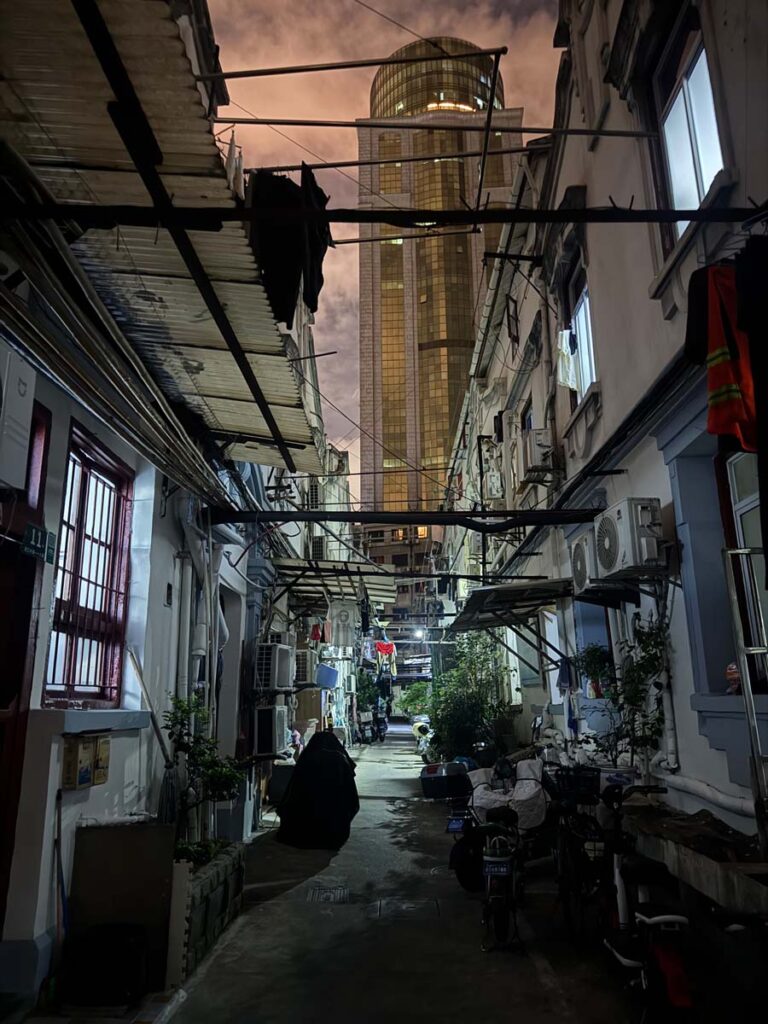
Finding it wasn’t straightforward. From the street, you enter through an unassuming doorway into a maze of narrow residential lanes that you could easily walk straight past without noticing. Surrounded by modern office towers and hotels, it felt like stumbling across a small pocket of old Shanghai that had somehow remained untouched.
The hotel itself blends into the neighbourhood and has even been used as a filming location for a Chinese drama. Walking back each evening through the quiet alleys, with laundry hanging overhead and locals going about their daily lives, felt completely different to the busy streets just outside.
The room was clean and comfortable, and despite being in the city centre, it was surprisingly peaceful at night. It wasn’t the most luxurious hotel we stayed in during our time in China, and it was actually the most expensive, but staying in a neighbourhood like this made it a memorable experience.
Things to do in Shanghai
Shanghai is a city of contrasts. One minute you’re surrounded by futuristic skyscrapers, the next you’re wandering through leafy streets, historic neighbourhoods or converted warehouses filled with art galleries. While many visitors come for the famous skyline, we found some of our favourite moments were simply exploring the city’s different districts and seeing how each one had its own character.
Walk Along Nanjing Road Pedestrian Street
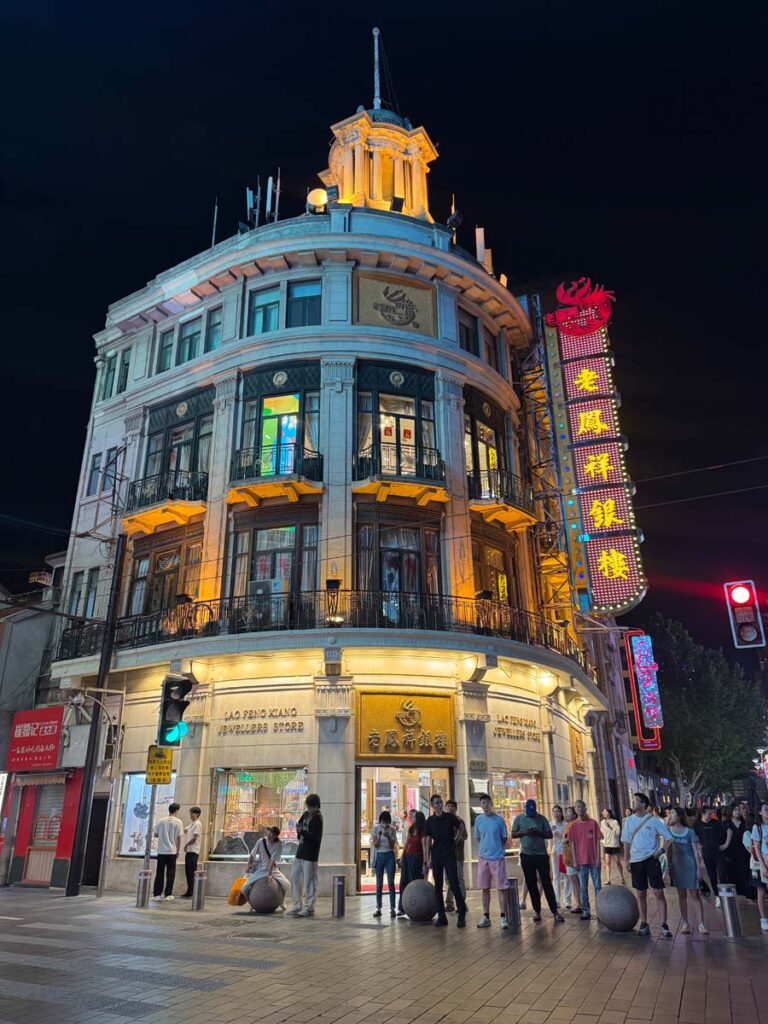
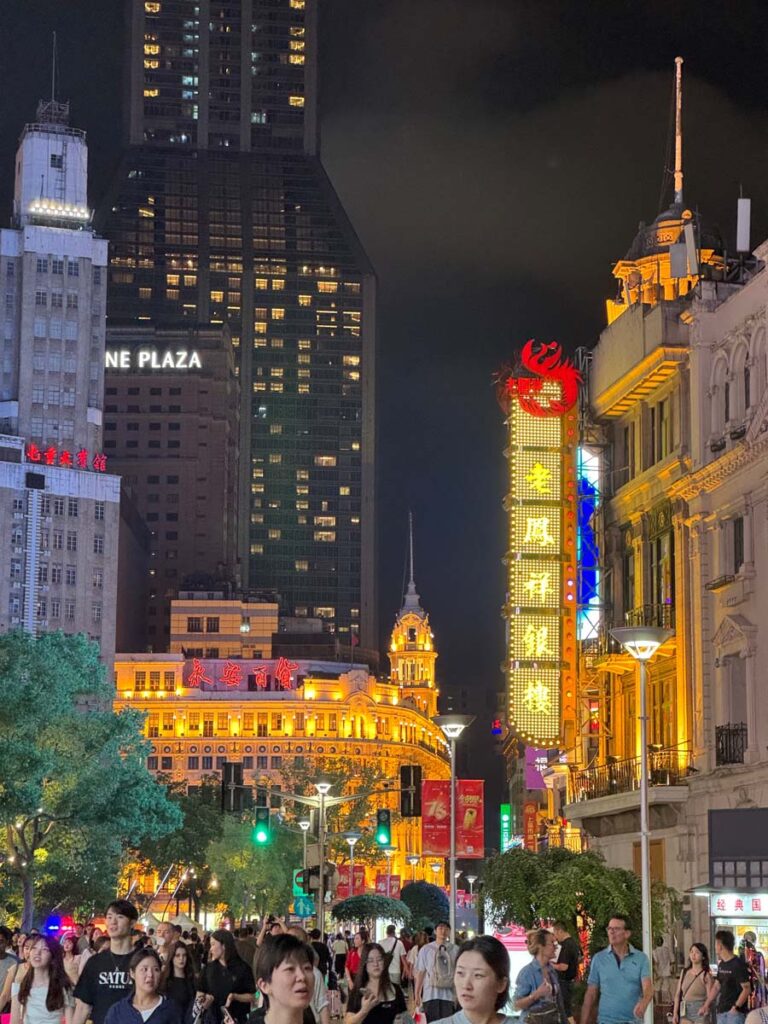
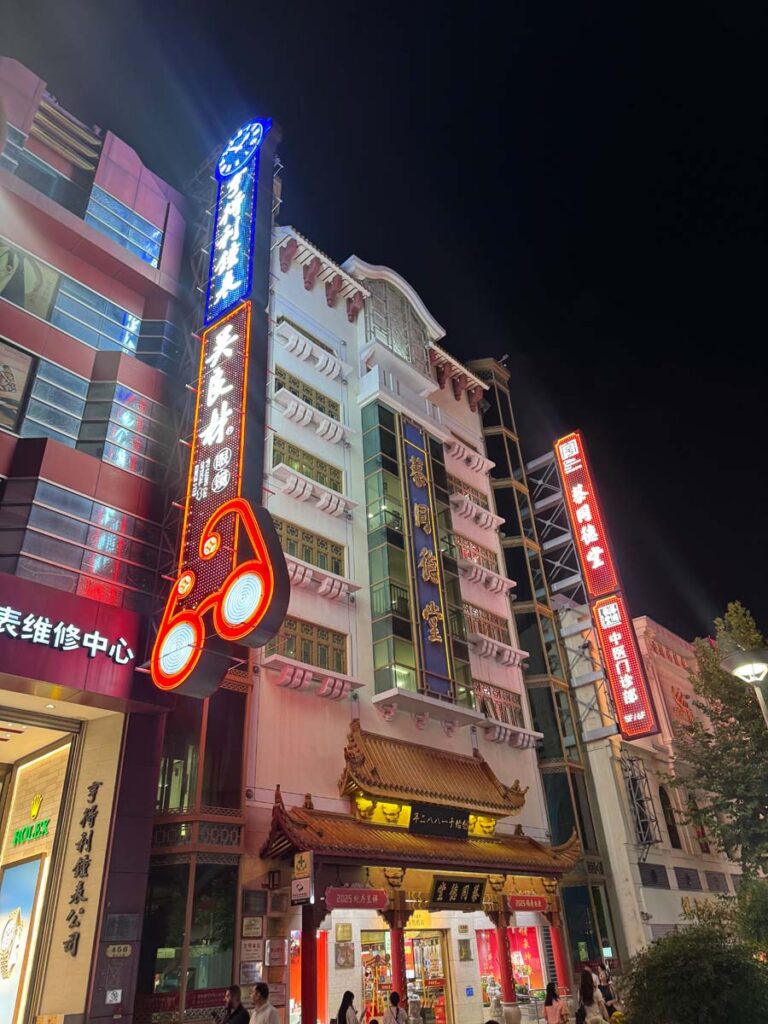
No visit to Shanghai is complete without walking along Nanjing Road Pedestrian Street, one of the busiest shopping streets in the world. Stretching for several kilometres, it’s lined with department stores, international brands, restaurants and huge digital billboards. During the day it’s busy, but after dark the neon lights give the whole street a completely different atmosphere.
Even if shopping isn’t your thing, it’s worth walking through to experience the energy of the city before continuing towards The Bund.
Walk Along The Bund
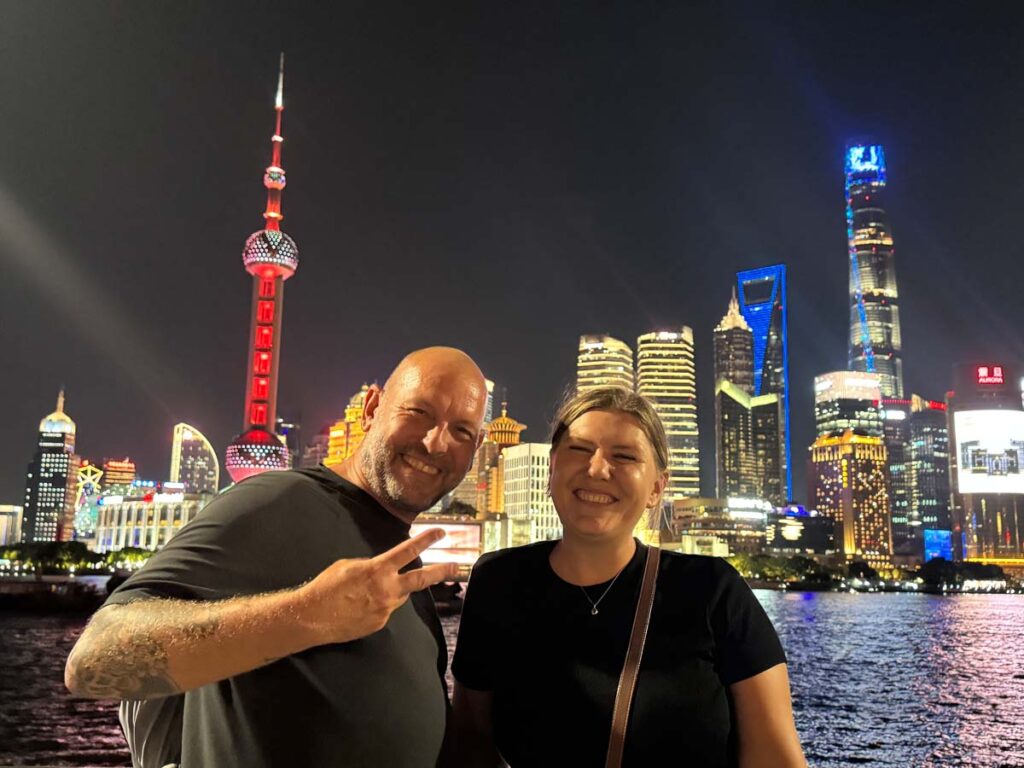
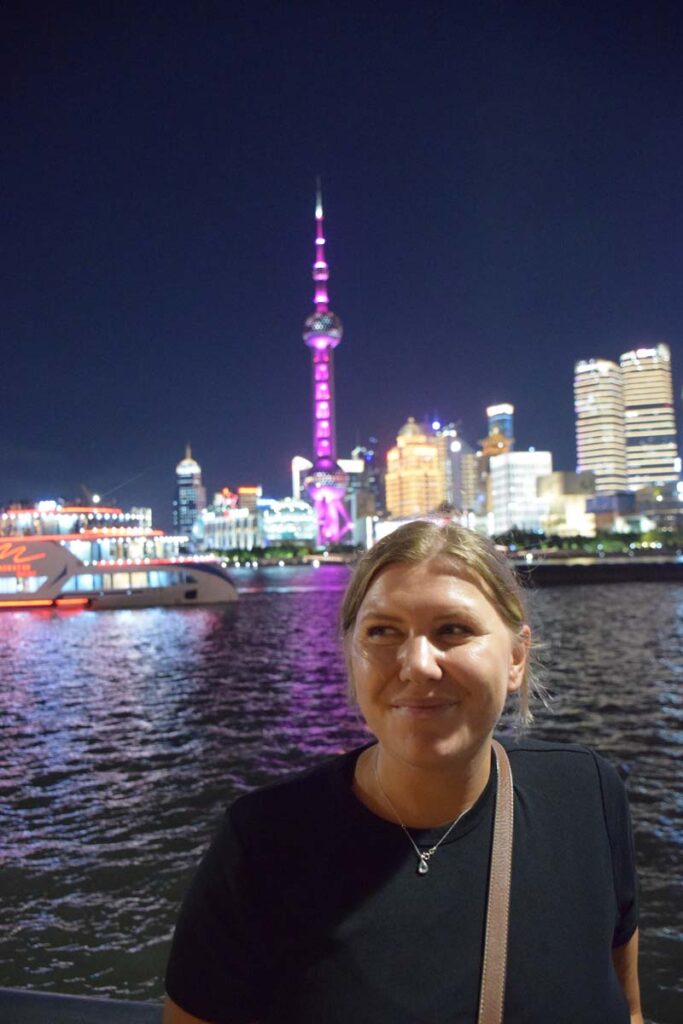
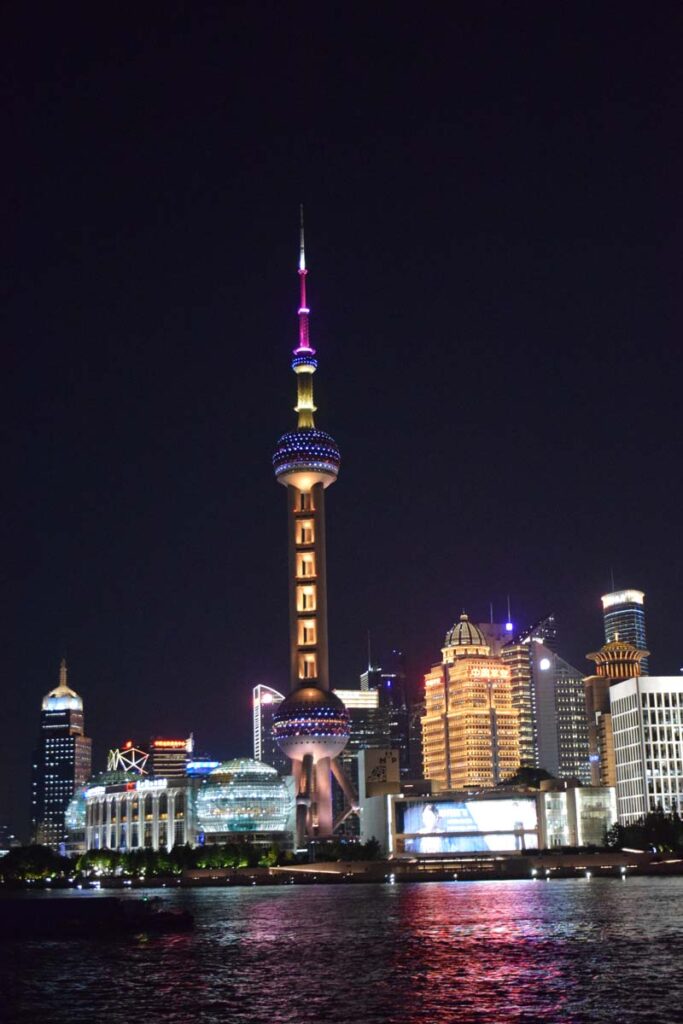
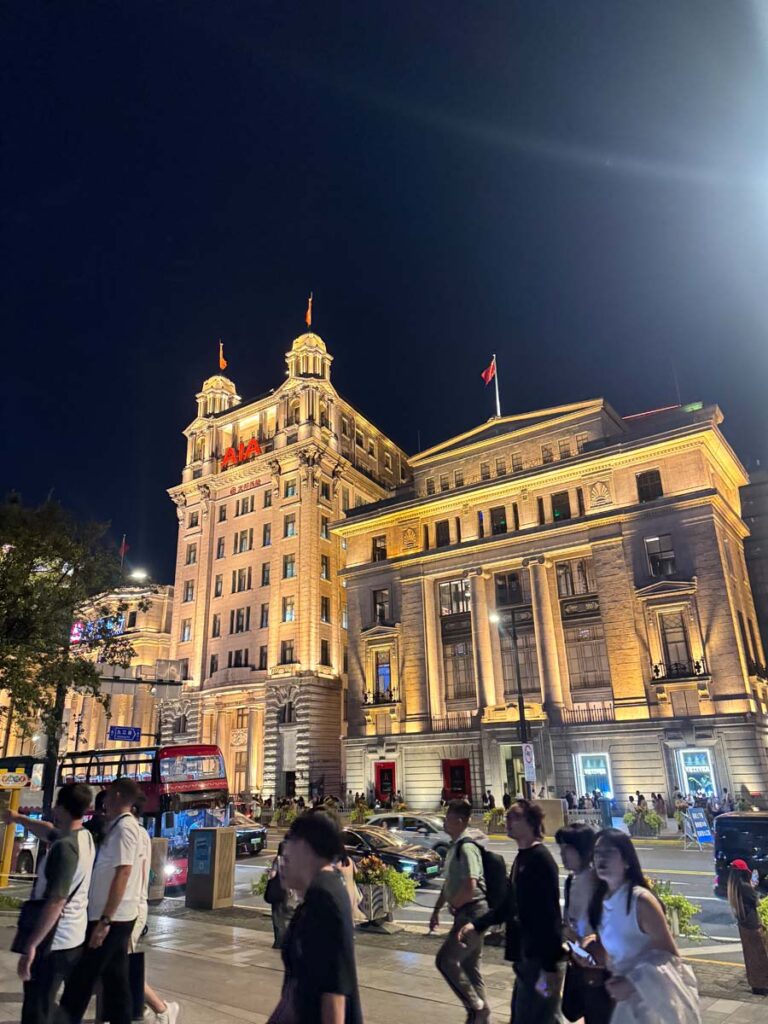
No visit to Shanghai is complete without a walk along The Bund. Stretching along the Huangpu River, it’s the city’s most famous waterfront, where grand colonial-era buildings face the futuristic skyline of Pudong on the opposite bank.
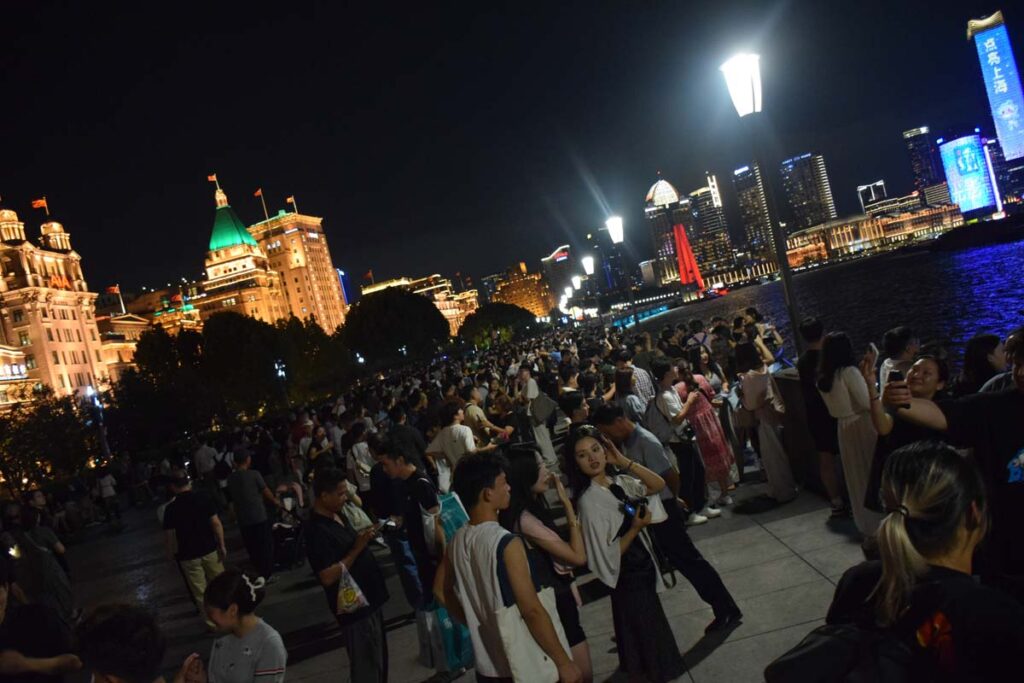
We visited on a Thursday evening, and while it was certainly busy, it never felt overwhelming. It was still easy to stroll along the promenade, stop for photos and enjoy the views without feeling constantly surrounded by crowds. Based on our experience, we’d avoid visiting on a Friday or Saturday evening, when it’s likely to be considerably busier.
As the sun goes down, the skyline gradually lights up, transforming the riverfront into one of Shanghai’s most iconic views. Watching the illuminated skyscrapers reflect across the Huangpu River is an experience that’s well worth including in your itinerary.
Wander Through the French Concession
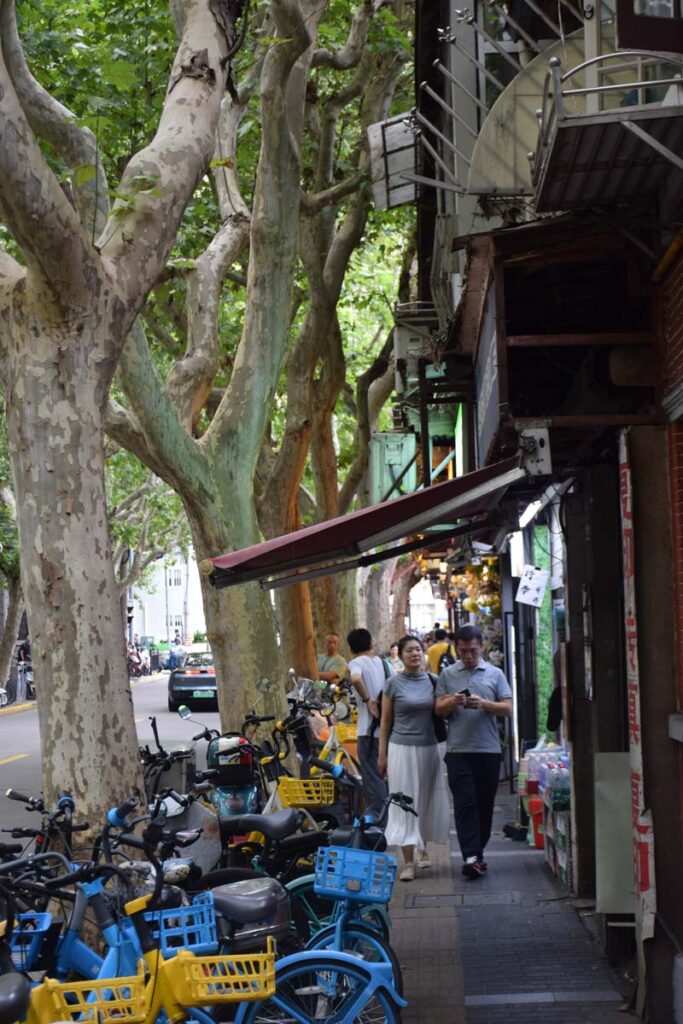
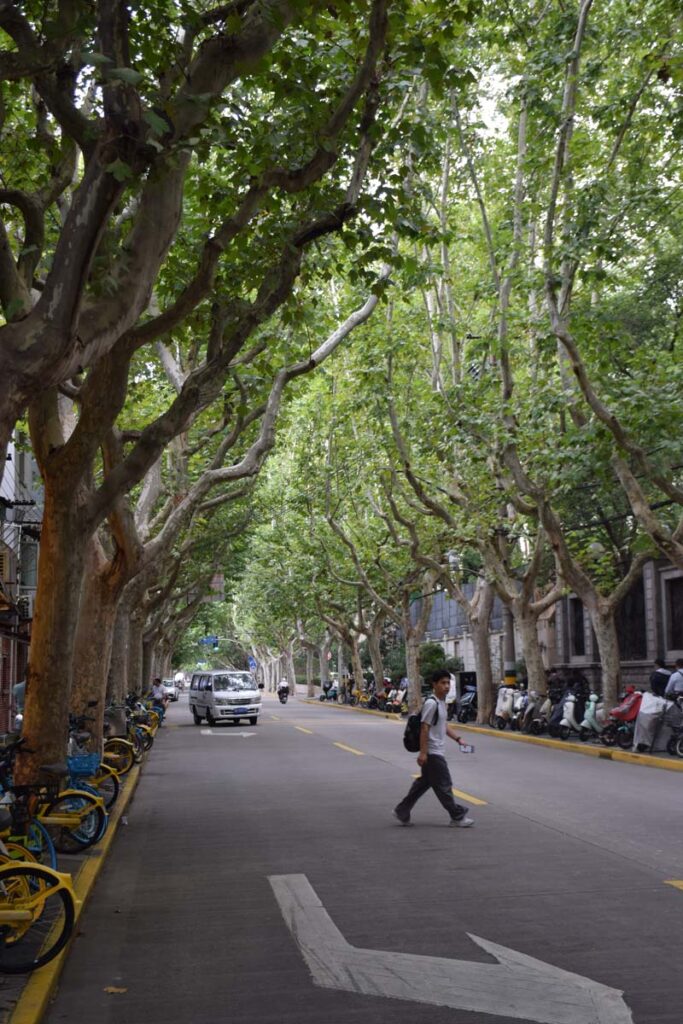
The French Concession couldn’t feel more different from central Shanghai. Wide tree-lined avenues replace busy shopping streets, while independent cafés, boutiques and beautiful historic buildings give the area a much more relaxed atmosphere.
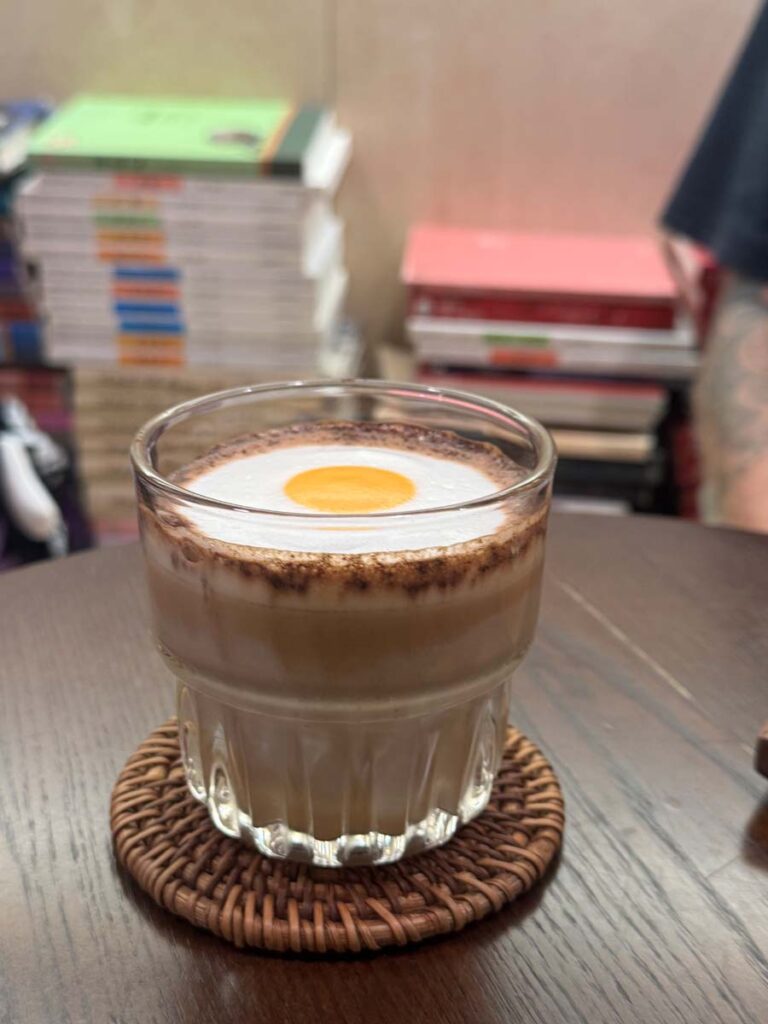
It’s the perfect neighbourhood to slow down, grab a coffee and spend a few hours wandering without any particular destination in mind. If you’re looking for a break from Shanghai’s skyscrapers and busy shopping streets, this is a great place to do it.
Explore Tianzifang
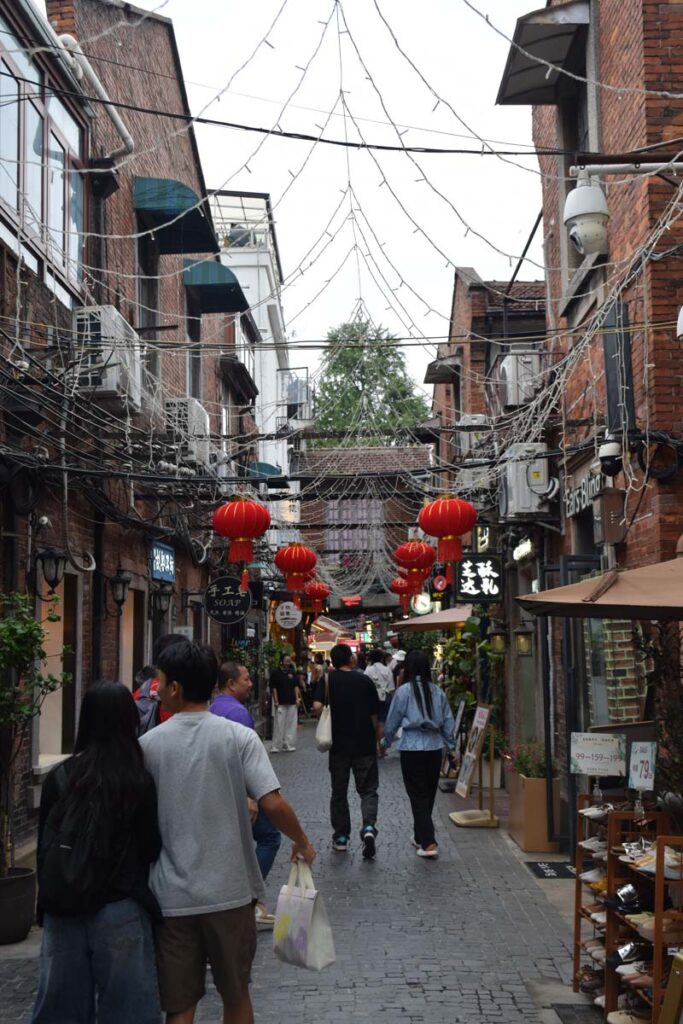
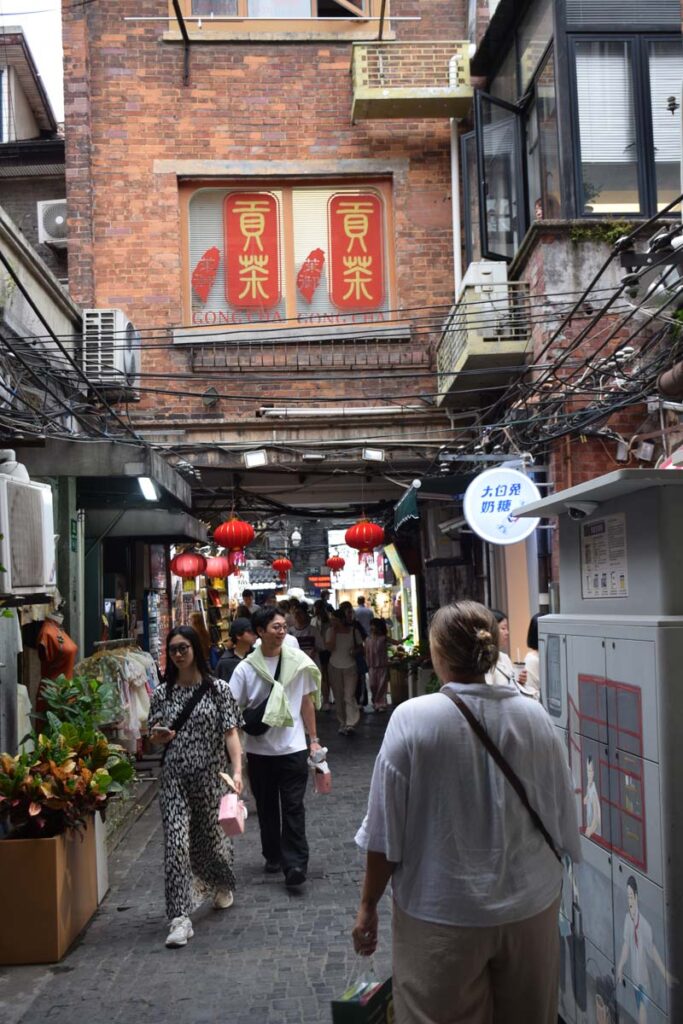
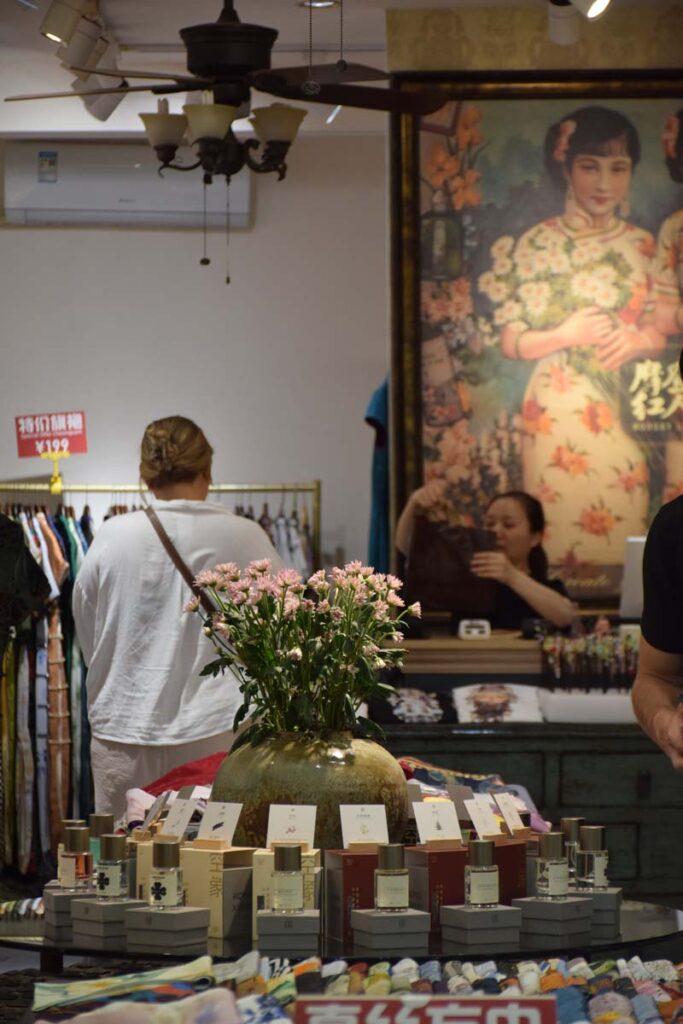
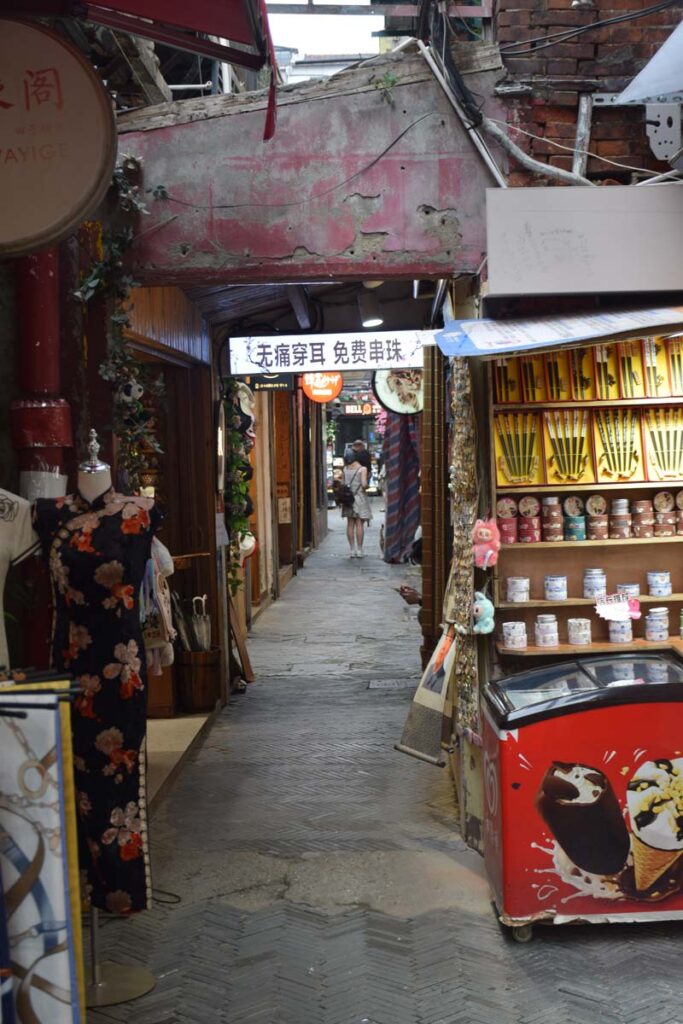
Hidden within a maze of narrow alleyways, Tianzifang is packed with small boutiques, cafés, art studios and independent shops. Although it’s popular with visitors, it still feels intimate thanks to the network of tiny lanes connecting everything together.
We ended up spending much longer here than we’d planned, browsing the shops and picking up gifts to take home for family. It was one of the best places we found in Shanghai for souvenirs, with plenty of locally made crafts, artwork and unique items that felt a little different from the usual tourist souvenirs.
It’s an easy place to lose track of time, whether you’re browsing the shops, stopping for a coffee or simply wandering through the narrow alleyways to see what you’ll discover next.
Visit Xintiandi
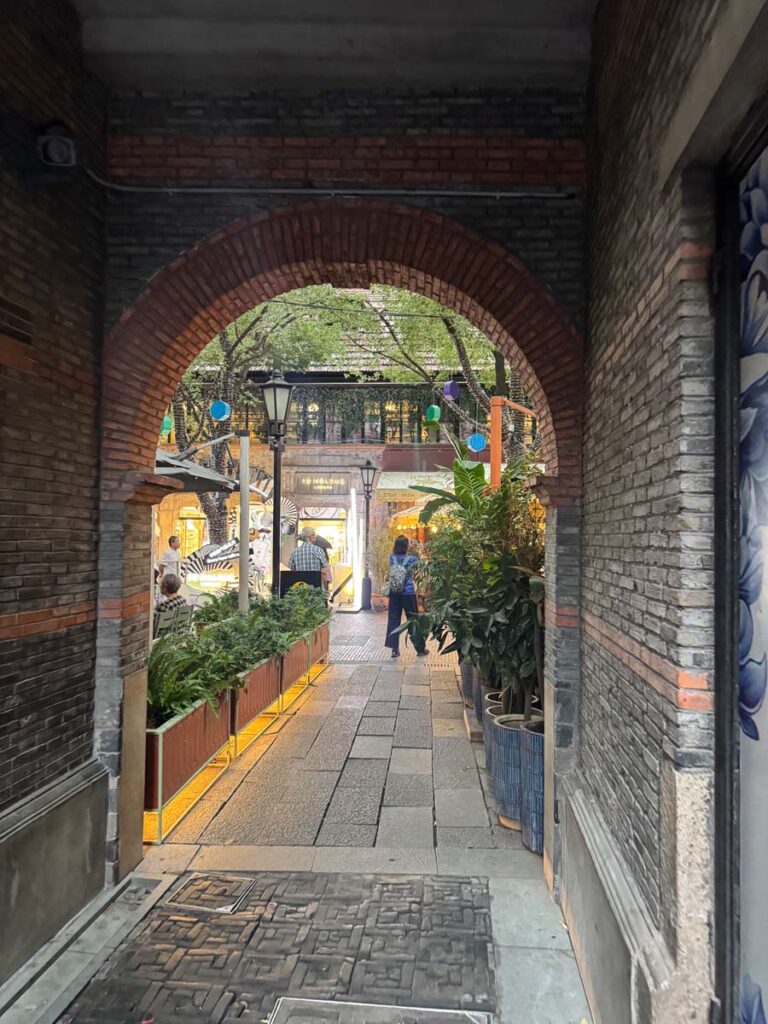
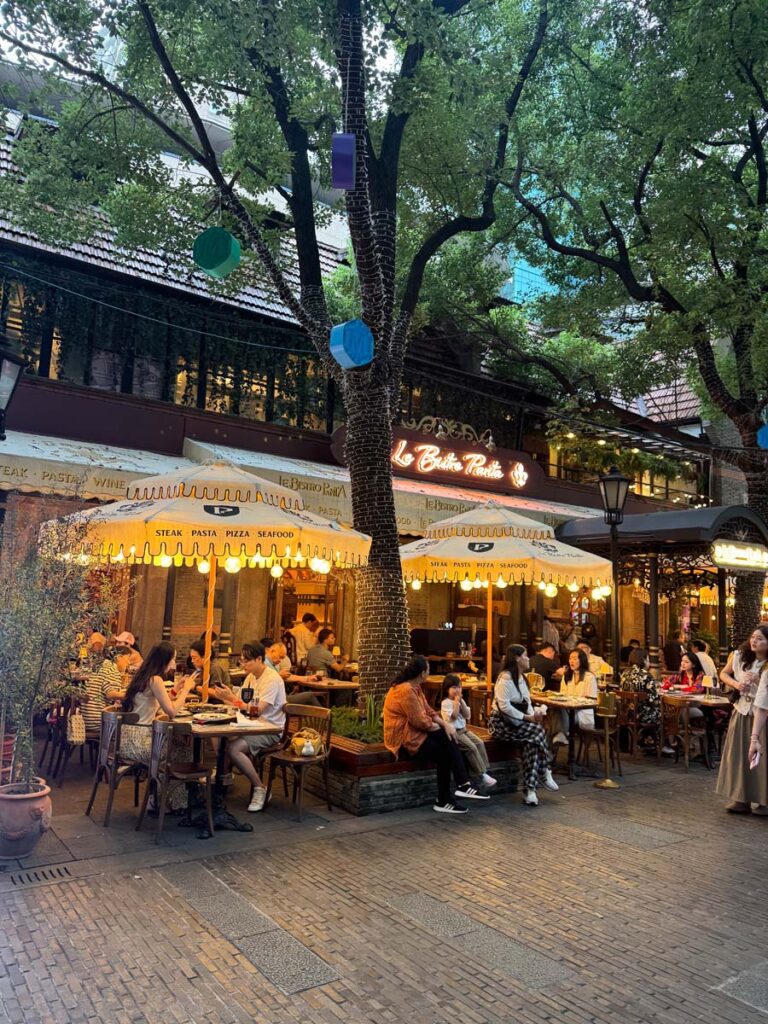
Xintiandi blends historic architecture with modern Shanghai. The restored stone-gate buildings now house stylish restaurants, cafés, bars and designer shops, creating one of the city’s more upmarket neighbourhoods.
It’s a pleasant area to wander during the afternoon or evening, particularly if you’re looking for somewhere to sit outside with a coffee or enjoy dinner after a day of sightseeing.
Discover M50 Art District (50 Moganshan Road)
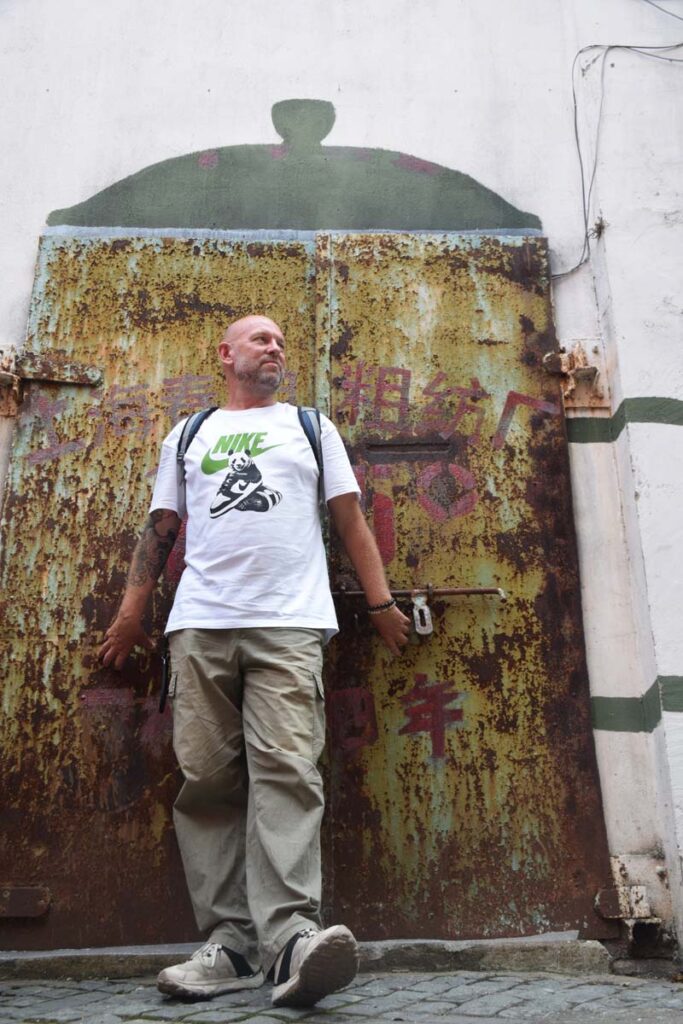
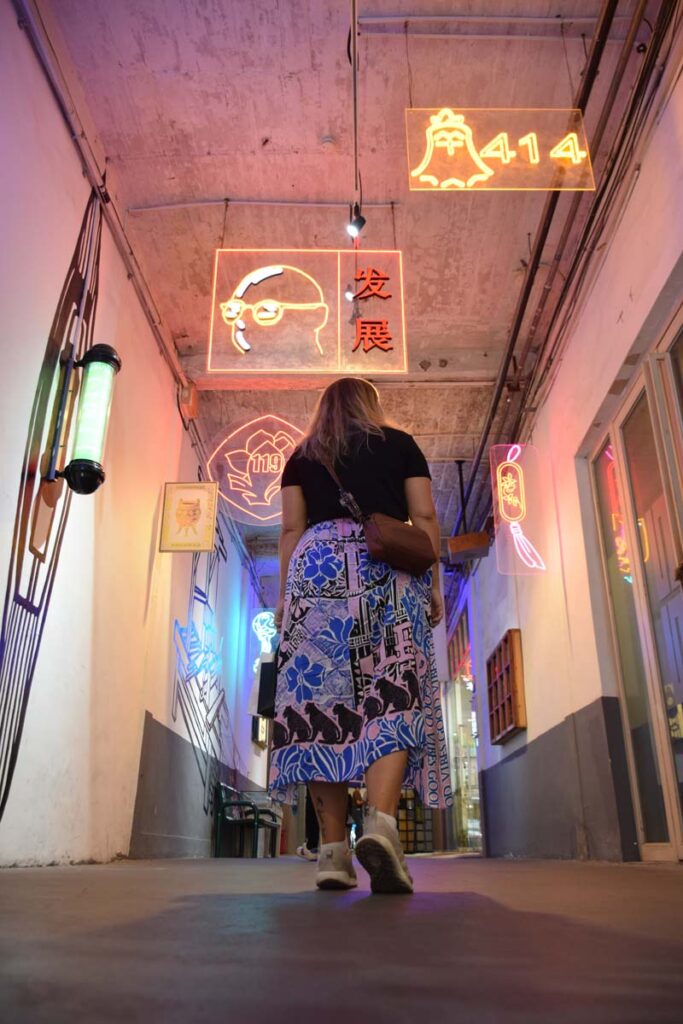
If you’re looking for something different, head to M50 Art District. Set inside former industrial warehouses, the area has been transformed into one of Shanghai’s leading creative spaces, with contemporary galleries, street art and artist studios spread throughout the complex.
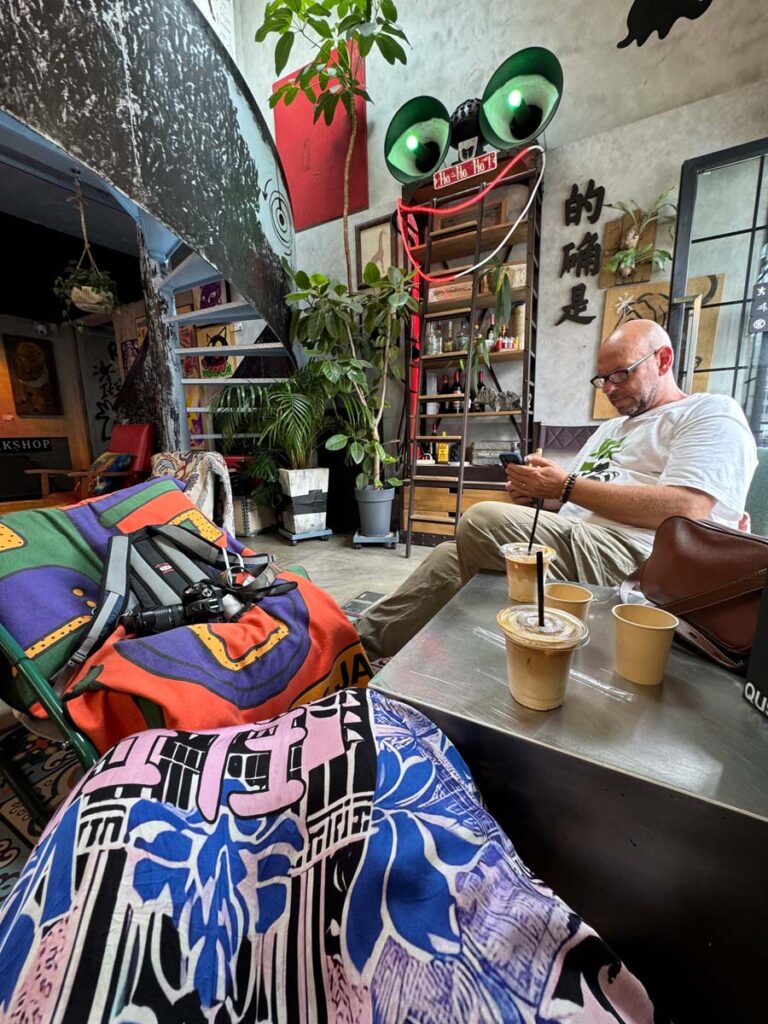
It’s more than just an art district, though. Between the galleries you’ll find some excellent cafés, independent boutiques and several specialist tea shops where you can browse and sample a huge range of Chinese teas. We also stumbled across NOD Café, tucked away on the second floor overlooking Suzhou Creek, which was a great spot to stop for a coffee, enjoy the riverside views and soak up the creative, artistic atmosphere before continuing to explore.
Whether you’re interested in contemporary exhibitions or simply want to experience a quieter, more creative side of Shanghai, M50 is well worth adding to your itinerary.
Visit Mengqing Garden (1000 Trees)
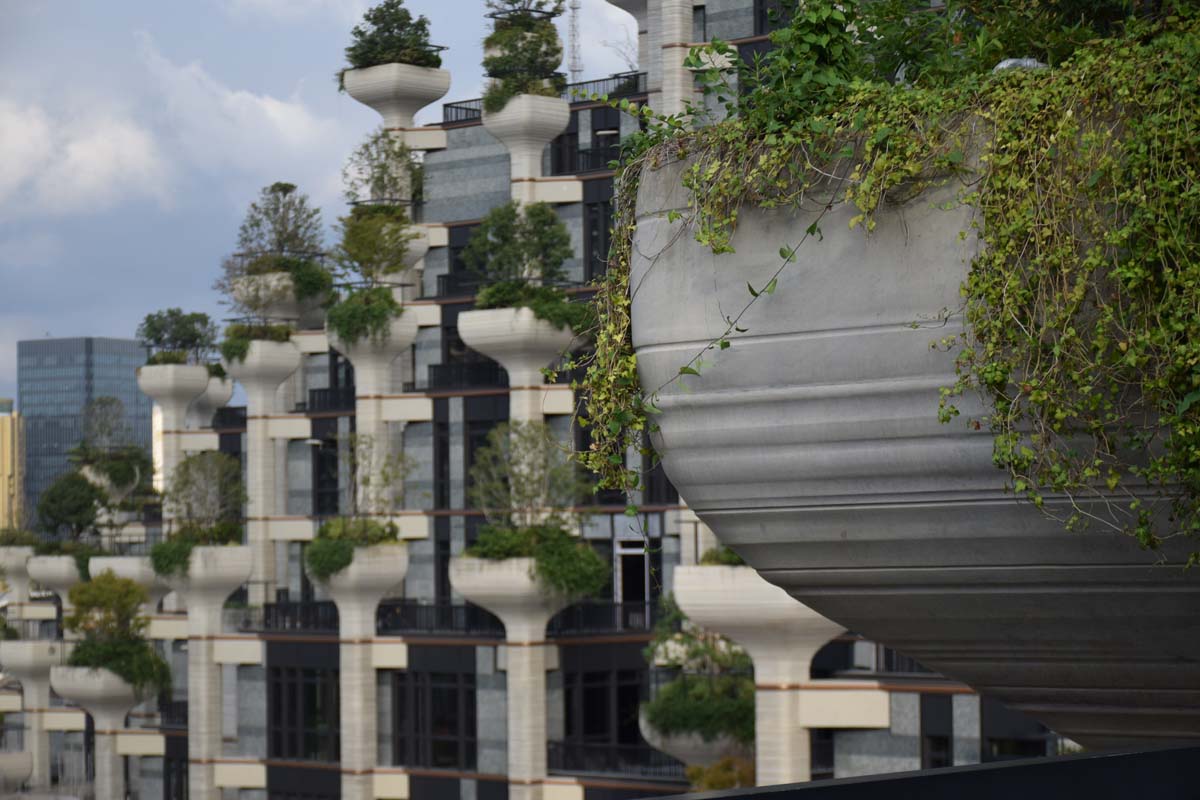
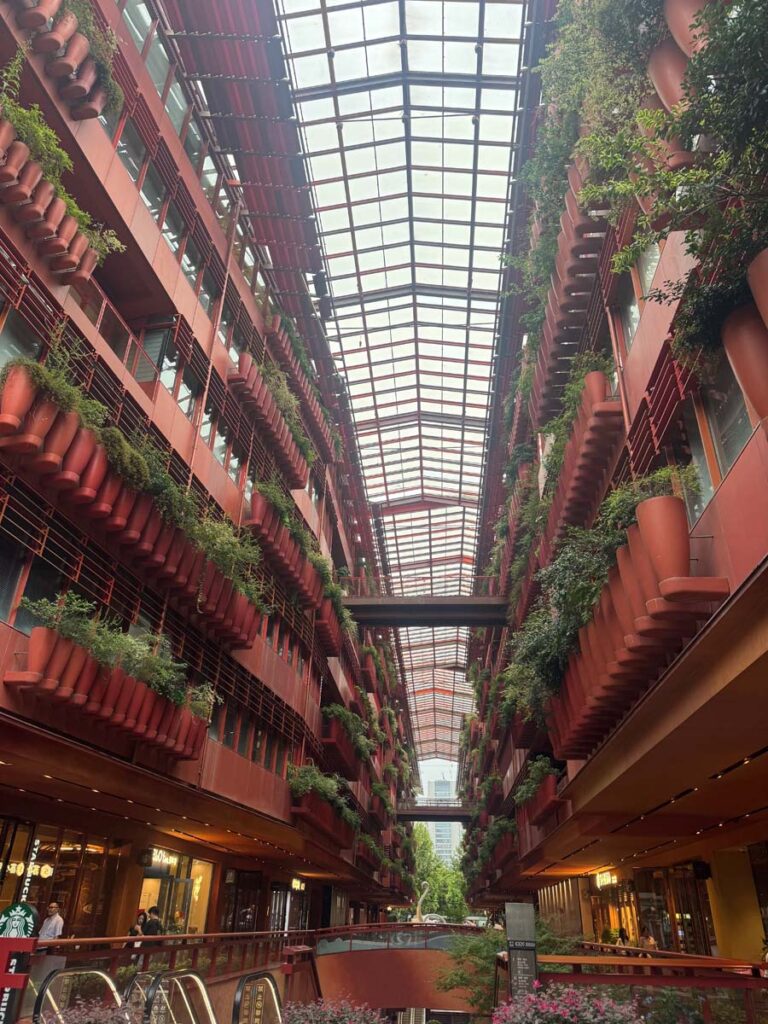
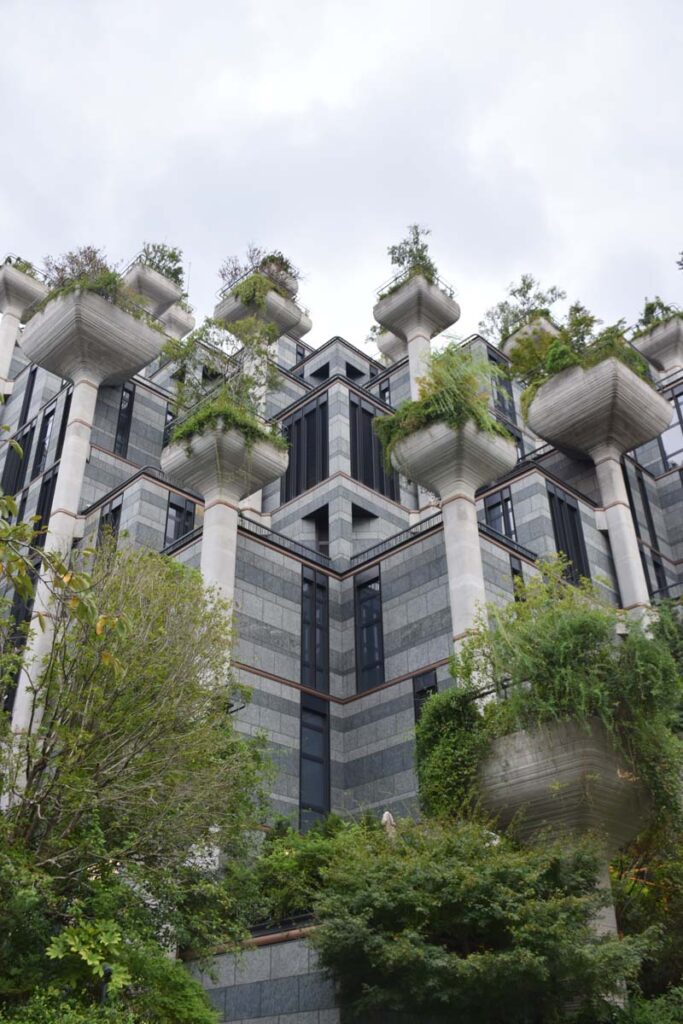
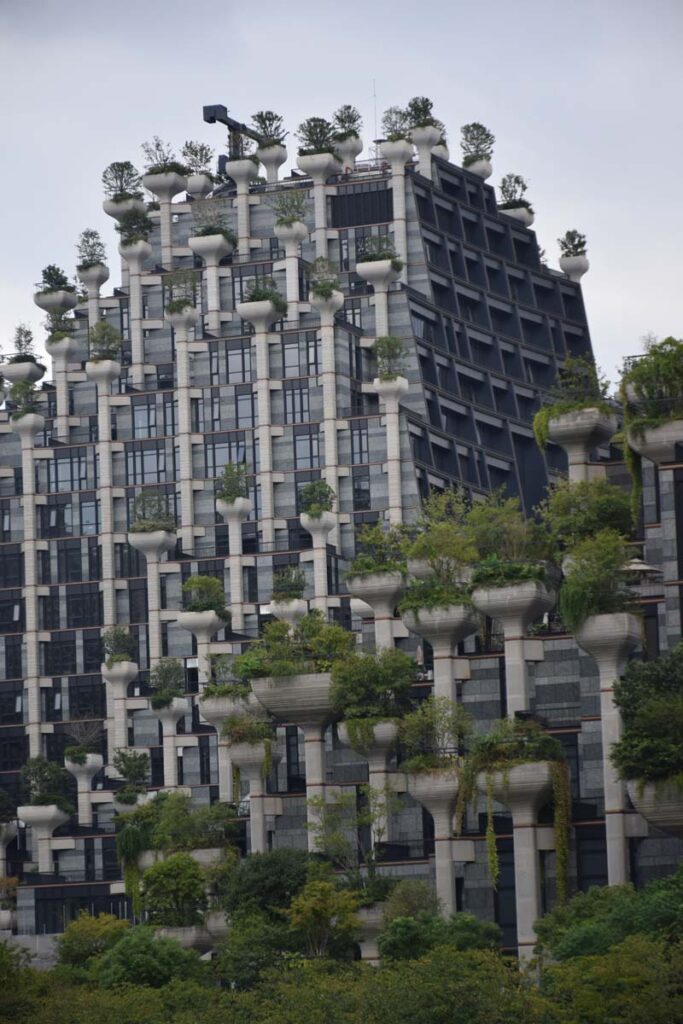
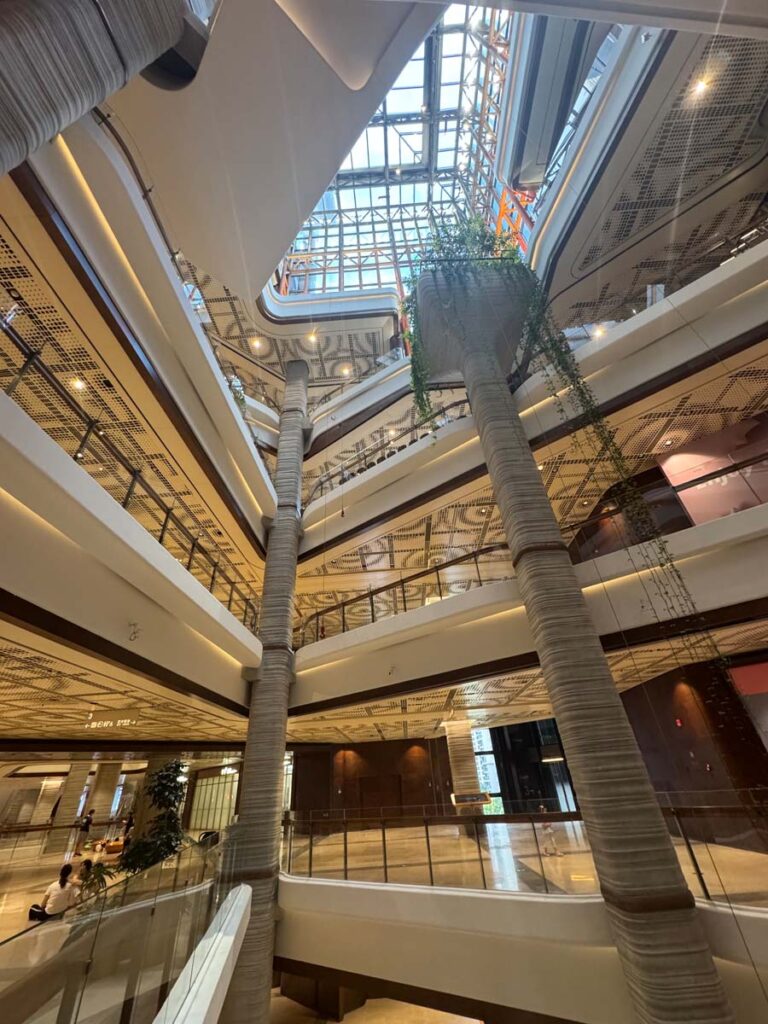
One of the more unusual places we visited was Mengqing Garden and the neighbouring 1000 Trees development along Suzhou Creek. The combination of riverside paths, green spaces and striking architecture makes it a pleasant area to wander, especially if you want a break from the busy city centre.
Don’t just admire 1000 Trees from the outside. Head inside the shopping centre, where you’ll find cafés, restaurants and shops spread across several levels. It’s also worth making your way up to the rooftop terraces, which offer great views over Suzhou Creek and the surrounding skyline while giving you a closer look at the building’s unique tree-covered design.
Take a Day Trip to Zhujiajiao Ancient Town
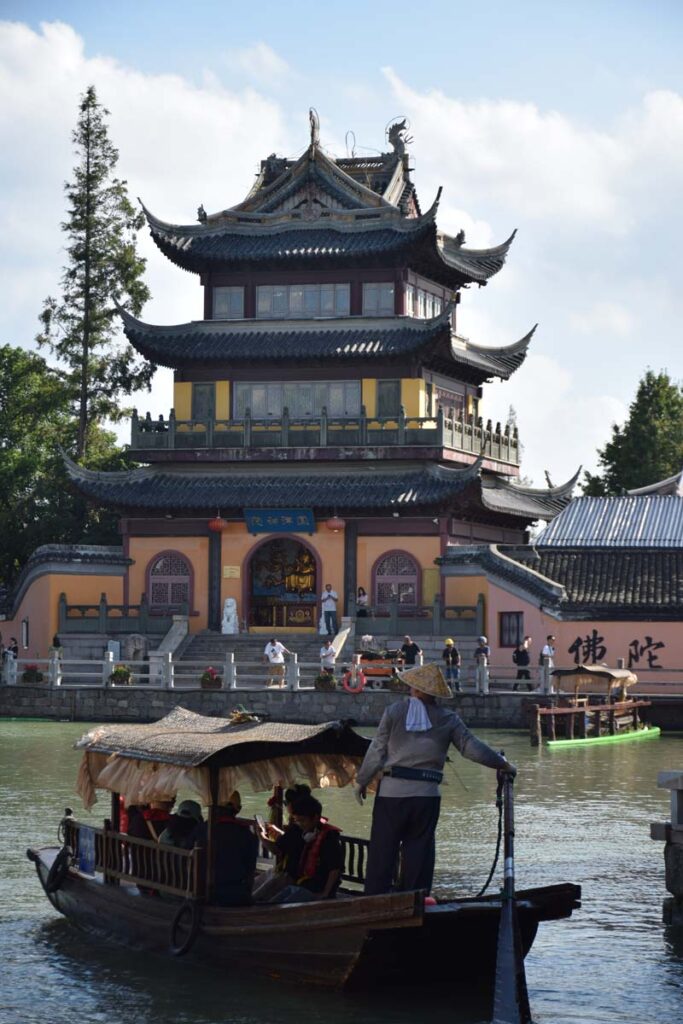
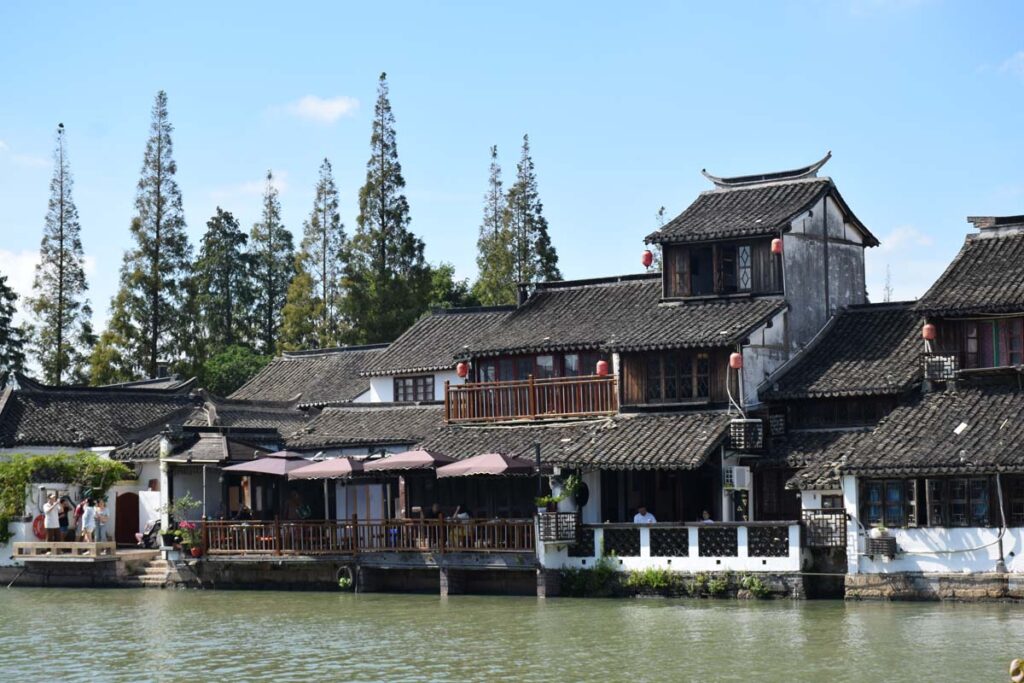
If you have the time, a day trip to Zhujiajiao Ancient Town is well worth adding to your itinerary. Often called one of Shanghai’s water towns, it’s a world away from the city’s skyscrapers, with canals, stone bridges and narrow streets lined with traditional buildings.
We spent the day wandering the old town, crossing its historic bridges and enjoying the slower pace before returning to the city in the evening. It made a great contrast to the rest of our time in Shanghai and was one of our favourite days of the trip. We’d recommend allowing a full day so you can explore at a relaxed pace rather than rushing back to the city.
How to get to Zhujiajiao Ancient Town
Zhujiajiao is easy to visit independently using Shanghai’s metro system. From central Shanghai, the journey takes just over an hour. Take Metro Line 2 to Hongqiao Railway Station, then change to Line 17 and get off at Zhujiajiao Station.
From the station, you can either walk for around 25 to 30 minutes to the entrance of the ancient town or catch a local bus. We chose to walk there, which was straightforward and gave us a chance to see a little more of the area, before taking the bus back to the metro station at the end of the day. We found it an easy day trip to do without joining an organised tour.


Where to eat in Shanghai
After the bold, spicy flavours of Sichuan cuisine in Chengdu and Chongqing, Shanghai’s food felt noticeably different. The local cuisine is generally milder and slightly sweeter, with an emphasis on fresh ingredients, seafood, braised dishes and delicate flavours rather than chilli and Sichuan pepper. You’ll also find plenty of dumpling shops, noodle restaurants and bakeries, alongside modern cafés and international restaurants.
One thing we particularly enjoyed was the variety of street food. Whether we were exploring Nanjing Road, wandering through neighbourhoods or browsing markets, there always seemed to be stalls selling dumplings, pancakes, skewers, buns and freshly cooked snacks. It’s a great city to graze your way through rather than sticking to three big meals a day.
Shanghai has no shortage of places to eat, from tiny noodle shops to modern restaurants and international cuisine. While the streets around Nanjing Road are packed with dining options, we actually found ourselves returning to the quieter area around Jiujiang Road, where we were staying. Just a few minutes from the crowds, the neighbourhood was full of small local restaurants and cafés that felt much more relaxed. It was here that we discovered some of our favourite meals, simply by wandering the streets and seeing where the locals were eating.
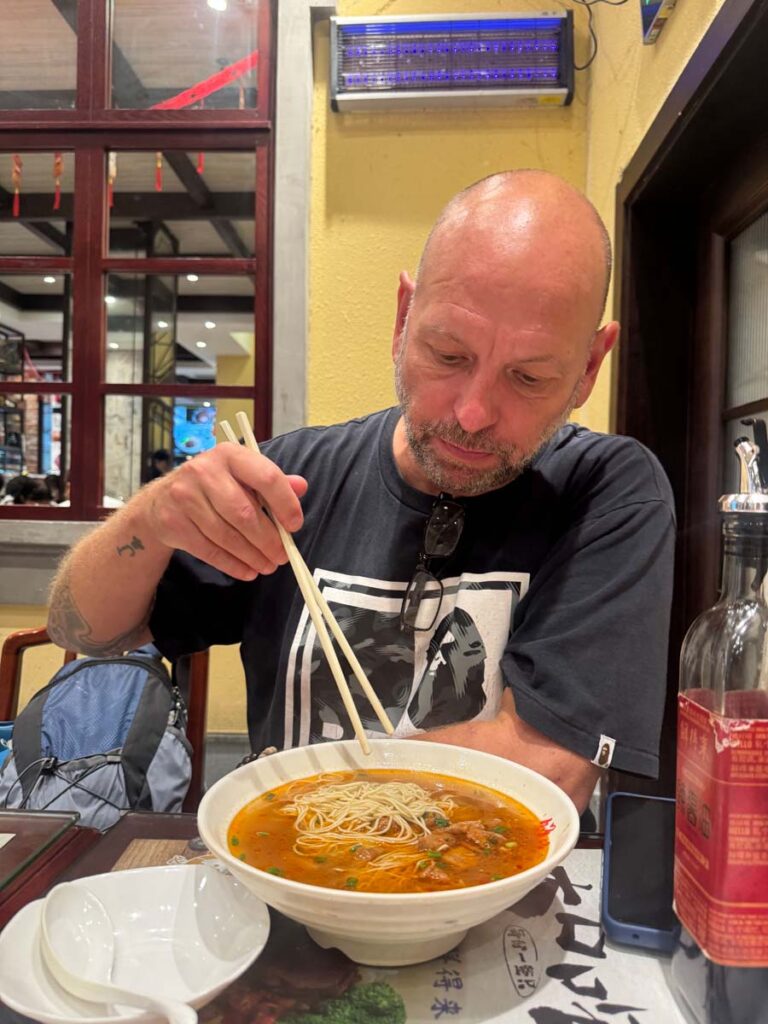
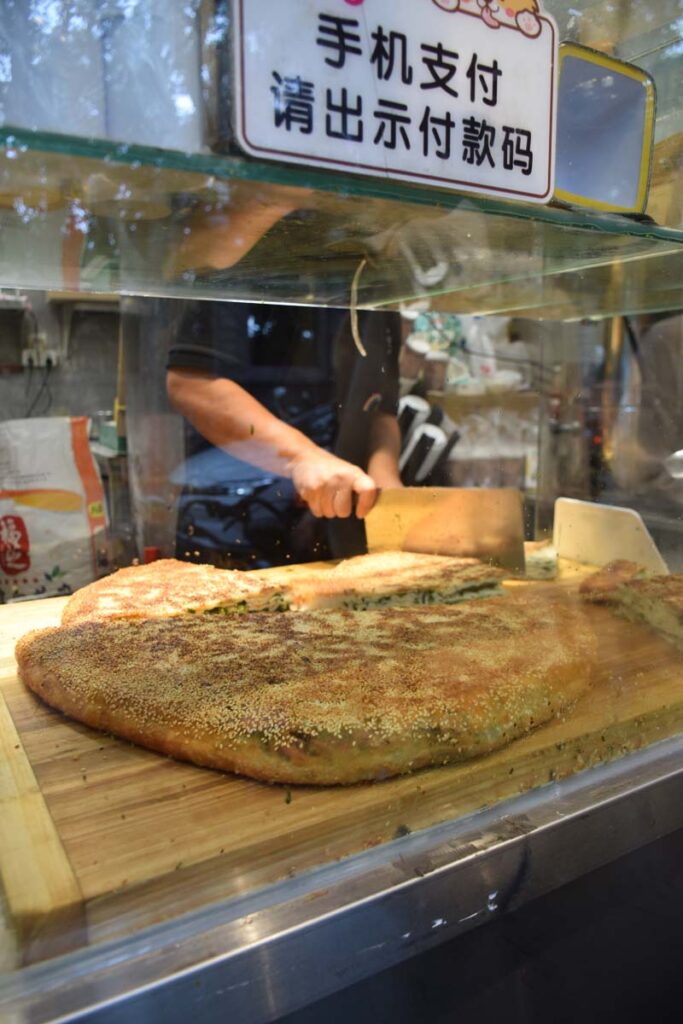
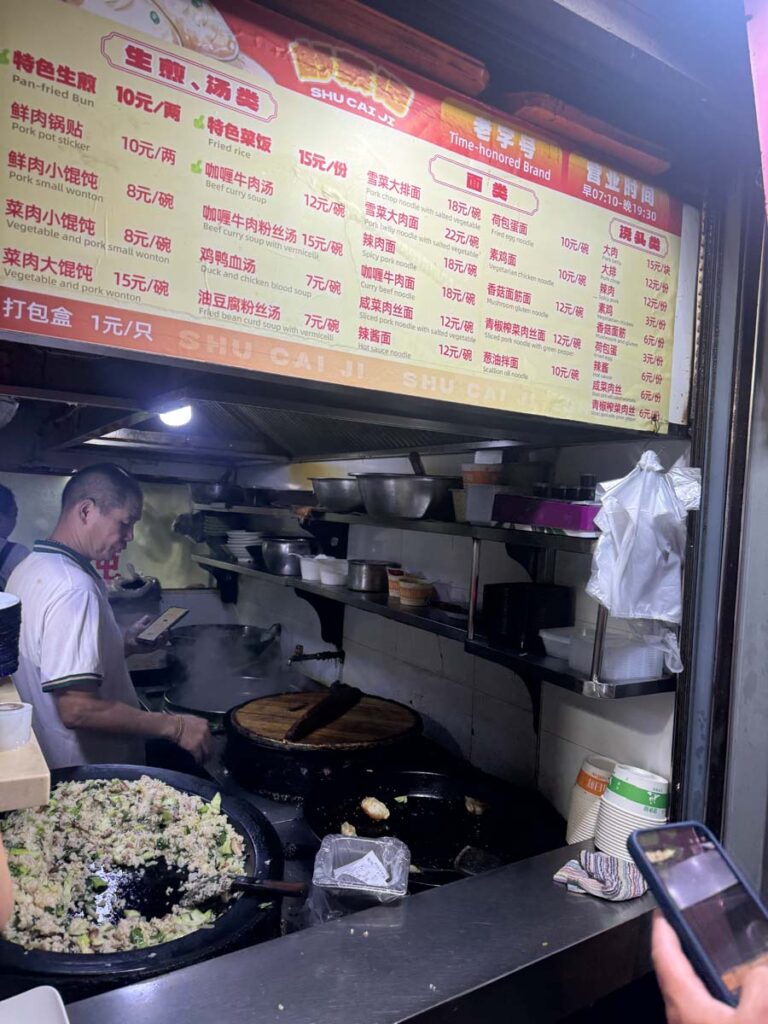
Shucaiji Pan-Fried Vegetable Rice 舒蔡记生煎菜饭
Located just outside our hotel, this tiny local restaurant quickly became one of our regular stops. Their pan-fried dumplings (shengjian bao) were excellent, with a crispy base and juicy filling, and the scallion oil noodles were simple but full of flavour. It’s the kind of place you could easily walk past, but it’s well worth stopping if you’re nearby.
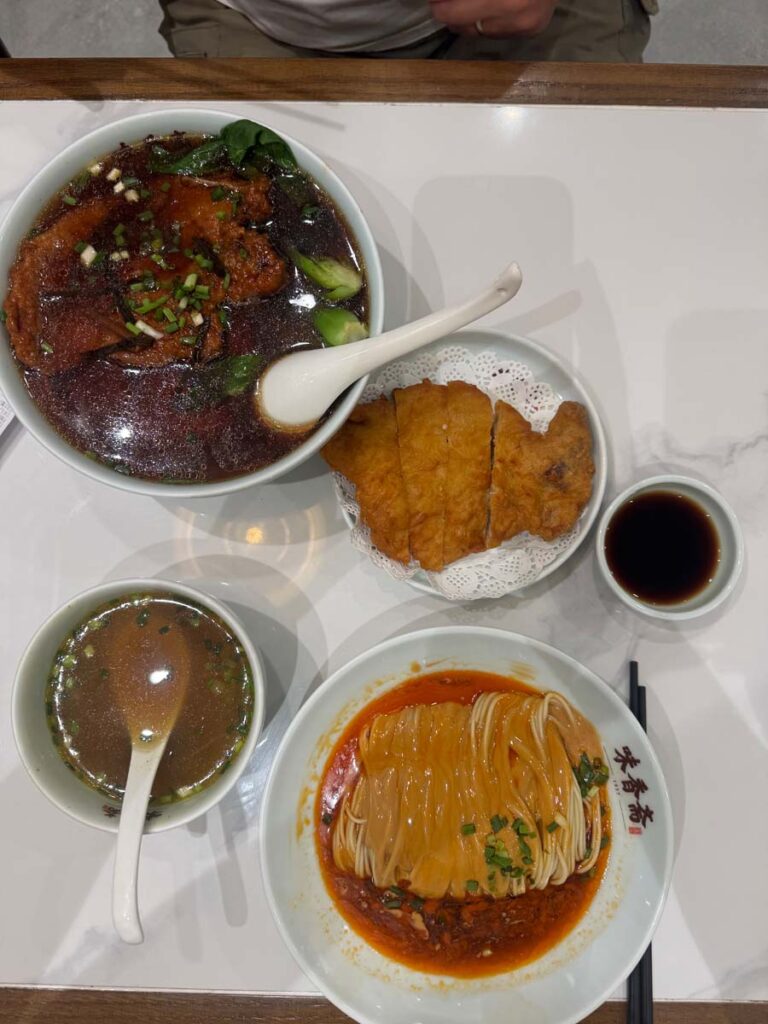
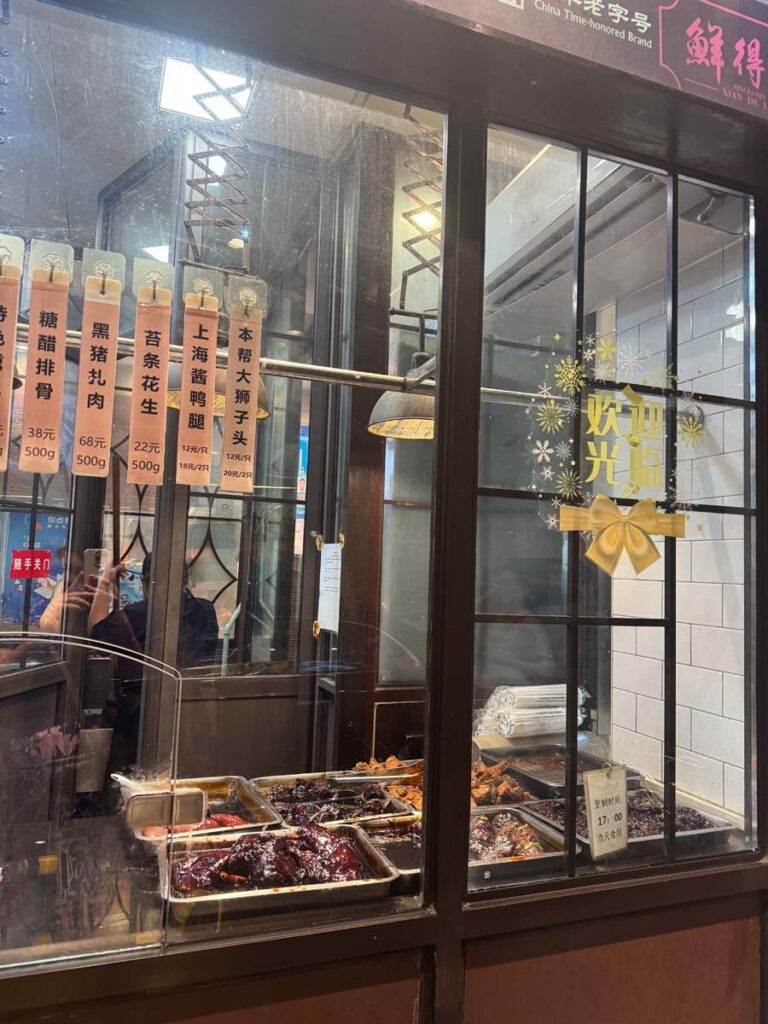
Xiandelai 鲜得来
Founded in 1921, Xiandelai is one of Shanghai’s best-known traditional restaurants and is famous for its fried pork chop (排骨), a local speciality that’s been enjoyed for over a century. Alongside the restaurant, there’s a takeaway counter selling a wide range of traditional Benbang dishes, including braised meats, smoked fish and soy-braised duck.
We enjoyed it so much that we came back a second time to try more of the menu. If you only have time to try one traditional Shanghai restaurant, Xiandelai is an excellent choice.
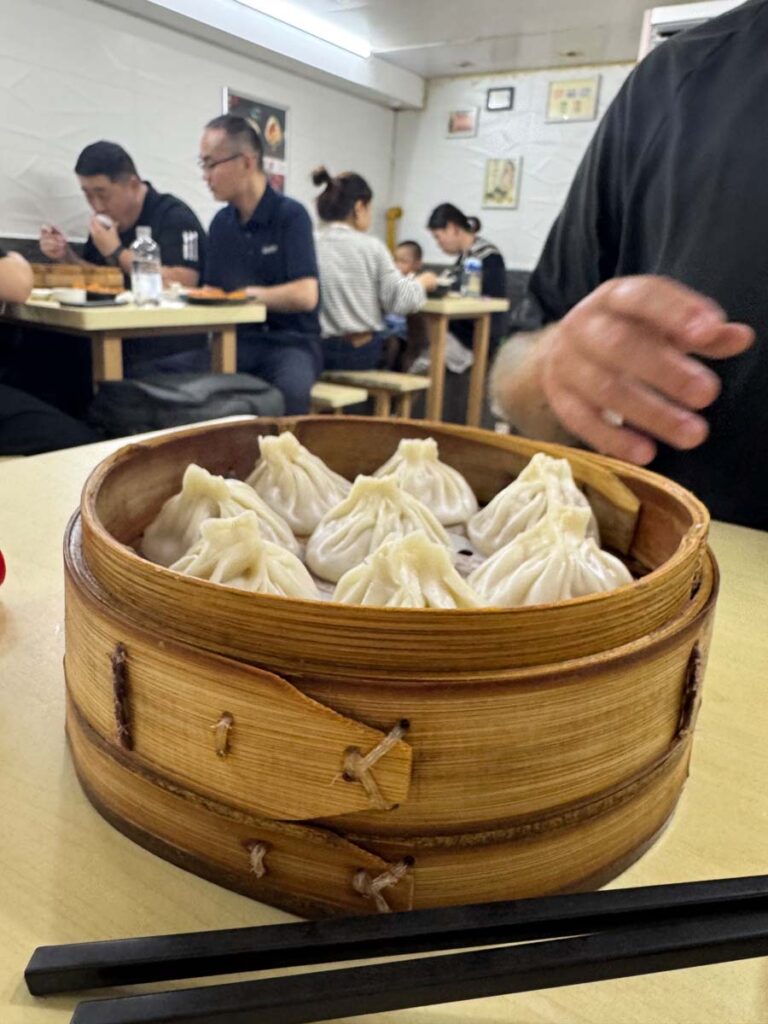
Hu Ji a Zhong Feature Fried Dumpling 胡记阿忠特色锅贴
Another small local restaurant specialising in potstickers (guotie). The dumplings are cooked until perfectly crisp on the bottom while staying juicy inside, making this a great place for a quick and inexpensive dinner. There was a queue when we arrived, but it moved quickly and was well worth the short wait
Zheying Restaurant 浙影餐厅
We stumbled across this restaurant near our hotel and ended up having one of our favourite dinners in Shanghai. It had a relaxed local atmosphere, friendly patrons and every dish we ordered was delicious.
Moo Moo By Moo Cake
If you’re looking for breakfast or a coffee break, Moo Moo by Moo Cake was a great bakery. Their fresh pastries, especially the morning buns, were the perfect way to start the day before heading out to explore the city.
How many days in Shanghai
We spent 4 nights in Shanghai. While there was still plenty we didn’t have time to see, we felt we’d experienced the city’s different sides, from the busy shopping streets and historic neighbourhoods to the quieter cafés, art districts and a day trip beyond the city. Looking back, we would probably have spent one less night here and added an extra night to Chengdu, simply because that city suited our travel style better.
2 Days
Two days is enough to experience many of Shanghai’s main highlights. You can explore Nanjing Road, wander along The Bund, and spend time discovering neighbourhoods such as the French Concession, Xintiandi or Tianzifang.
3 Days
With three days, you can explore at a more relaxed pace and venture beyond the main tourist sights. Visit the M50 Art District (50 Moganshan Road), stroll through Mengqing Garden (1000 Trees), enjoy more of Shanghai’s cafés and restaurants, or simply spend time wandering the city’s different neighbourhoods.
4+ Days
If you have four or more days, it’s worth taking at least one day trip outside the city. We visited Zhujiajiao Ancient Town, which offered a completely different atmosphere from central Shanghai. There are also plenty of other day trips we would have loved to do but simply didn’t have enough time for, including Suzhou, Hangzhou and several other nearby water towns. Having extra time also means you can explore more neighbourhoods, try different restaurants and enjoy Shanghai at a slower pace.
Practical Tips for Visiting Shanghai
Language
Compared to Chengdu and Chongqing, we found Shanghai easier to navigate as English was more widely spoken, particularly around the main tourist areas, hotels and larger restaurants. That said, don’t expect everyone to speak English, so having a translation app and a few key phrases is still helpful.
Getting Around Shanghai
Metro
Shanghai has an excellent metro system and it’s by far the easiest way to get around the city. We mostly walked between attractions in the centre and used the metro for longer journeys. Trains were frequent, clean and easy to navigate, making public transport one of the highlights of travelling around Shanghai.
As with the other cities we visited in China, we simply added a Shanghai Public Transport Card to Apple Wallet, which made travelling incredibly easy. We could tap in and out without needing to buy individual tickets.
Walking
Although Shanghai is huge, many of the main attractions around The Bund, East Nanjing Road, People’s Square and the French Concession are surprisingly walkable. We covered most of the city centre on foot, using the metro only when travelling between different neighbourhoods.
Best Time to Visit Shanghai
Spring (March to May) and autumn (September to November) are generally considered the best times to visit Shanghai, with milder temperatures and lower humidity.
We visited in September, and it was still very hot and humid, especially during the middle of the day, but the warm evenings were perfect for walking along The Bund and exploring the city’s different neighbourhoods.
Internet, Payments and Apps
Like the rest of China, you’ll need a few apps before you arrive. Alipay and WeChat Pay are accepted almost everywhere, while Trip.com made booking trains and attractions straightforward. We also recommend arranging an eSIM or VPN before you travel so you can access Google services and other websites that are blocked in China.
For a full breakdown of the apps we used, how to set them up before you arrive, and everything you need to know about internet access, mobile payments and getting around China, read our Complete Guide to the Essential Apps for Travelling in China.
Final Thoughts on Visiting Shanghai
Shanghai was a fascinating place to end our journey through China. From the futuristic skyline and historic waterfront to creative neighbourhoods and peaceful water towns, it offered a completely different experience to Chengdu and Chongqing.
Although it wasn’t our favourite city of the trip, that’s largely because we visited it last. After spending time in inland China, Shanghai felt more familiar and international. Looking back, we think it would actually make the perfect introduction to China before venturing further afield.
Whether you’re visiting for a couple of days or using it as a base for day trips like Zhujiajiao, Shanghai has plenty to offer. Wander beyond the main sights, explore its different neighbourhoods, and don’t be afraid to duck into the small local restaurants. Some of our favourite memories came from the places we found simply by walking without a plan, proving that Shanghai rewards curiosity just as much as careful planning.