Top Posts
Best Day trips from Sendai
The Sendai Travel Guide: Real Japan
A Self-Guided Art Walk in Kigali: Exploring Kacyiru’s Art Centres
Windhoek Travel Guide: Is Namibia’s Capital Worth Visiting?
Kibiji Cycling Route Rentals: A Day Trip from Okayama
Okayama Travel Guide: A Practical Base for Kurashiki and the Kibi Plain
Is Tottori Worth Visiting on a Japan Trip?
North Sumatra Itinerary: Bukit Lawang, Berastagi & Lake Toba
Lake Toba & Samosir Island: Is It Worth Visiting?
Mount Sibayak Sunrise Hike: Our Experience in Berastagi, Sumatra
LBSB World
  • Home
  • Destinations
    • Africa
      • Namibia
      • Rwanda
    • Asia
      • China
      • Indonesia
      • Japan
    • Europe
      • Albania
      • Bosnia-Herzegovina
      • Croatia
      • Montenegro
      • Netherlands
      • North Macedonia
      • Serbia
    • North America
      • Dominican Republic
  • Travel itineraries
  • Plan your trip
  • About Us
    • About Sam & Livia
    • The Story Behind Our Full-Time Travel Life
    • abearcalledpaddington
Tag:

Tottori

Livia on the Tottori Sand Dunes
Japan

Is Tottori Worth Visiting on a Japan Trip?

by Sam August 25, 2026
written by Sam

Tottori was one of the more unusual stops on our 23 day slow travel route through western Japan. After a few quieter places along the Sanin Line, it was also the first time in weeks that we noticed more tourists around again.

We stayed for 2 nights, which gave us enough time to see the famous Tottori Sand Dunes, visit the Sand Museum, eat well near the station, and enjoy a slower stop before continuing our journey.

Tottori is not a city packed with endless sights, but it does have one very clear reason to visit: the dunes. Huge sand dunes rolling down towards the sea are not something you expect to find in Japan, and that alone makes Tottori feel different from anywhere else we visited.
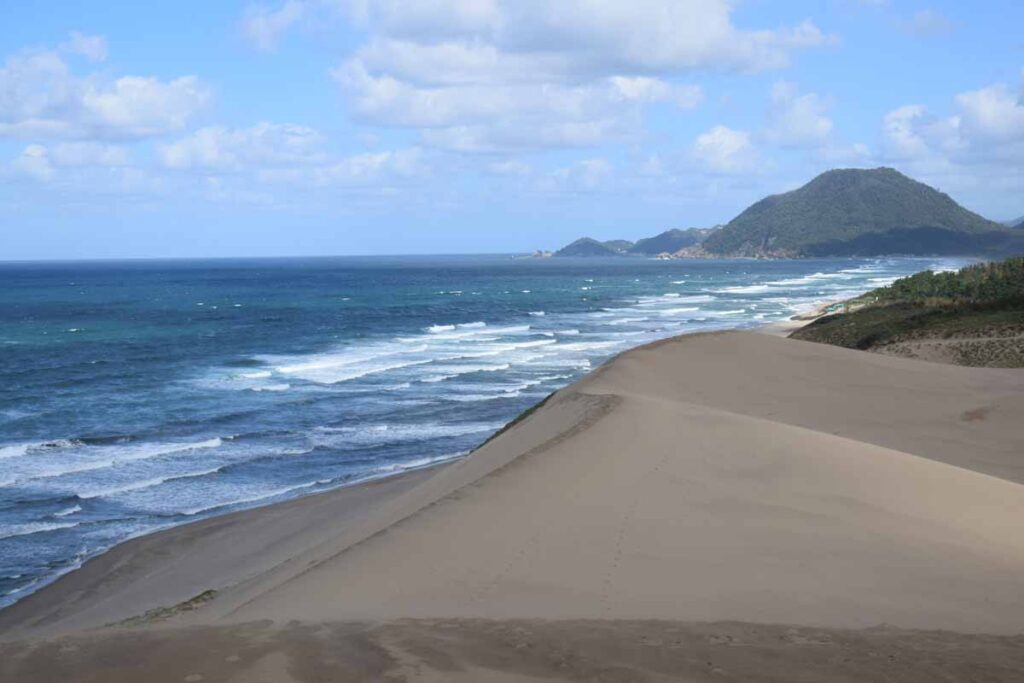
Tottori Dunes
Tottori Dunes

Where We Stayed in Tottori

We stayed at Tottori Washington Hotel Plaza.

The location was the main reason we chose it. It is close to Tottori Station, which made arriving by train, catching buses, and leaving again very easy. For a short 2-night stop, being near the station worked perfectly.
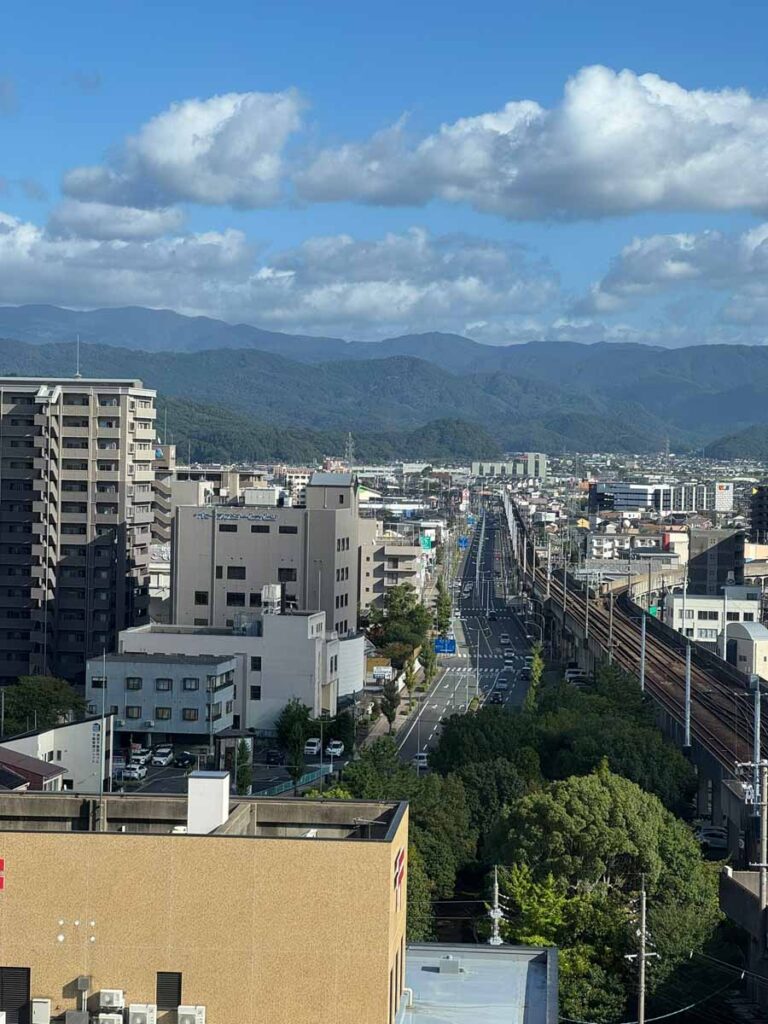
Tottori - just another Japanese City
Tottori – just another Japanese City
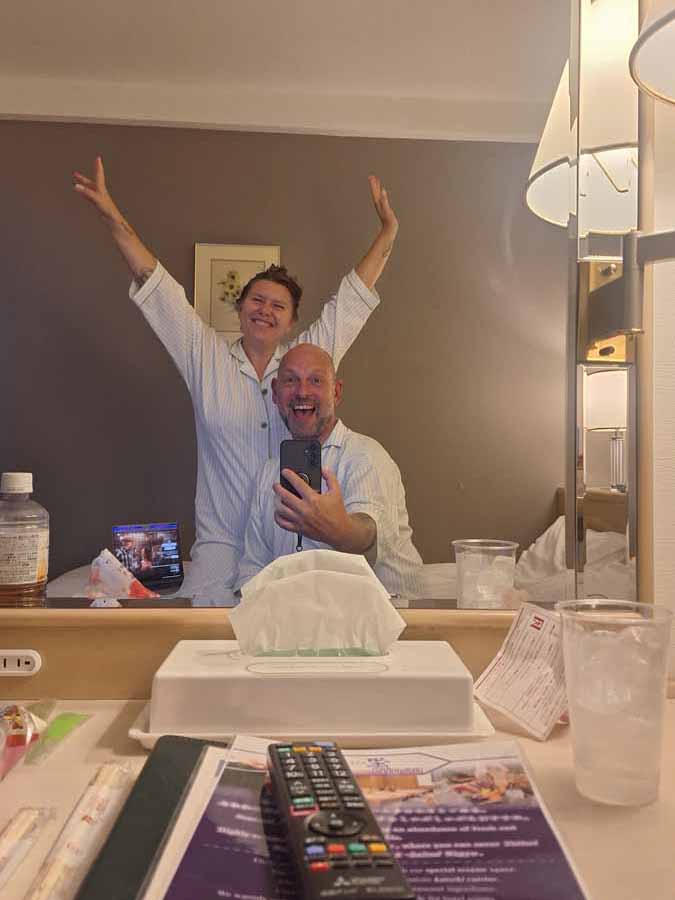
Japanese Business Hotel Pajamas

Why Visit Tottori?

The main reason to visit Tottori is the sand dunes. They are the largest sand dunes in Japan, and they sit right beside the Sea of Japan, which makes the landscape feel surprisingly dramatic.

But the dunes are not the only reason to go. The Sand Museum is genuinely impressive, especially if you visit before walking out to the dunes themselves. We also found Tottori easy to use as a short, practical stop on our slow train route through western Japan.

It felt busier than some of the smaller towns we had visited before it, but still calm compared with Japan’s major tourist cities.

Things to Do in Tottori

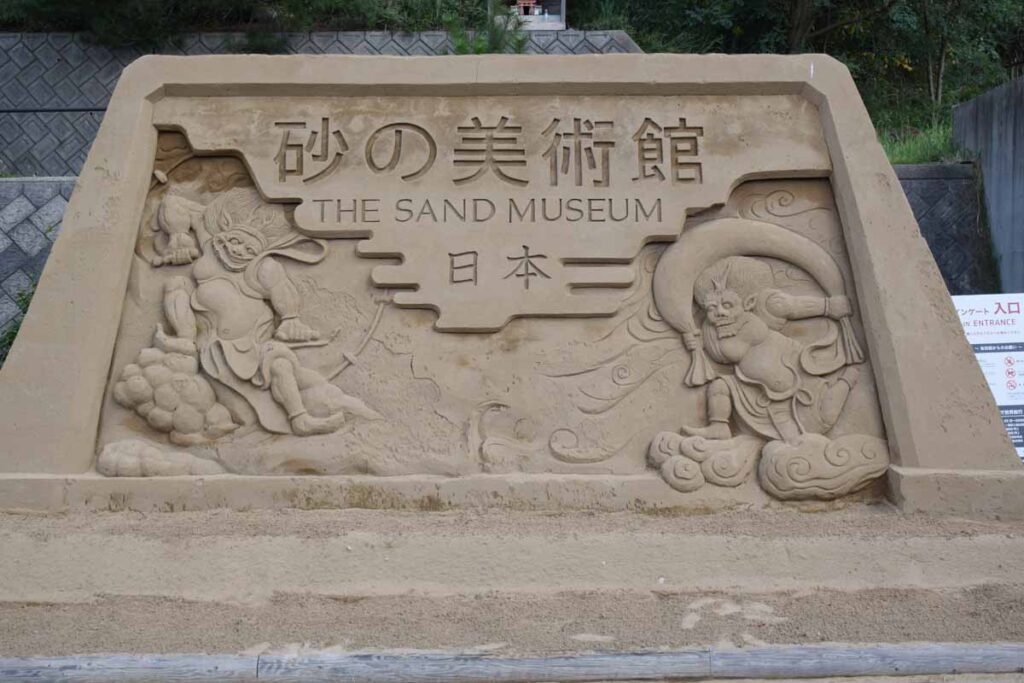
Visit the Tottori Sand Museum

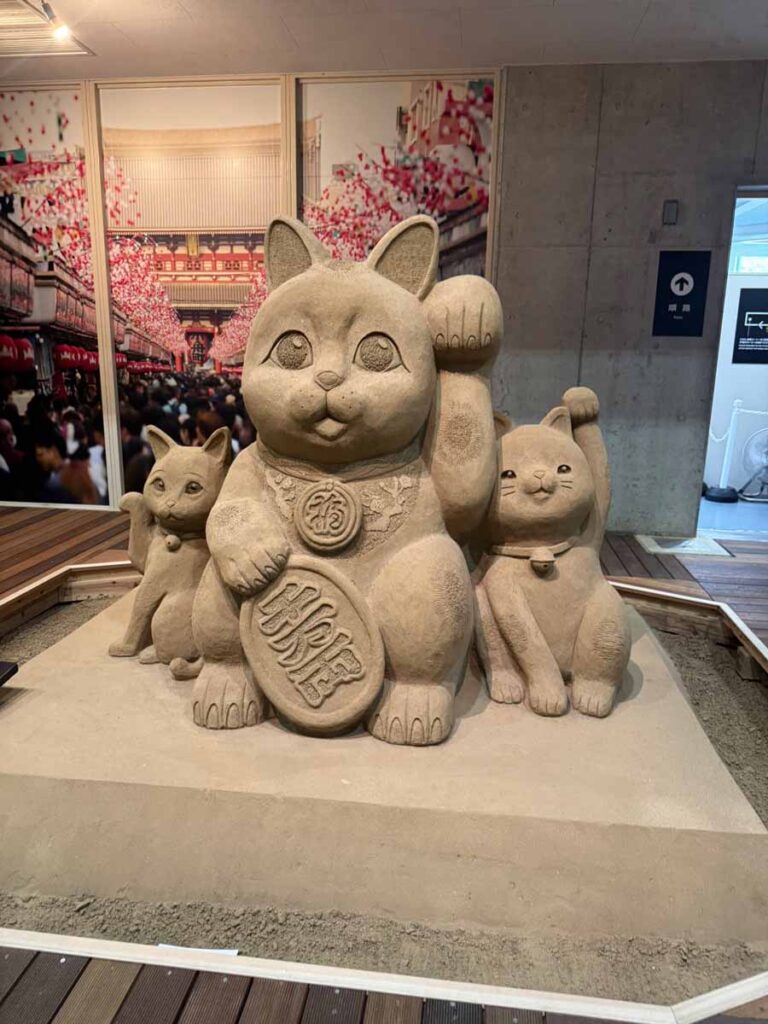
The Tottori Sand Museum was much better than we expected. It is an indoor museum filled with huge sand sculptures, and the detail is seriously impressive.

When we visited, the exhibition theme was Japan, which felt like a perfect fit for the trip. The theme changes regularly, so it is worth checking what is on before you go. The official Sand Museum website says the museum usually runs one main exhibition theme each year, with the display open from spring until early January before closing for the next exhibition changeover.

Adult entry is currently listed as ¥800, with student tickets at ¥400, according to the official Sand Museum information page.
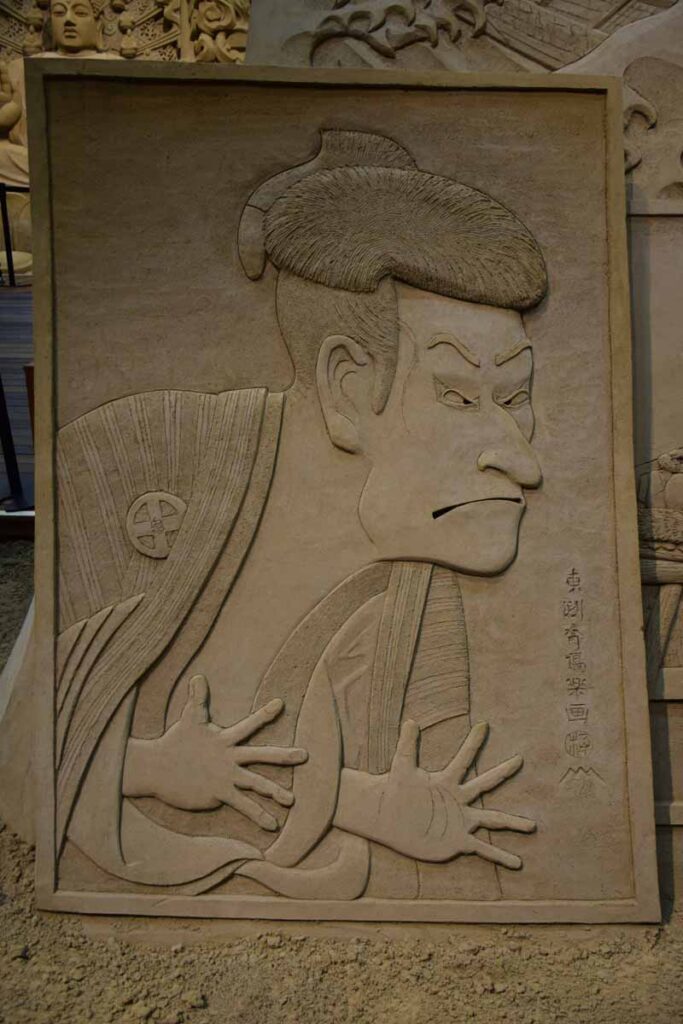
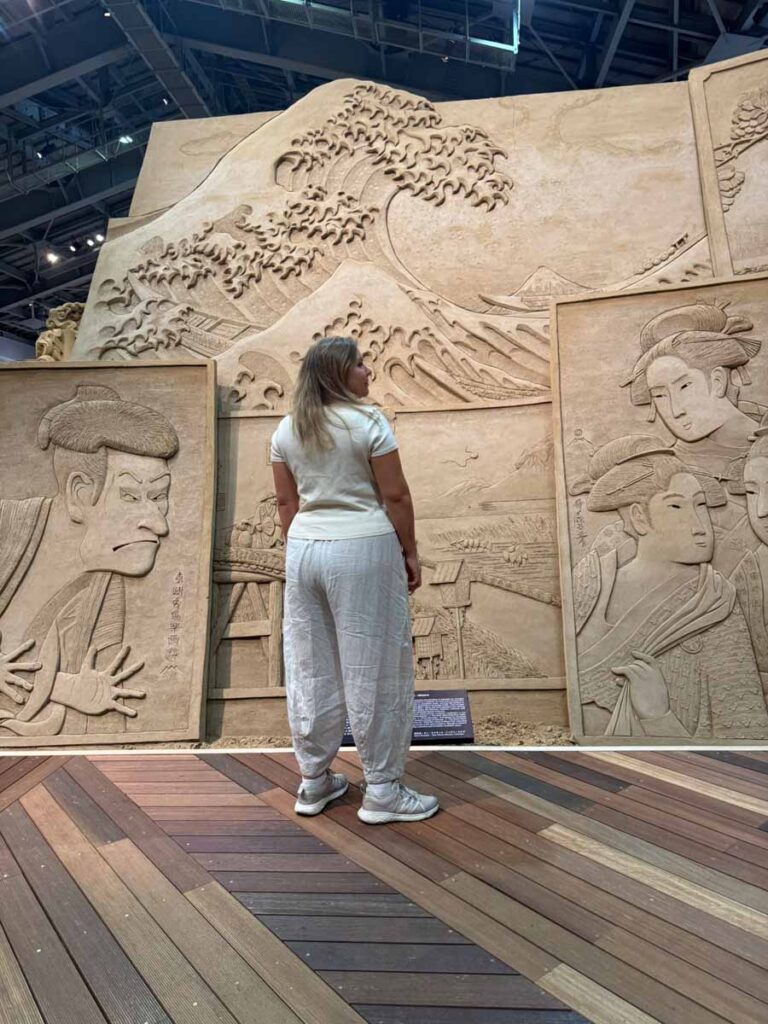
Tottori Sand Museum
Tottori Sand Museum
Tottori Sand Museum
Tottori Sand Museum
Tottori Sand Museum
Tottori Sand Museum
Tottori Sand Museum
Tottori Sand Museum

Walk Across the Tottori Sand Dunes

After the museum, cross the road and walk over to the Tottori Sand Dunes.

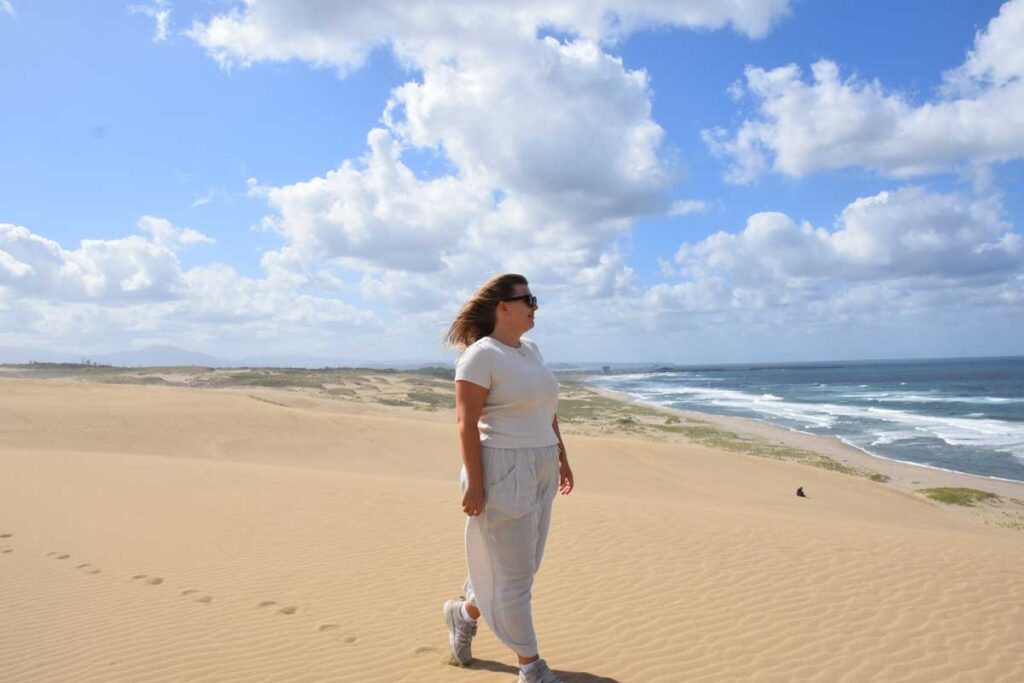
The dunes are, well, sand dunes — but sand dunes that roll all the way down towards the sea, which is what makes them special. It is a strange and slightly surreal landscape, especially in Japan, where so much of our route had been towns, mountains, rivers and old streets.

You can walk up and across the dunes, then down towards the beach if you want to. Just remember that sand is much harder work than it looks, especially if the weather is hot.

We would recommend going early. By late morning, the dunes were already getting busier, so the early bus is worth it.


Livia & Sam on the Tottori Sand Dunes
Livia on the Tottori Sand Dunes

Stop at the Sakyu Center

We got off the bus at Sakyu Center, which is near the chairlift/cable car area above the dunes.

From there, you can walk down towards the Sand Museum first, then continue to the dunes afterwards. This worked well because it meant we visited the museum before the dunes got too busy.

Just make sure you check return bus times before wandering too far. Buses are not constant, and you do not want to finish at the dunes only to realise you have a long wait.

Try the Pear Shake at Tottori Station Starbucks

Tottori is famous for pears, and we somehow ended up at Starbucks at the station drinking a pear shake. Was it the most local, hidden, off-the-beaten-path experience in Japan? Absolutely not. Was it delicious? Yes.

If the pear shake is available when you visit, it is worth trying.

Google Maps: Starbucks Tottori Station

Where to Eat in Tottori

GyuTonBaKei Yakiniku

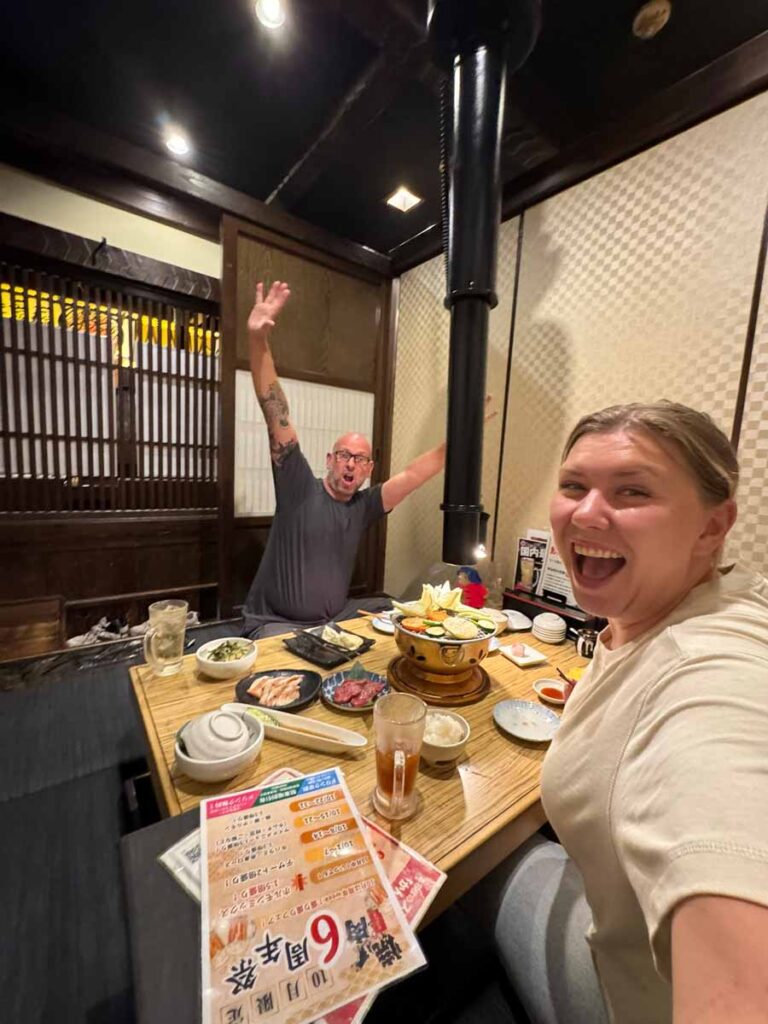
Our favourite food stop in Tottori was GyuTonBaKei Yakiniku.

It was a great local food joint: friendly, relaxed, and exactly the kind of place we love finding while travelling. The staff were super welcoming, and the food was excellent.

After a day out at the dunes, it made for a very good evening meal.

Pear shake at Tottori Starbucks
We all love Yakiniku

How to Get to Tottori Sand Dunes by Bus

The easiest way to reach the dunes without a car is by bus from Tottori Station.

When we visited, we took bus 39 from Tottori Station towards the dunes. The fare was ¥380, and the journey took around 30 minutes. We got off at Sakyu Center, which is useful if you want to start near the chairlift area and walk down towards the Sand Museum.

Official tourism information also lists buses from Tottori Station to the Sand Museum / dune area, with journey times around 20–30 minutes depending on the service. There is also a Loop Kirinjishi Bus on weekends and holidays, according to the official Tottori tourism site.

The important thing is this: there are not loads of buses.

Check your outbound and return times carefully before you go. We would suggest taking an early bus, visiting the Sand Museum first, then walking across to the dunes. Before you head too far into the sand, check what time you need to be back for the return bus.

Suggested Half-Day Route to the Dunes

This is the route we would suggest:

  1. Take an early bus from Tottori Station.
  2. Get off at Sakyu Center.
  3. Walk down to the Sand Museum.
  4. Visit the Sand Museum before it gets too busy.
  5. Exit near the lower/main entrance.
  6. Cross the road to the Tottori Sand Dunes.
  7. Walk across the dunes towards the sea.
  8. Return in time for your chosen bus back to Tottori Station.

This works well as a morning trip and leaves the afternoon free for food, coffee, or a slower wander around the station area.

How Many Days Do You Need in Tottori?

1 Day

One full day is enough if you only want to visit the Sand Museum and Tottori Sand Dunes. Arrive the night before or early in the morning, visit the dunes, then continue onwards.

2 Days

Two nights worked well for us. It gave us enough time to arrive without rushing, visit the dunes properly, eat locally, and continue our slow train route without making Tottori feel like a dash.

3+ Days

If you have more time, you could use Tottori as a base for exploring more of the coast, nearby temples, or other parts of eastern Tottori Prefecture. For our itinerary, though, 2 nights was enough.

Practical Tips for Visiting Tottori Sand Dunes

Go early if you can. The dunes can get busy by late morning.

Check bus times carefully. Services are not constant, and return timing matters.

Visit the Sand Museum before the dunes. It is indoors, structured, and easier to enjoy before you get sandy and tired.

Wear comfortable shoes. Sand is harder to walk on than it looks.

Bring water. There are facilities around the dune area, but once you are out walking, it is exposed.

Check the Sand Museum exhibition before visiting. The theme changes, and the museum closes between exhibition periods.

Be ready for wind. It is an open coastal sand area, so weather can make a big difference.

Final Thoughts on Tottori

Tottori was a worthwhile 2-night stop on our slow train route through western Japan. The city itself did not grab us in the same way as Matsue or Kurayoshi, but the dunes and Sand Museum made it memorable.

It is the kind of place that works best as part of a wider Sanin Line journey rather than a standalone city break. If you are travelling slowly through western Japan, Tottori gives you something completely different: sand, sea, sculpture, and a landscape you probably do not expect to find in Japan.

This stop was part of our wider route across western Japan. You can read the full journey here: 23 Day Japan Slow Travel Itinerary by Train
August 25, 2026 0 comments
FacebookTwitterPinterestLinkedinRedditStumbleuponWhatsappTelegramThreadsOpenAIChatGPTEmail
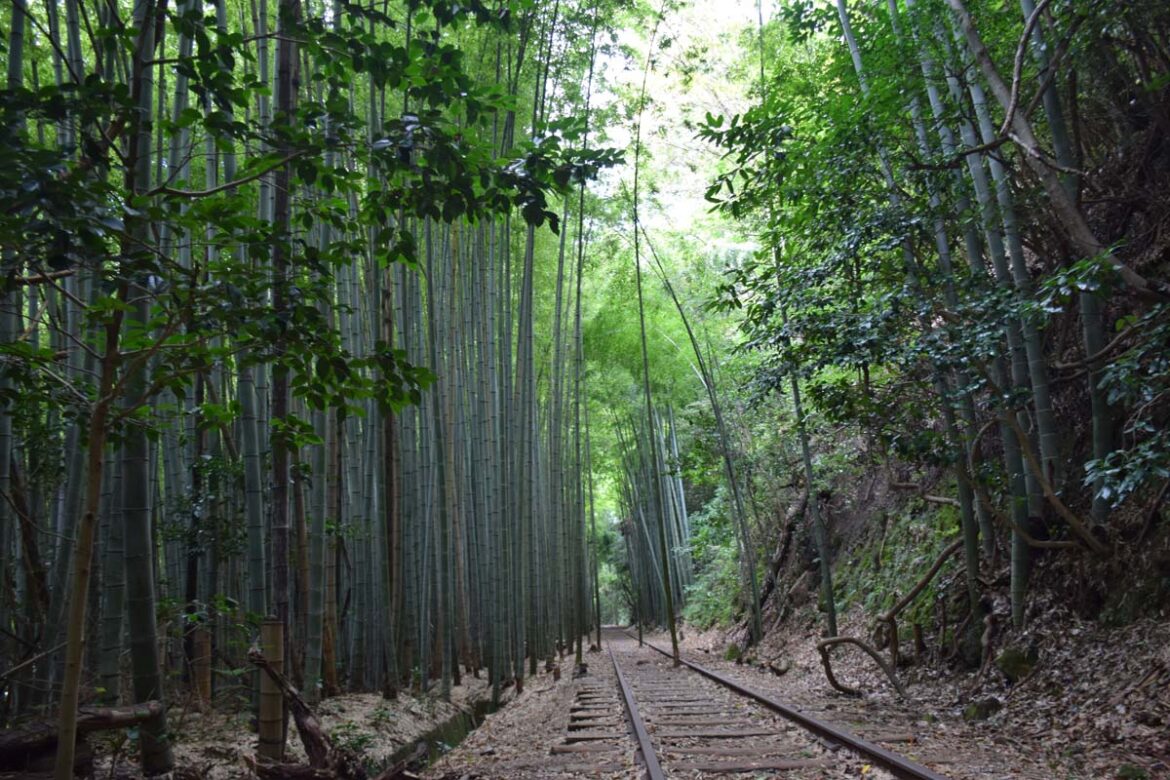
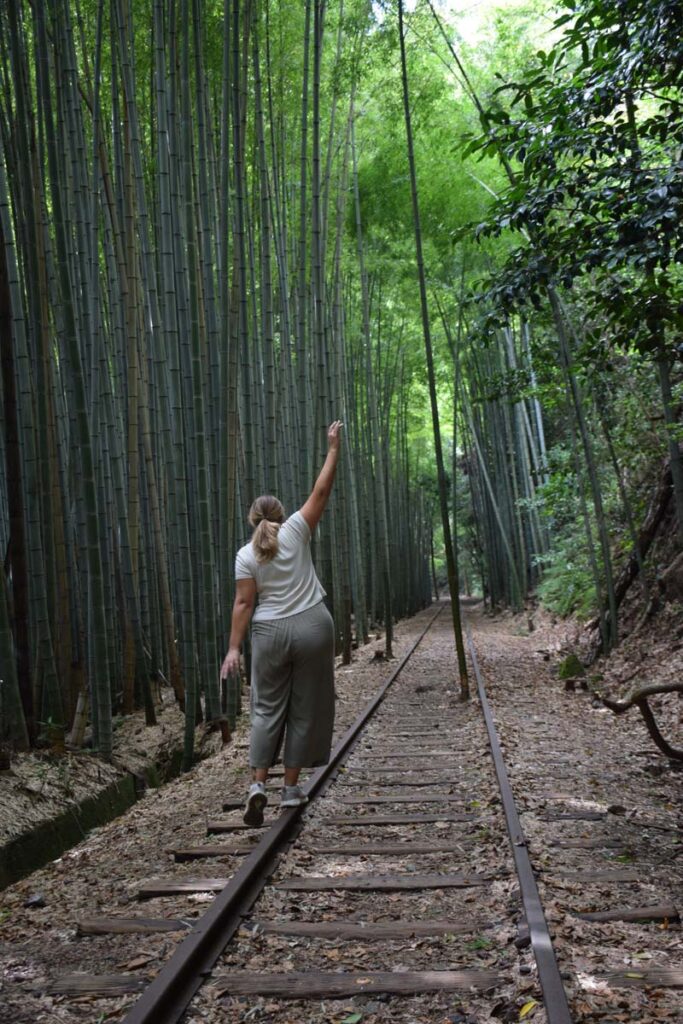
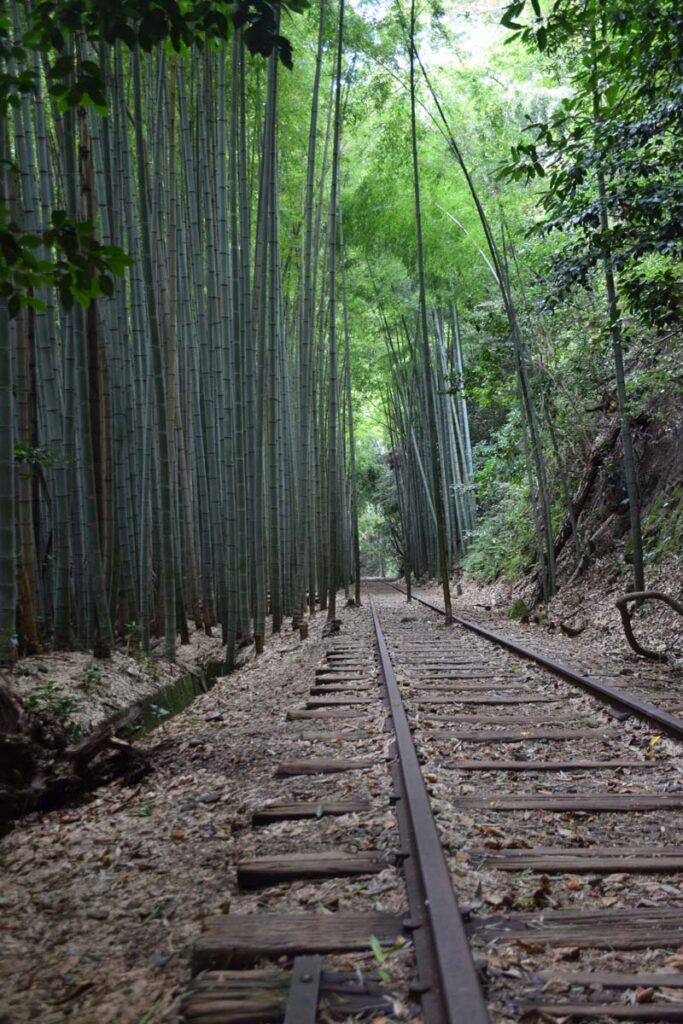
Bamboo grove at the Abandoned Kurayoshi Railway Line
Japan

How to Find the Abandoned Kurayoshi Railway Line

by Sam August 1, 2026
written by Sam

The abandoned Kurayoshi Railway Line was one of our favourite little detours in Tottori Prefecture. It is not a big polished tourist attraction, and that is exactly why we loved it. Old rails disappear into the countryside, the former Taikyuji Station still feels half-forgotten, and the bamboo grove looks like something from a Studio Ghibli scene.

We visited in the morning and did it as a half-day trip from Kurayoshi. It takes a little planning by public transport, but it is absolutely worth the effort if you like quiet places, old railway lines, and finding something that still feels genuinely hidden.

If you’re staying in town, pair this with our full Kurayoshi travel guide for the old town, pear museum, cafés and where we stayed.

Bamboo grove at the Abandoned Kurayoshi Railway Line
Abandoned Kurayoshi Railway Line

What Is the Abandoned Kurayoshi Railway Line?

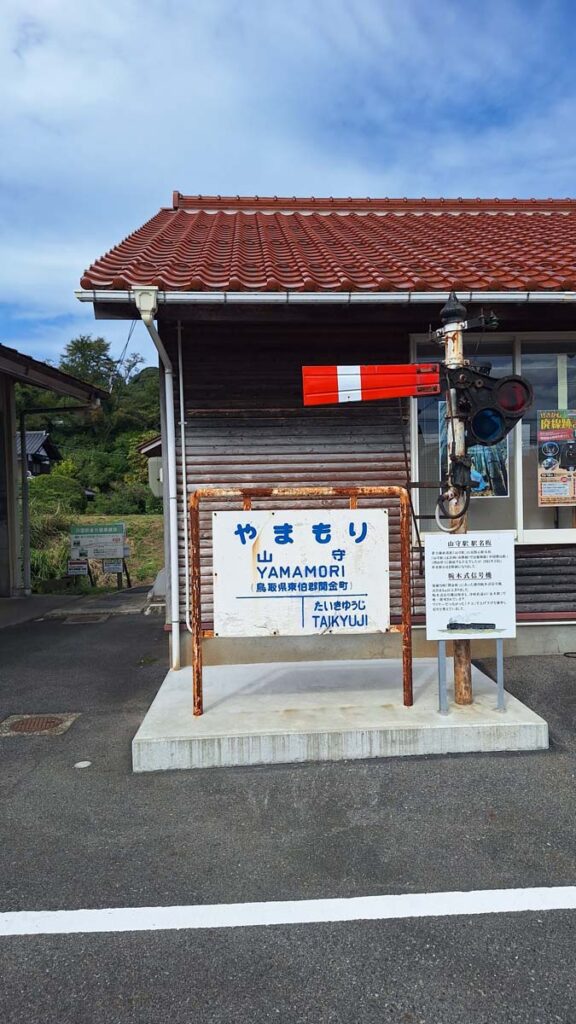
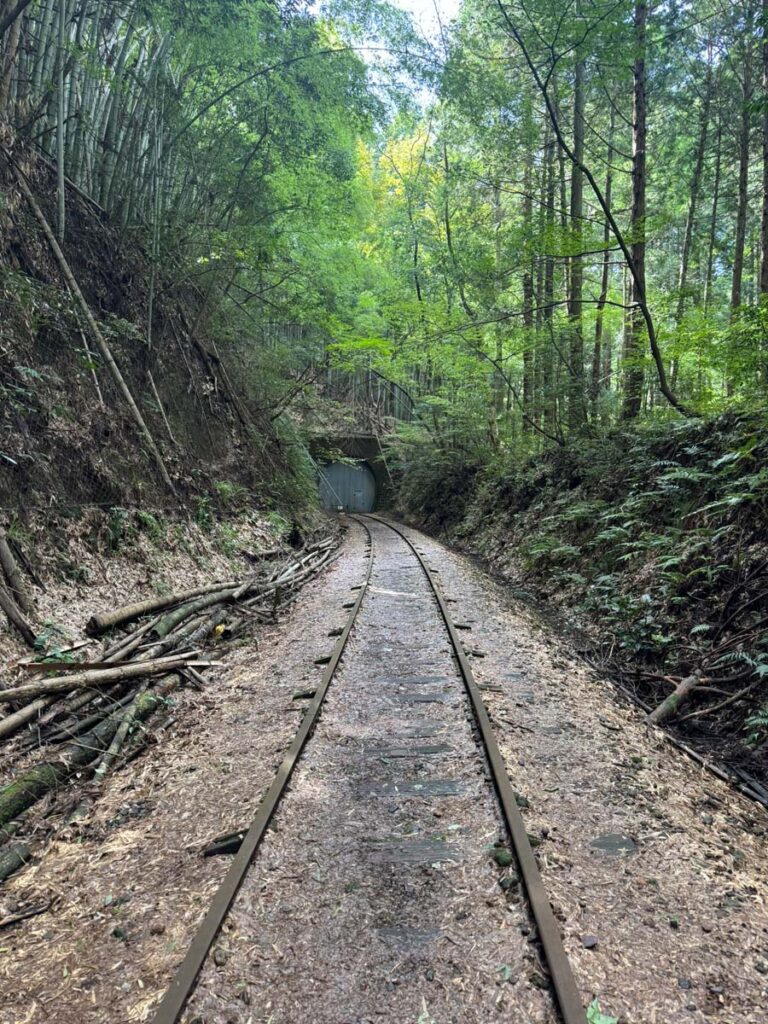
The old Kurayoshi Line once connected Kurayoshi Station with Yamamori Station, running for around 20 kilometres through the Sekigane area. The line closed in 1985, but parts of the track, platforms and railway remains are still visible today.

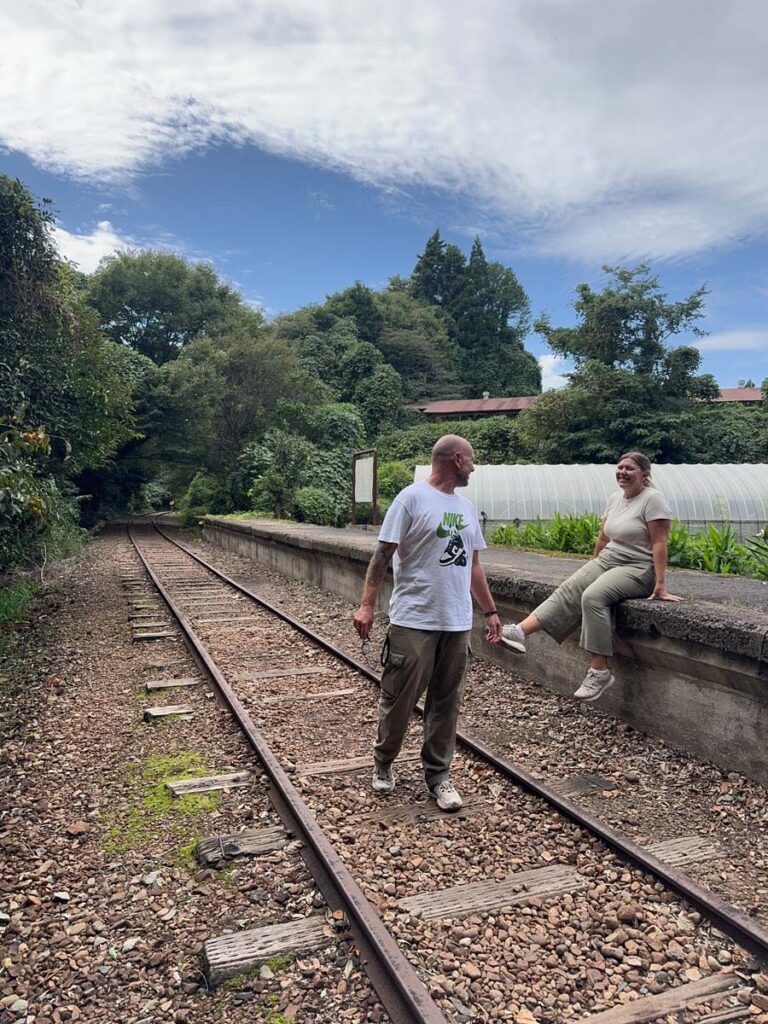
The most atmospheric section is around the former Taikyuji Station ruins, where the old track continues towards the bamboo grove and Yamamori Tunnel. The rails are still there, but nature has slowly taken over, which is what makes the place so special.

You can walk freely around the Taikyuji Station ruins and bamboo grove area, but Yamamori Tunnel itself is not normally open to walk through unless you join an official event or guided tour.

Where Is the Abandoned Kurayoshi Railway Line?

The section most people visit is near the former Taikyuji Station ruins in Sekigane, outside central Kurayoshi.

Google Maps link: Former Kurayoshi Line / Taikyuji Station area

Useful search terms for Google Maps:

  • 旧国鉄倉吉線 泰久寺駅跡
  • 357-5 Sekiganecho Taikyuji, Kurayoshi, Tottori 682-0404, Japan

How to Get There by Bus from Kurayoshi Station

Start at Kurayoshi Station bus terminal. Buses for the Sekigane area usually leave from platform 2.

The most useful route is the Nihon Kotsu Sekigane Line. The easiest direct option is to take the bus towards Akedaka / Sekigane and get off at Taikyuji, but this is not always convenient because direct buses to Taikyuji are very limited during the day, so check the local timetable.

The easiest and most flexible option (which we took) is to take the bus from Kurayoshi Station to Sekigane Chosha-mae, which is the stop for the Kurayoshi City Hall Sekigane Branch area.

Google Maps link: Kurayoshi City Hall Sekigane Branch

From Kurayoshi Station to Sekigane Chosha-mae / City Hall the bus takes around 45 minutes.

From there, allow roughly 30 minutes on foot to reach the former Yamamori Station, depending on your pace and how many photos you stop for.

From Yamamori Station, walk behind and left along the old tracks to Taikyuji Station ruins, allow another 5 minutes or so to walk along the railway line towards the bamboo grove.

So, as a simple morning route:

  • Kurayoshi Station to Sekigane area by bus: around 45 minutes
  • Sekigane City Hall area to Yamamori Station ruins: around 30 minutes on foot
  • Yamamori Station to Taikyuji Station (which then ruins to bamboo grove: around 20 minutes on foot)
  • Time exploring and taking photos: 45–90 minutes
  • Total trip: half a day

If you can line up the bus times well, this works nicely as a morning trip from Kurayoshi. Just remember to check the departure times before you leave the City Hall bus stop. Google Maps will also help you with transport times.

Countryside around Kurayoshi
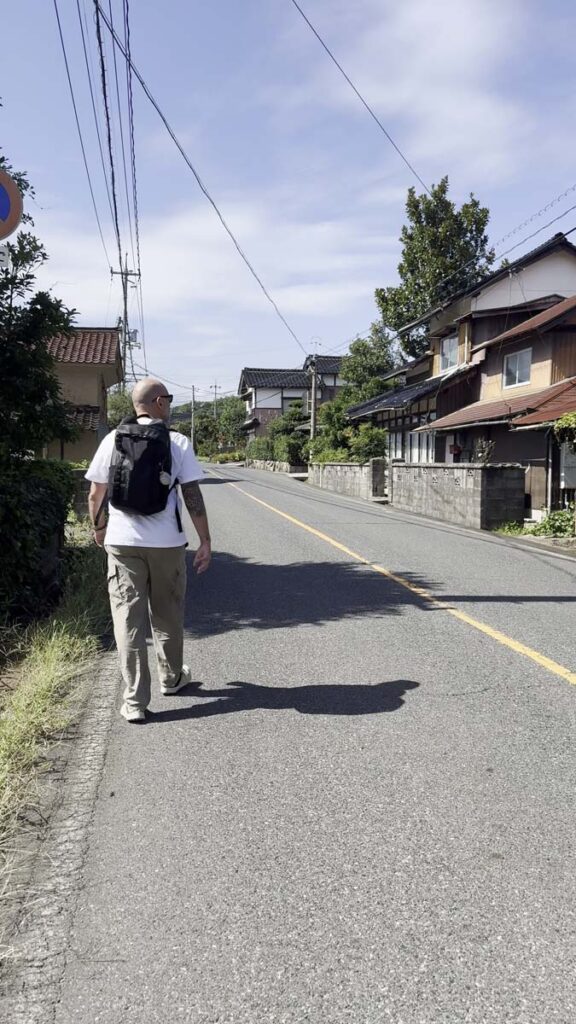
Walking from Kurayoshi City Hall Sekigane Branch to Yamamori Station

The Route We Took

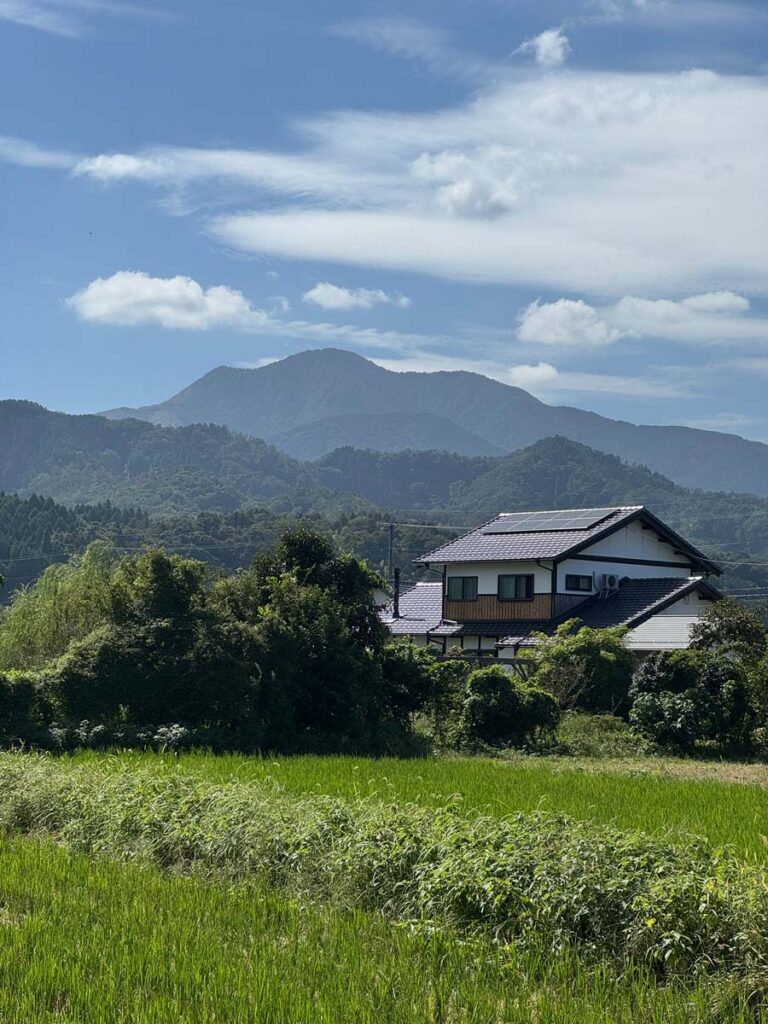
We started from Kurayoshi Station and took the bus out towards Sekigane. Once you leave the town behind, the journey quickly becomes rural, with small villages, rice fields and mountains.

After getting off near the Sekigane City Hall area, we walked towards the former railway line. It’s a straight, flat road that continues past the gas station. It’s not a difficult walk, but it does feel like you are heading further and further away from the obvious tourist route. That is part of the charm.

The first main goal is the former Yamamori Station. From there you need to walk about 20 minutes to the Taikyuji Station. This is where the abandoned railway atmosphere really begins. You can see the old platform area, rails and signs, and it already feels wonderfully quiet. Walk behind the old station and turn left and begin walking along the tracks.

Continue along the old line towards the bamboo grove. The actual line breaks up a bit, but you can see where it goes. There’s a road crossing, so go right up a little hill and re-join the line at the old station. The rails run into the trees, then the bamboo closes in around the track, and it feels completely different from the rest of Kurayoshi. We had the place entirely to ourselves.

It is not a long walk, but it is slow in the best way. You will want to stop constantly for photos.

Can You Walk Through Yamamori Tunnel?

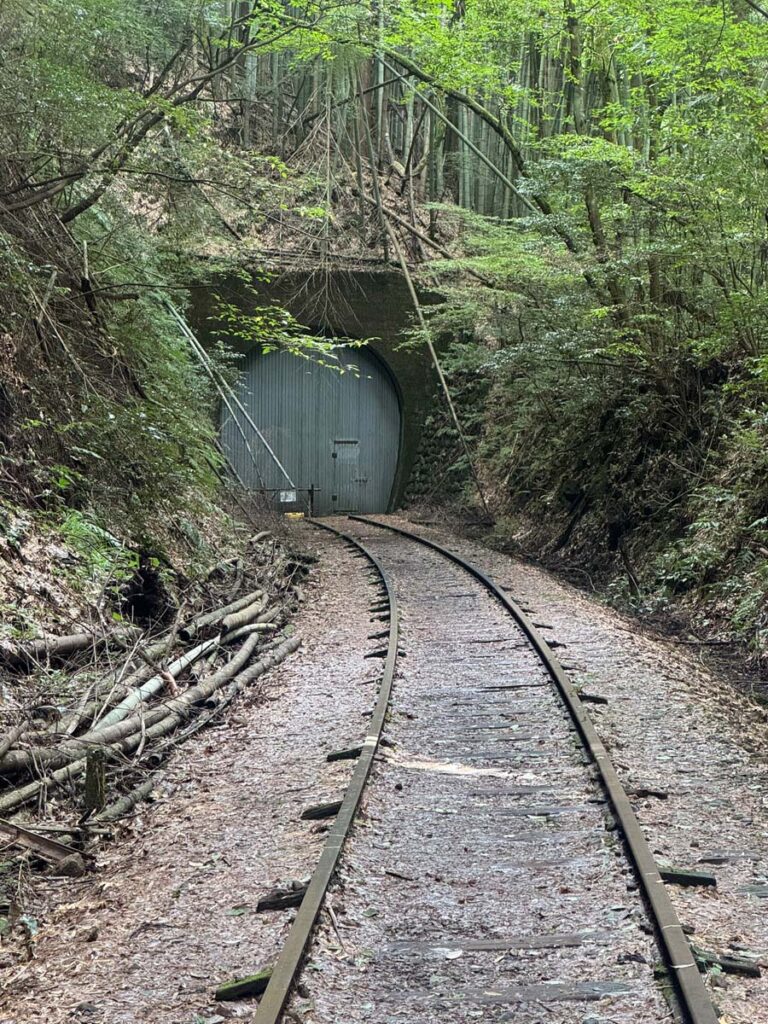
No. It’s sealed up, there is a locked door.

The Yamamori Tunnel is beyond the bamboo grove, but it is not normally open for casual visitors to walk through. According to the official Kurayoshi tourism information, you need to join an organised walking event or guided tour if you want to enter the tunnel.

For most visitors, the Taikyuji Station ruins and bamboo grove are the main reason to come anyway. You still get the abandoned railway feeling without needing to enter the tunnel.

Entrance to Yamamori Tunnel

What to Bring

You do not need hiking gear, but this is not a city stroll either.

Bring:

  • Comfortable shoes
  • Water
  • A snack, especially if you are doing it in the morning
  • Sun protection in warmer months
  • A light rain jacket if the weather looks changeable
  • Offline maps or the location saved in Google Maps
  • A portable charger
  • Cash (you’re in Japan afterall)
  • Your camera or phone with plenty of battery

The walking is not technically difficult, but the ground can be uneven around the tracks. Watch your step, especially if it has been raining.

How Long Do You Need?

We did this as a half-day morning trip from Kurayoshi, and that felt about right.

If you only want to see the old station ruins and bamboo grove, you do not need a full day. The main thing is timing the buses properly, because public transport is not as frequent as it is in bigger Japanese cities.

A relaxed half-day plan would look something like this:

  • Morning bus from Kurayoshi Station
  • Walk to the former Yamamori Station , then to Taikyuji Station
  • Continue to the bamboo grove
  • Take photos and explore slowly
  • Walk back towards Sekigane
  • Bus back to Kurayoshi
  • Lunch or coffee back in town

If you are travelling by car, it is much easier and quicker, but going by bus made it feel like more of a little adventure.

Is It Worth the Effort?

100% Yes, if you like quiet, unusual places.

This is not somewhere with big crowds, souvenir shops or polished attractions. It is a peaceful abandoned railway walk in the countryside, and that is exactly what makes it memorable.

For us, it was one of those small Japan moments that stuck with us more than expected. A quiet bus ride, a rural walk, an old station, and railway tracks disappearing into bamboo. Simple, but brilliant.

Practical Tips for Visiting

Check the bus times before you go, ideally the day before. The direct bus to Taikyuji is limited, so you may need to travel via the Sekigane City Hall area instead.

Save the map location before leaving Kurayoshi Station. Mobile signal may be fine, but this is not the place to start guessing.

Go in the morning if you can. It gives you more breathing room with buses and means you can be back in Kurayoshi for lunch or coffee afterwards.

Do not enter Yamamori Tunnel unless it is part of an official open day or guided tour.

Wear proper shoes. The route is easy, but the railway area is uneven in places.

Where We Stayed in Kurayoshi

We stayed at Hotel St Palace Kurayoshi, just opposite Kurayoshi Station.

The location was very convenient for arriving and leaving by train, but it did mean we needed to catch a bus into the old town area. That trade-off worked fine for us, especially as Kurayoshi’s buses were straightforward enough once we knew where we were going.

Final Thoughts

Finding the abandoned Kurayoshi Railway Line took a bit more effort than simply visiting Kurayoshi’s old town, but that is what made it feel special. It was quiet, slightly odd, beautiful in a forgotten sort of way, and completely different from the usual Japan sightseeing stops.

If you are spending two nights in Kurayoshi, this is one of the best little half-day trips you can do.

This stop was part of our wider slow travel route through western Japan. You can read the full journey here: 23 Day Japan Slow Travel Itinerary by Train
Save the pin

August 1, 2026 0 comments
FacebookTwitterPinterestLinkedinRedditStumbleuponWhatsappTelegramThreadsOpenAIChatGPTEmail
Japan

Kurayoshi Travel Guide: Old Town, Pears and Railway Ruins

by Sam August 1, 2026
written by Sam

Kurayoshi was one of the quieter stops on our 23 day slow train route through western Japan, and that was exactly what made it memorable. We stayed for 2 nights, using the city as a slower stop between bigger names on the Sanin Line.

It is not a place packed with major sights, but Kurayoshi has a lovely old town, some excellent coffee, a wonderfully odd pear museum and one of the most atmospheric abandoned railway walks we found in Japan.

Nashikkokan, the Tottori Nijusseiki Pear Museum
Kurayoshi Old Town
Kurayoshi Old Town
Countryside around Kurayoshi

Where We Stayed in Kurayoshi

We stayed at Hotel St Palace Kurayoshi, just opposite Kurayoshi Station.

The location was very convenient for arriving and leaving by train, but it did mean we needed to catch a bus into the old town area. That trade-off worked fine for us, especially as Kurayoshi’s buses were straightforward enough once we knew where we were going.

Why Visit Kurayoshi?

Kurayoshi is best known for its White Wall Warehouses district, a preserved old merchant area with canals, stone bridges, red-tiled roofs and traditional buildings. It is small, peaceful and easy to explore slowly.

The town also has a few historic residences, cafés, local beer and one very unusual museum dedicated entirely to pears. And if you are willing to make the effort, the abandoned former Kurayoshi railway line near Sekigane is genuinely special.

Kurayoshi probably is not somewhere we would cross Japan specifically to visit, but as a stop on a slow regional train journey, it worked beautifully.

Things to Do in Kurayoshi

Walk Around the White Wall Warehouses District

The prettiest part of Kurayoshi is the White Wall Warehouses district, also known as 白壁土蔵群.

This is the area to wander without much of a plan. You’ll find old storehouses, canals, small bridges, shops, cafés and quiet streets that feel very different from Japan’s larger tourist towns.

We especially liked walking around 東仲町通り / Higashinakamachi Street, where the old buildings and waterways give Kurayoshi its most photogenic side.

Kurayoshi White Wall Warehouses District
Visit Daigakuin Temple
Kurayoshi shopping
Kurayoshi shopping

Visit Toyoda Family Residence

Toyoda Family Residence is one of Kurayoshi’s traditional merchant houses. It is a good stop if you want to understand a little more about the town’s historic architecture rather than just walking past the old buildings from the outside.

It is not a huge attraction, but it fits nicely into a slow walk around the old town.

Visit Kurayoshi Yodoya, Former Makita Family Residence

We also visited Kurayoshi Yodoya, the former Makita Family Residence. This old merchant house is now a small museum and is one of the most interesting historic buildings in town.

One of our favourite memories from Kurayoshi was meeting the lovely volunteer ladies here. Nobody spoke much English, but somehow we still had a brilliant conversation, with plenty of smiling, pointing, translation attempts and shared enthusiasm.

Sometimes those small human moments are the things you remember most.

Visit Daigakuin Temple

Daigakuin Temple is another quiet stop you can add while exploring Kurayoshi. Like much of the city, it is not about rushing through major attractions, but about slowing down and letting the town unfold a little.

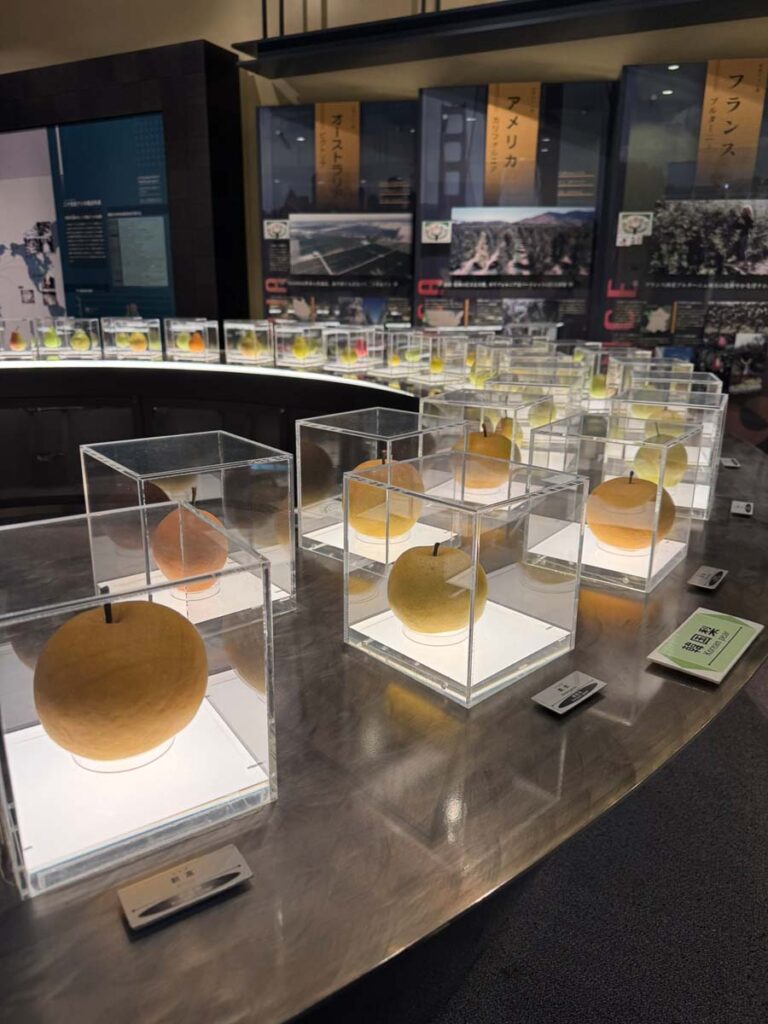
Visit Nashikkokan, the Tottori Nijusseiki Pear Museum

One of the strangest and most fun places we visited in Kurayoshi was Nashikkokan, the Tottori Nijusseiki Pear Museum.

Yes, it is a museum about pears. And yes, it is much better than that sounds.

Tottori is famous for its 20th Century Pears, and this museum is dedicated to the history, farming and culture around them. It is slightly odd, very wholesome and surprisingly enjoyable. If you like regional museums that fully commit to one very specific thing, you’ll probably enjoy it too.

Nashikkokan, the Tottori Nijusseiki Pear Museum
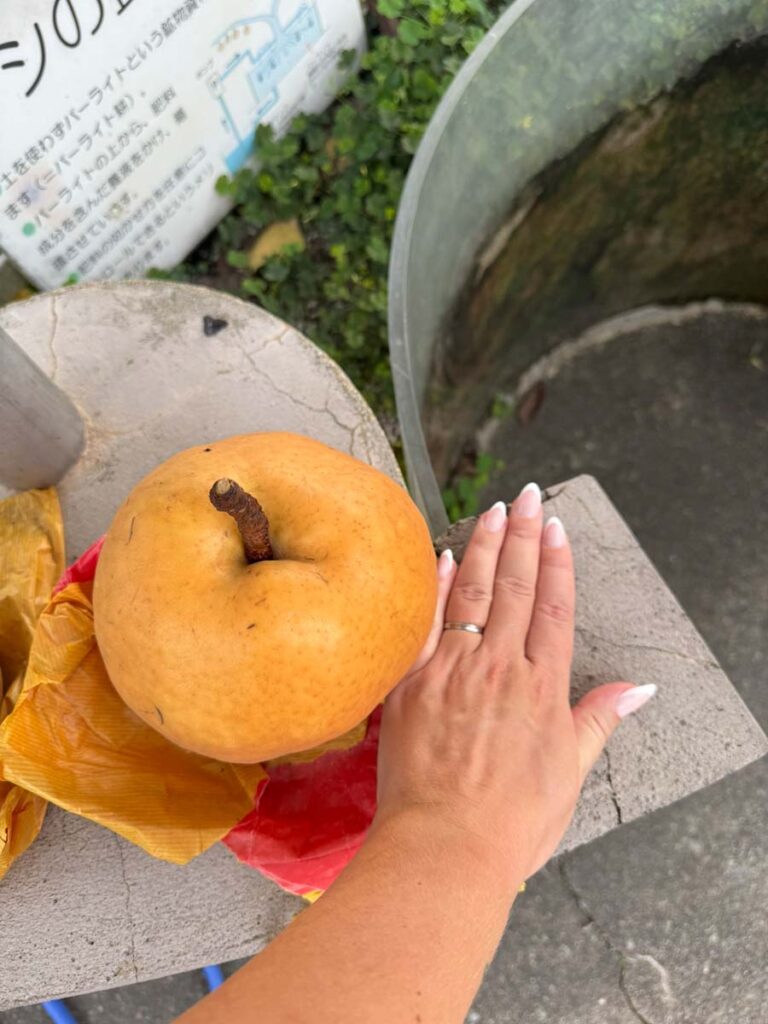
Giant pears at Nashikkokan, the Tottori Nijusseiki Pear Museum
fruit hats at Nashikkokan, the Tottori Nijusseiki Pear Museum

Find the Abandoned Kurayoshi Railway Line

Our favourite side trip from Kurayoshi was visiting the old abandoned railway line near Sekigane.

The former Kurayoshi Line once ran from Kurayoshi towards Yamamori, but it closed in 1985. Today, parts of the old track remain, including a beautiful section through bamboo forest near the former Taikyuji Station area.

It felt like something from a Studio Ghibli film: old railway tracks, bamboo, greenery and absolutely no crowds when we visited. It took a bit more effort to reach by bus, but it was completely worth it.

If you want to visit the old tracks yourself, we’ve written a separate guide on how to find the abandoned Kurayoshi Railway Line with bus details, walking times and the route to the bamboo grove.

The former Kurayoshi Line
Abandoned Kurayoshi Railway Line

Where to Eat and Drink in Kurayoshi

Harukiya Cafe

Harukiya Cafe was a lovely stop in the old town area. It is set in a renovated traditional building and makes a good coffee break while exploring the White Wall Warehouses district.

BrewLab KURAYOSHI

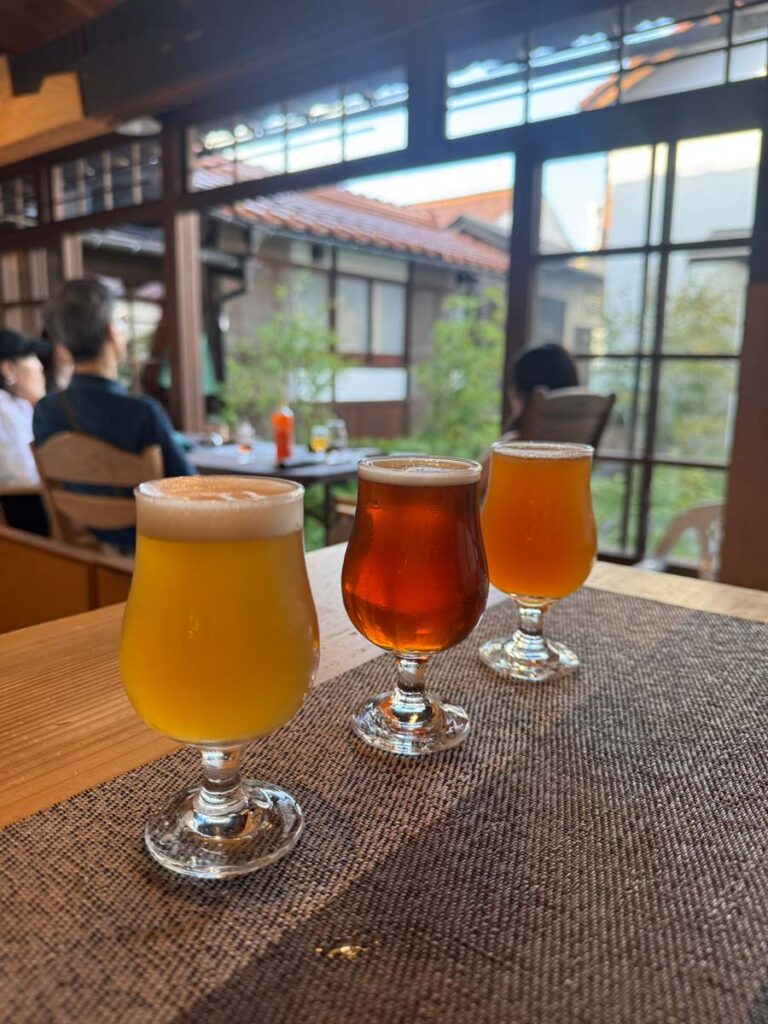
BrewLab KURAYOSHI is a local craft beer spot in the old town, close to the warehouse district. If you like finding small local breweries while travelling, this is an easy one to add to your Kurayoshi walk.

Yokohama Iekei Ramen Yoshiokaya Kurayoshi Station Branch

Near the station, we ate at 横浜家系ラーメン吉岡家 倉吉駅前店, a ramen shop close to Kurayoshi Station.

It was convenient, filling and exactly what we needed after a day of buses and walking. It also stood out because the shop was run by women, which made it feel a little different from many ramen places we had visited.

Tasting at BrewLab KURAYOSHI
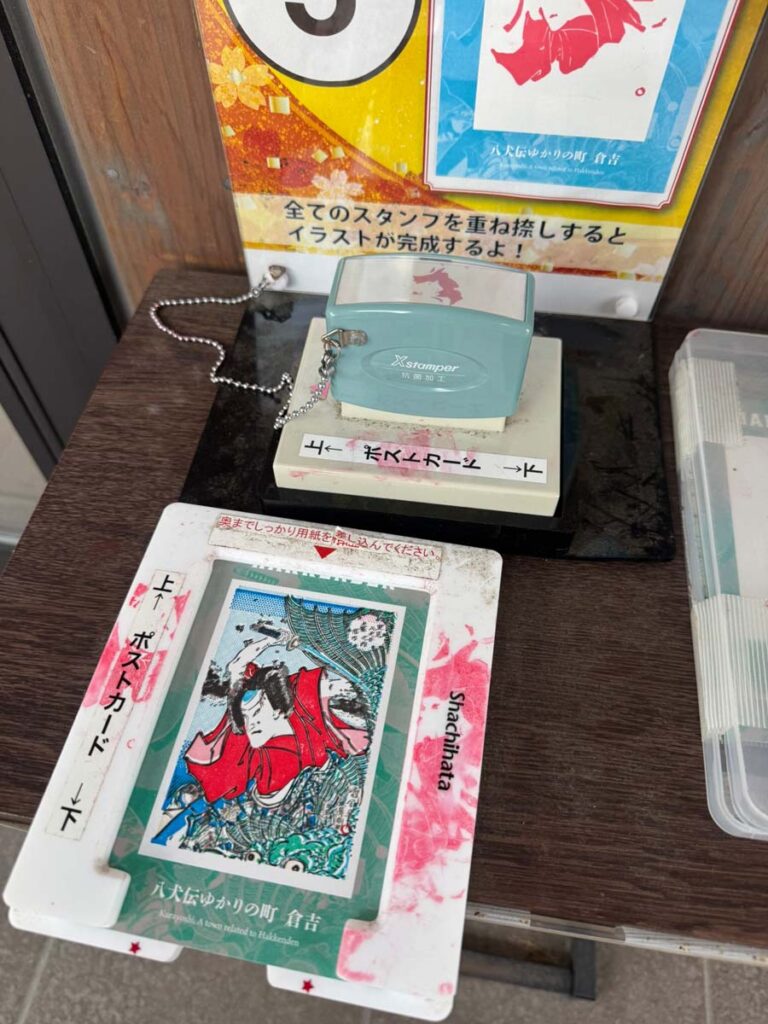
Collect the stamps from around Kurayoshi Old Town

How Many Days Do You Need in Kurayoshi?

1 Day

One day is enough to see the White Wall Warehouses district, visit one or two historic houses, stop for coffee and get a feel for the old town.

2 Days

We stayed 2 nights, which gave us time to explore Kurayoshi slowly and also make the trip out to the abandoned railway line near Sekigane. If you are following a slow regional train route, this felt like the right amount of time.

3+ Days

You probably only need three days or more if you want to use Kurayoshi as a base for nearby areas, visit Misasa Onsen, or explore more of central Tottori Prefecture.

Getting Around Kurayoshi

Kurayoshi Station is not right beside the old town, so you will probably need to use local buses unless you have a car.

For the White Wall Warehouses district, look for buses heading towards the old town / Akagawara / Shirakabe area. For the abandoned railway line, you’ll need a bus towards Sekigane, then a walk.

As always with rural Japan, check the return bus times before heading out, especially if you are visiting places outside the city centre.

Final Thoughts on Kurayoshi

Kurayoshi is quiet, gentle and a little unusual. The old town is pretty, the coffee was good, the pear museum was far more fun than expected, and the abandoned railway line was one of the most memorable detours of our western Japan trip.

It is not a blockbuster destination, and that is part of the appeal. For us, Kurayoshi worked best as a slow stop on our 23 day slow train route through western Japan, giving us time to enjoy a smaller city that many travellers simply pass by.

August 1, 2026 0 comments
FacebookTwitterPinterestLinkedinRedditStumbleuponWhatsappTelegramThreadsOpenAIChatGPTEmail

Recent Posts

  • The Sendai Travel Guide: Real Japan

  • A Self-Guided Art Walk in Kigali: Exploring Kacyiru’s Art Centres

  • Windhoek Travel Guide: Is Namibia’s Capital Worth Visiting?

We use Safetywing

We use THS

Trusted House Sitters

Here’s 25% off your annual membership to TrustedHousesitters - thanks to your pet loving pals at LBSBWorld.

Join now with 25% Off!

We use NordVPN

NordVPN

Get 3 months of NordVPN right now!


The best VPN service for a free, open internet

Get NordVPN!

We use Wise

Wise

Get Zero Fees on a transfer up to €500


Spend in 150+ countries like a local with Wise card

Get Wise!

Follow us on Instagram

A Bear Called Paddington abearcalledpaddington 🌍 7 years full-time travel
Follow on Instagram
©2026 LBSBWorld - All Right Reserved - Designed and Developed by Livia & Sam
LBSB World
  • Home
  • Destinations
    • Africa
      • Namibia
      • Rwanda
    • Asia
      • China
      • Indonesia
      • Japan
    • Europe
      • Albania
      • Bosnia-Herzegovina
      • Croatia
      • Montenegro
      • Netherlands
      • North Macedonia
      • Serbia
    • North America
      • Dominican Republic
  • Travel itineraries
  • Plan your trip
  • About Us
    • About Sam & Livia
    • The Story Behind Our Full-Time Travel Life
    • abearcalledpaddington