Table of Contents
Most people come to Bukit Lawang for one reason: to trek into the Sumatran rainforest in search of orangutans.
That was the main reason we came too, but after spending a week here we discovered that Bukit Lawang is also a lovely place to simply stay for a while and relax in nature.
Set alongside the Bohorok River on the edge of Gunung Leuser National Park, the village is surrounded by dense green rainforest. Away from the orangutan trekking, there isn’t a huge list of things you need to see or do, and that’s part of the appeal. We spent our days walking along the river, exploring the village, eating at small restaurants and enjoying being surrounded by nature.
If your North Sumatra itinerary allows it, we’d recommend staying a little longer rather than arriving, doing the trek and immediately leaving again.
How to Get to Bukit Lawang from Medan airport
We flew into Medan, the main gateway to Bukit Lawang and northern Sumatra, and arranged a private pick-up from the airport with our hotel.
The drive from Kualanamu International Airport (Medan) to Bukit Lawang usually takes around 3.5–4.5 hours, depending on traffic.
As you get closer to Bukit Lawang, the busy city streets gradually give way to smaller towns, plantations and increasingly green countryside.
Once you arrive, it’s worth knowing that parts of Bukit Lawang are pedestrian-only. Depending on where you’re staying, you may need to walk the final section to your accommodation with your luggage. As we booked our pick up with the hotel, the hotel staff were there meeting us and helping us with our luggage to the hotel.
Where to Stay in Bukit Lawang
We stayed in three different places during our eight nights in Bukit Lawang, which gave us a good feel for the different accommodation available around the village.
Sam’s Bungalows
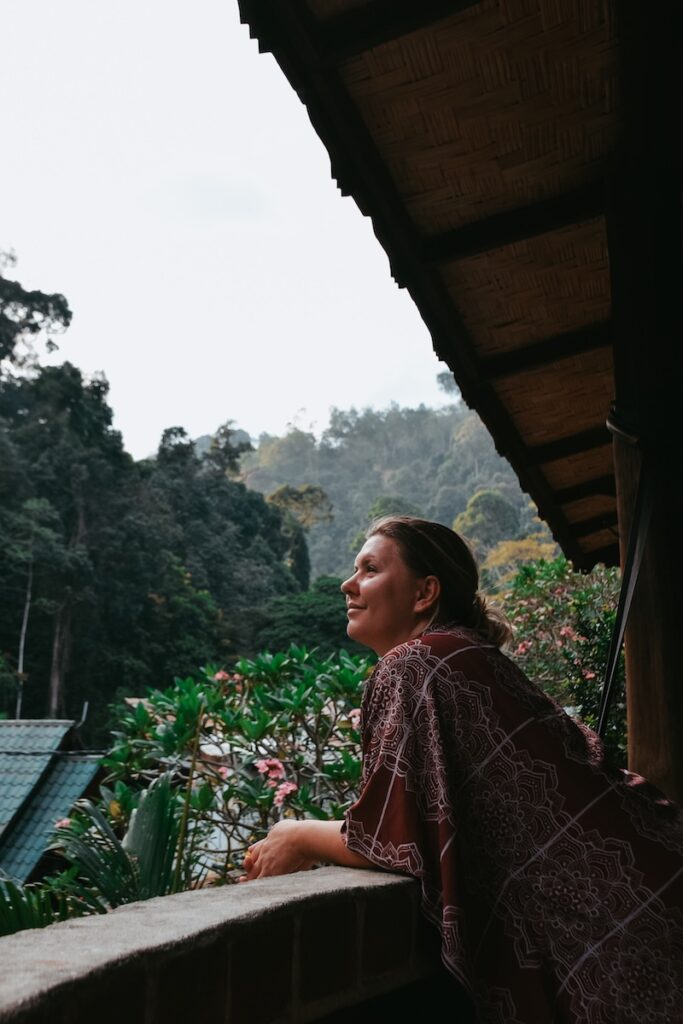
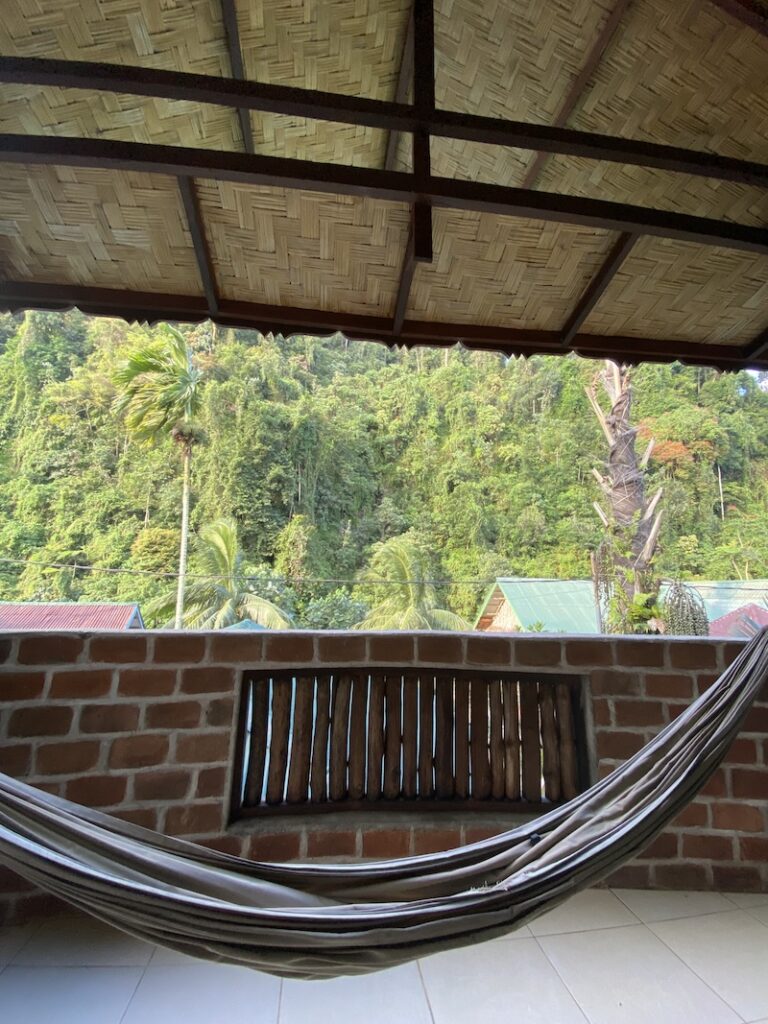
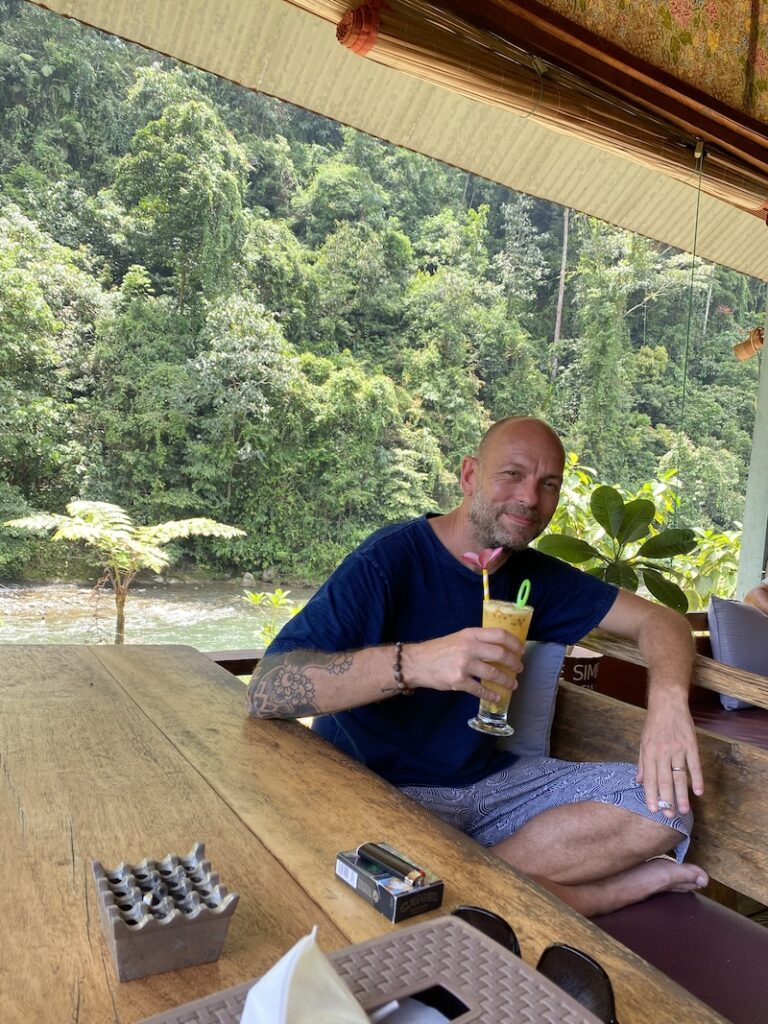
Our first stay was at Sam’s Bungalows, towards the end of the village beside the river.
The location is lovely, with the river and rainforest right outside, and we found the staff very friendly. There’s also a restaurant serving good food, so you don’t necessarily need to walk back into the main part of the village whenever you want to eat.
Being towards the end of the village also means you’re away from some of the busier areas.
Garden Inn
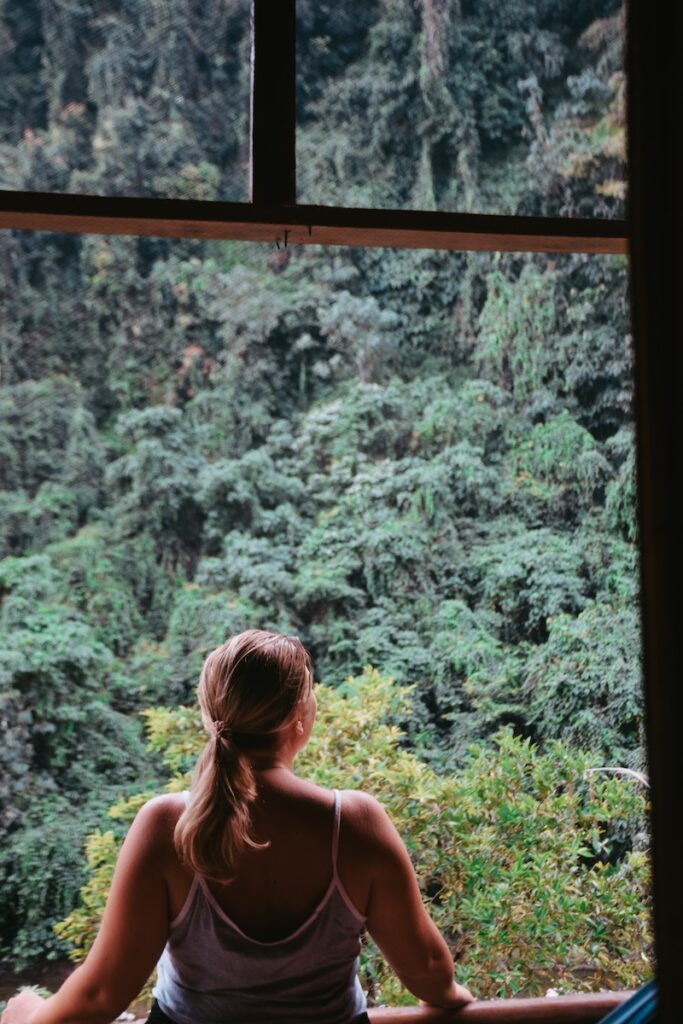
We also stayed at Garden Inn, which has beautiful views across the surrounding greenery.
The rooms were quite simple and we found it a little hot and noisy at times as you are more in the middle of the village, but the setting is lovely. If you’re mainly looking for somewhere inexpensive with great views and don’t mind fairly basic accommodation, it can be a good option.
On The Rocks
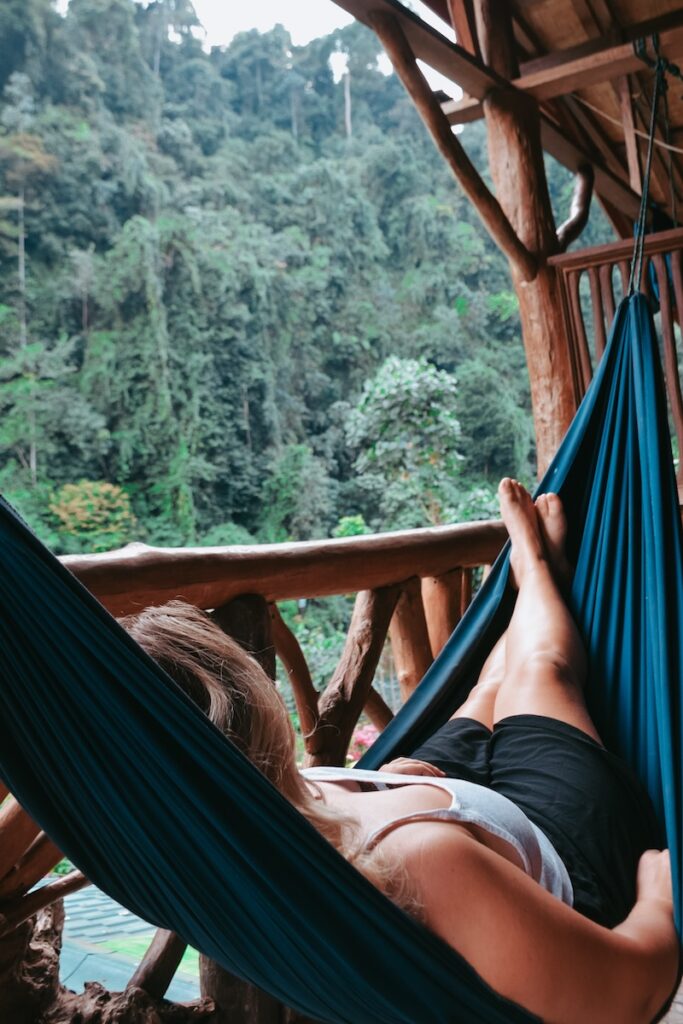
Our favourite place we stayed in Bukit Lawang was On The Rocks.
It’s set higher up amongst the trees, right on the edge of the rainforest, so reaching it involves a bit of a walk uphill, but the location is worth the effort.
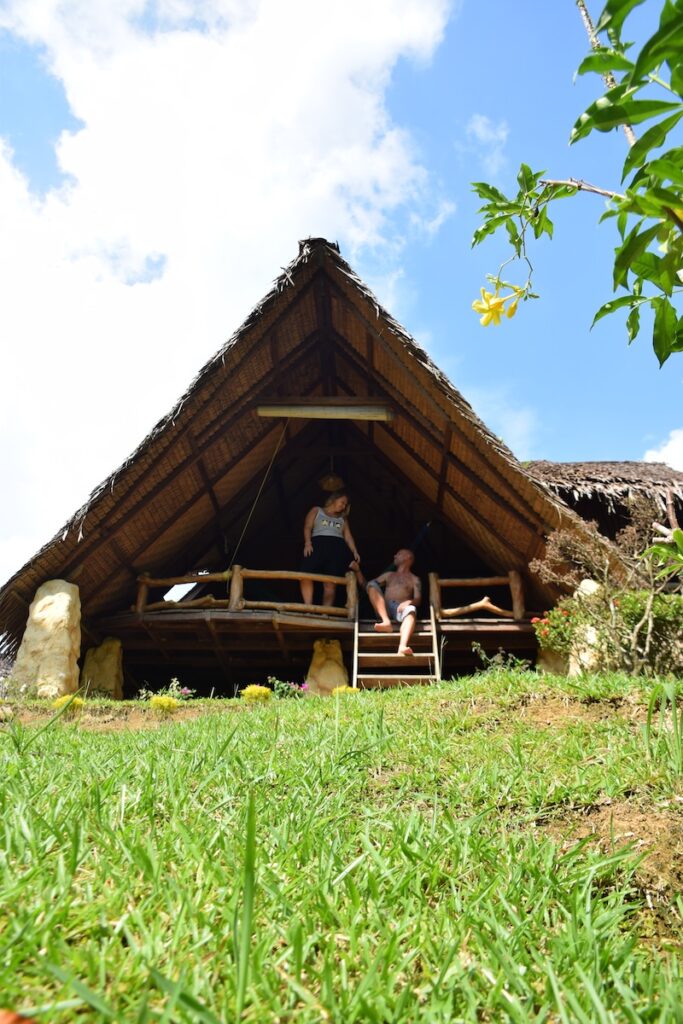
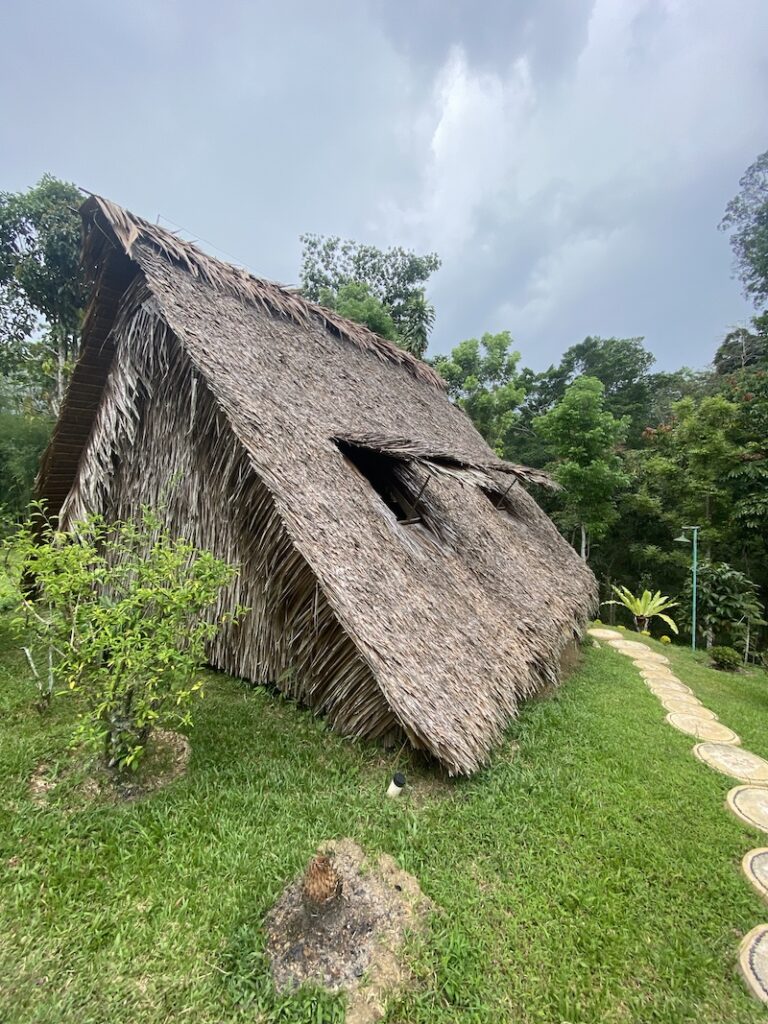
There are several different types of accommodation at different price points. We stayed in one of the cheapest options, a simple little thatched cottage, and absolutely loved it. The more expensive rooms are beautiful, but you don’t need to spend a lot to enjoy the setting, so there are options for different budgets.
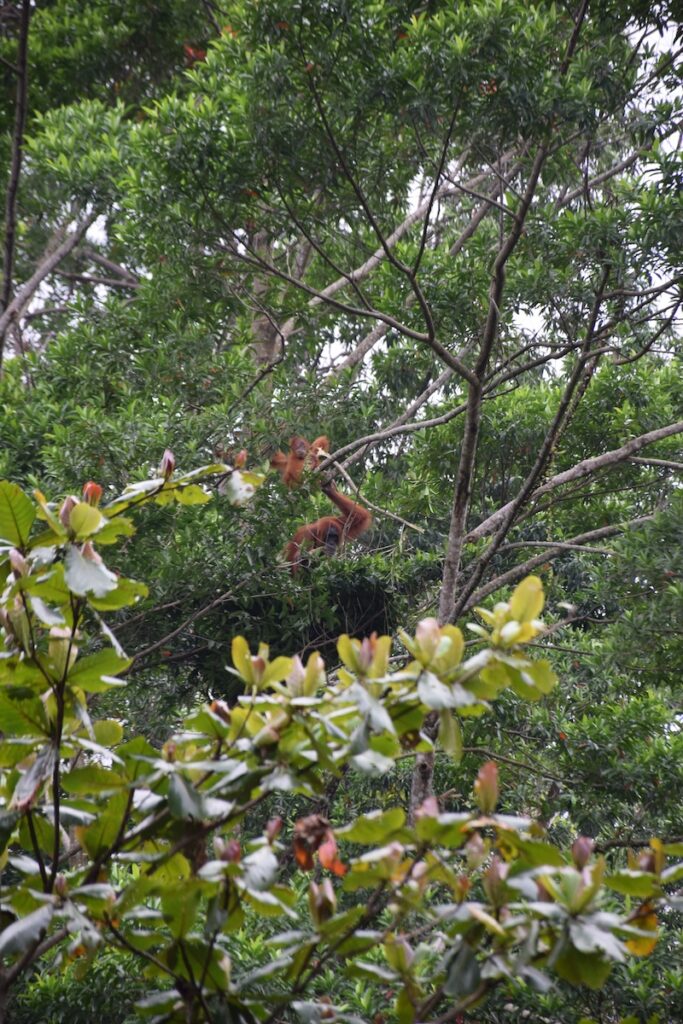
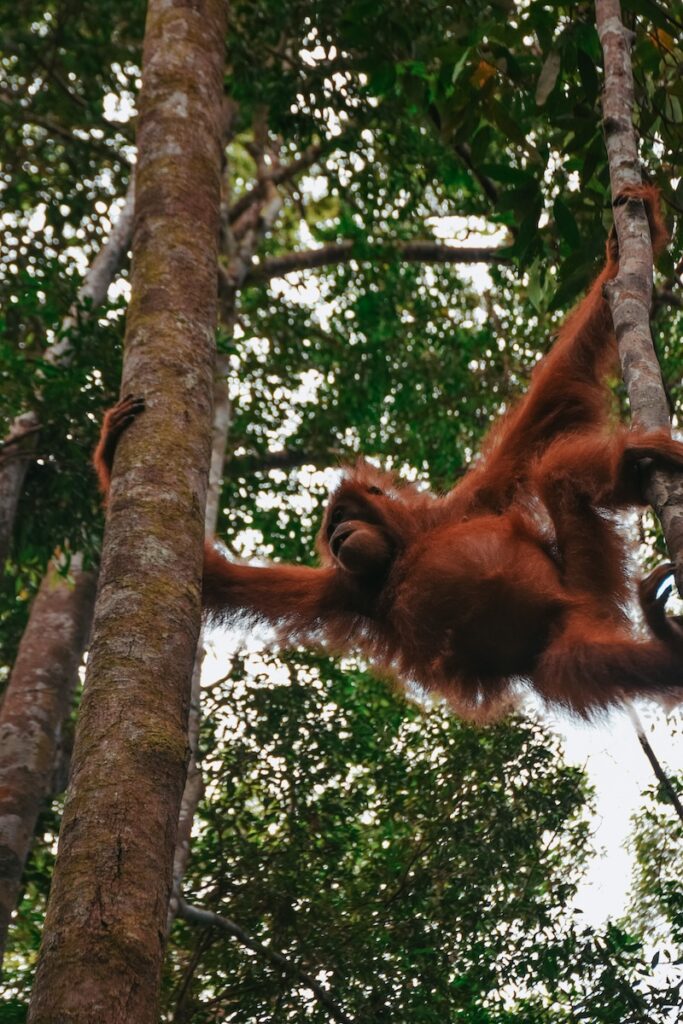
You’re surrounded by rainforest here, and it feels much more secluded than staying down beside the main path through the village. We even had a female orangutan with her baby nesting in the trees outside our room. The food is also good here.
If we returned to Bukit Lawang, this is where we’d stay again.
Orangutan Trekking in Bukit Lawang
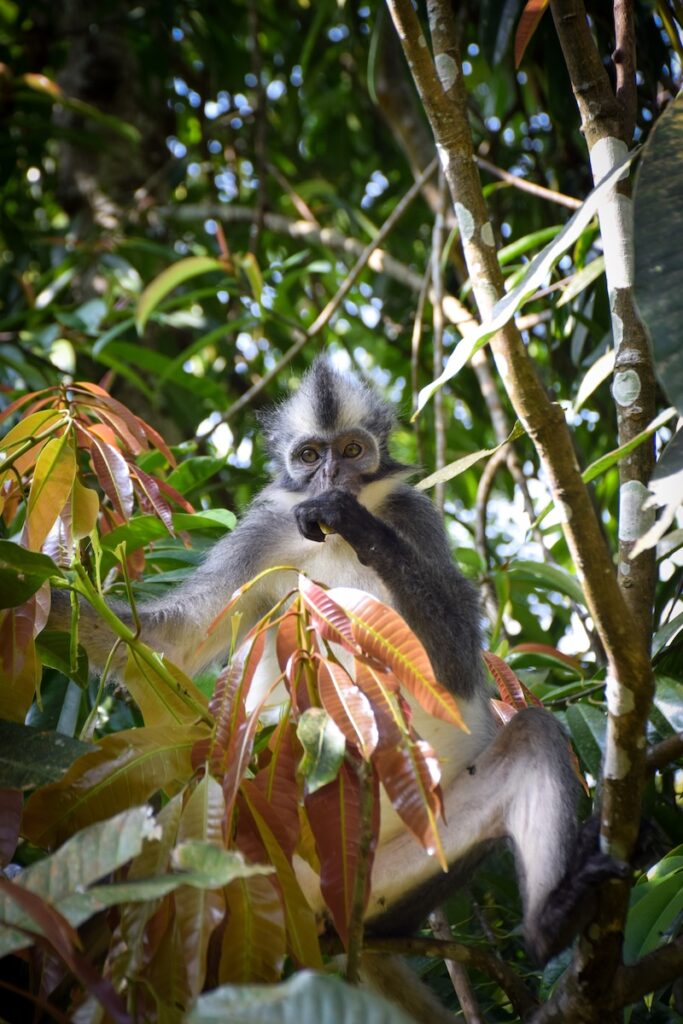
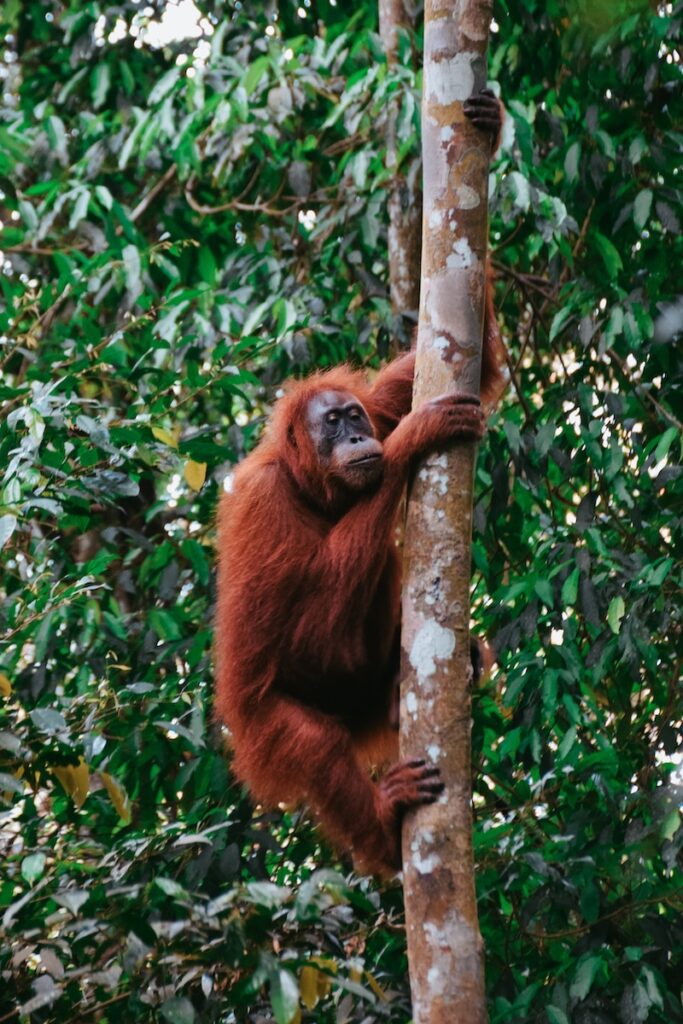
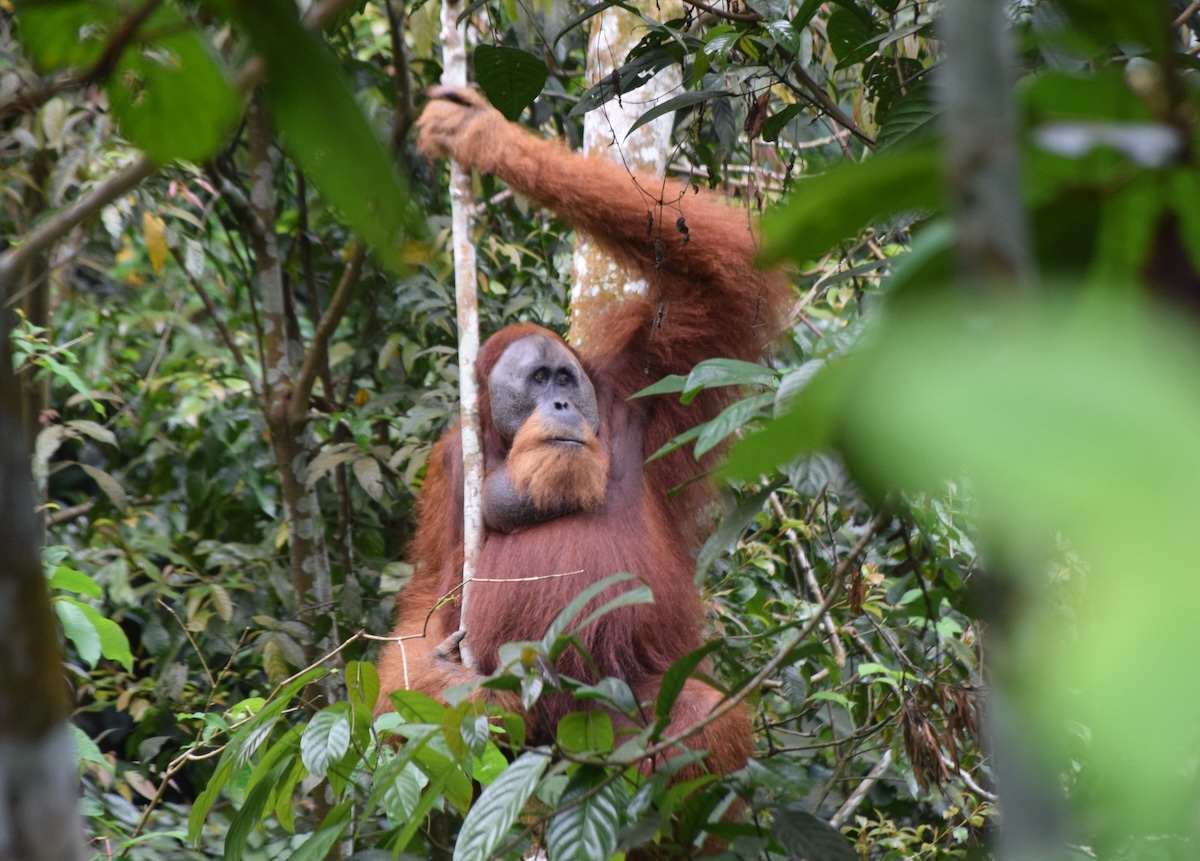
Seeing Sumatran orangutans in the wild is the main reason most travellers visit Bukit Lawang.
The village sits beside Gunung Leuser National Park, part of the wider Leuser Ecosystem and one of the remaining places where Sumatran orangutans live in the wild.
You can choose anything from a one-day trek to multi-day jungle expeditions, with longer treks taking you deeper into the rainforest and usually involving camping overnight.
We chose a one-day trek, which was plenty challenging enough for us.
How Difficult Is the Orangutan Trek?
Don’t underestimate the terrain.
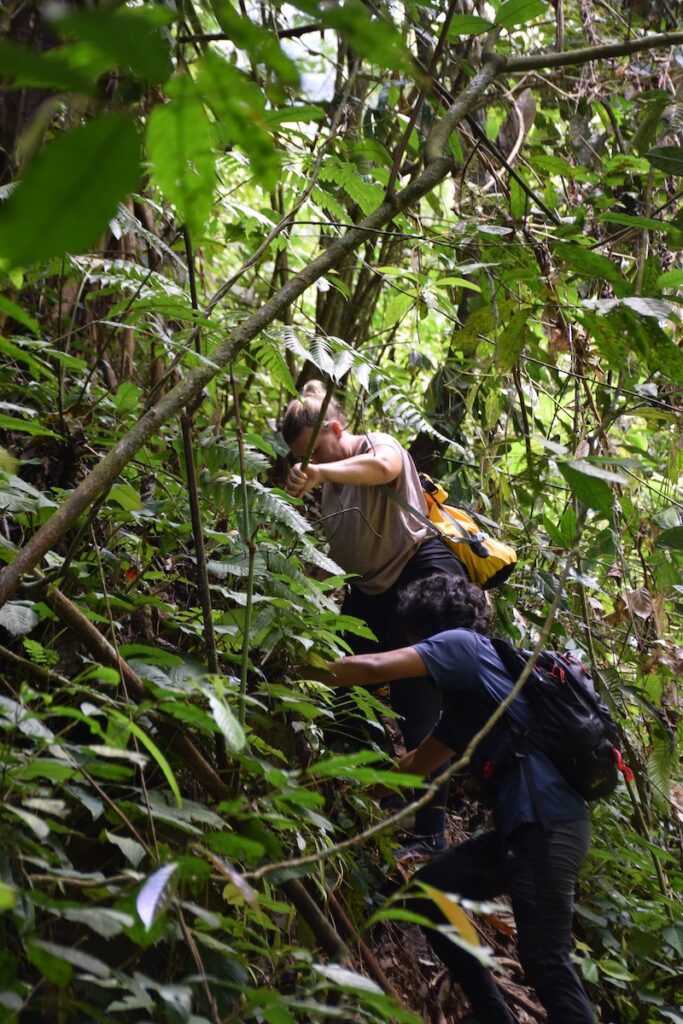
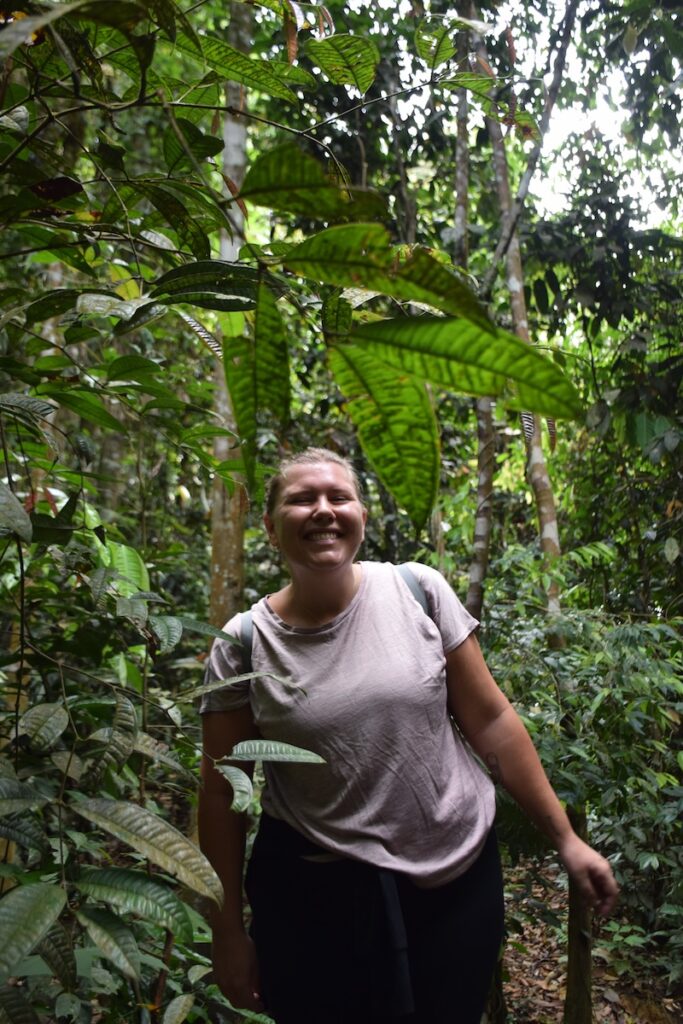
The trekking involves a lot of steep ups and downs through humid rainforest. There were sections where we were pulling ourselves uphill using vines and tree roots, followed by steep descents where you really need to watch where you’re putting your feet.
It was tough at times, but also incredibly rewarding. The rainforest itself is beautiful, quite apart from the wildlife you’re there to see.
You don’t need to race through it either. A good guide will adapt the trek to your ability and let you take breaks when needed.
Choosing an Ethical Orangutan Trekking Guide
Choosing the right guide was particularly important to us.
There are rules around encounters with orangutans, including maintaining an appropriate distance and never feeding or touching them. Before booking, we wanted to make sure we went with guides who respected those rules rather than prioritising close-up photographs for tourists.
Most accommodation in Bukit Lawang can arrange orangutan trekking, but you don’t have to book through the place you’re staying. Green Hill is another guesthouse in the village, and although we weren’t staying there, we simply walked over after we arrived in Bukit Lawang and asked about arranging a trek.
We ended up trekking with Randa Armando from Green Hill, who was excellent. He took the trek at our pace, helped us through the more difficult sections and was respectful of the wildlife we encountered.
After later staying at On The Rocks and getting to know the place a little, we would also have been very happy trekking with their guides. If we returned, we’d probably arrange our trek directly through them.
Whichever company or guesthouse you choose, we’d recommend asking about their approach to wildlife before booking. Guides should maintain the required distance from orangutans and shouldn’t feed them, touch them or encourage tourists to get closer for photographs.
Rafting Back to Bukit Lawang
At the end of many jungle treks, you’ll have the option of returning to Bukit Lawang by river rather than walking all the way back.
The “rafting” is done using large inner tubes tied together to create a simple raft.
I was a little hesitant about this part before we did it, but it turned out to be really enjoyable. After hours of climbing up and down through the hot rainforest, getting onto the river was a pretty good way to finish the trek.
You float downstream through the jungle before eventually arriving back in Bukit Lawang.
If you’re unsure about adding the rafting to your trek, we’d do it again.
What Else Is There to Do in Bukit Lawang?
Not much. And we mean that in a good way.
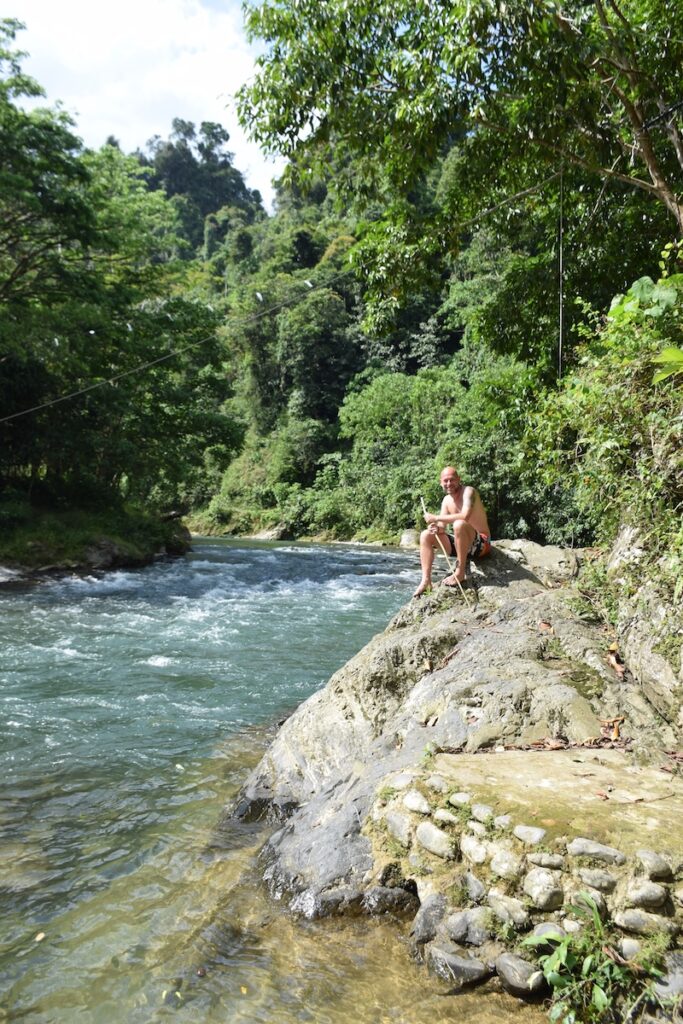
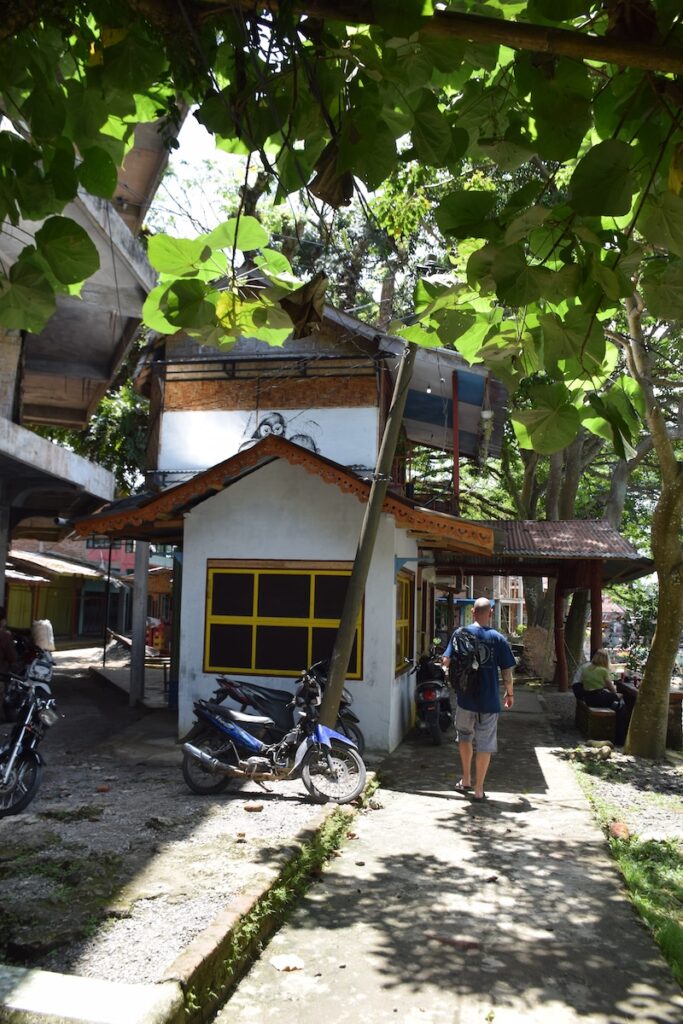
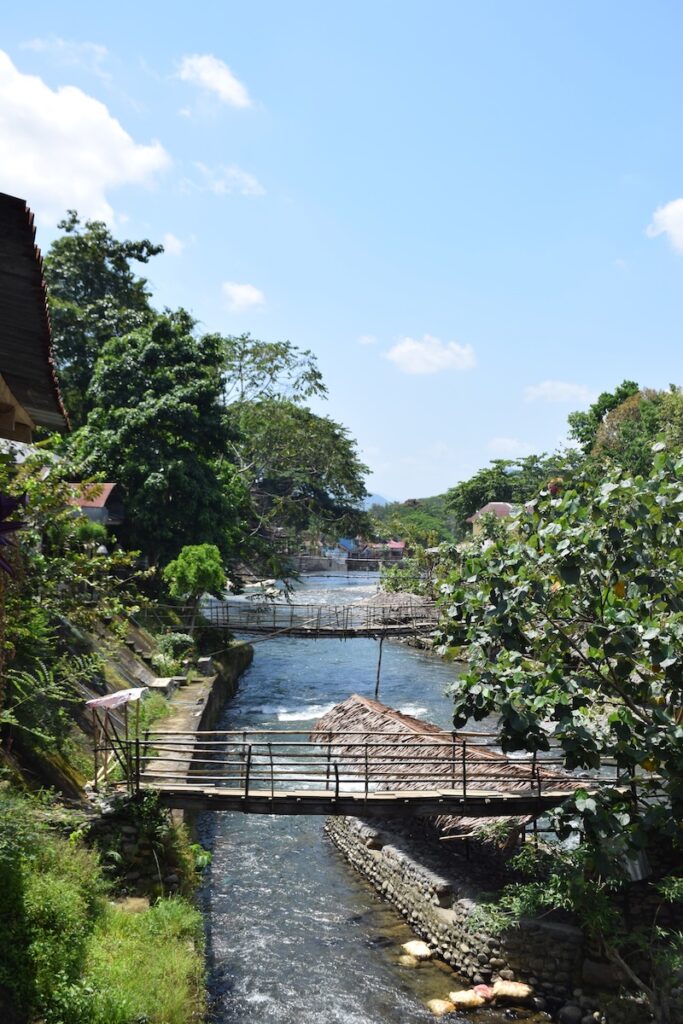
Bukit Lawang isn’t somewhere you need an itinerary packed with attractions. We spent plenty of time simply walking along the river and through the village. You can follow the riverside paths, cross the suspension bridges and walk into the main town away from the more tourist-oriented accommodation beside the national park.
There’s also a small market area by the river, which is worth wandering through while you’re exploring. You can also walk further into the main town, away from the guesthouses and restaurants clustered closer to the national park.
For us, the appeal of staying longer was having nowhere in particular we needed to be. It’s a good place to slow down, read, sit beside the river and enjoy being surrounded by nature.
Where to Eat in Bukit Lawang
There are plenty of small restaurants and guesthouse restaurants along the river in Bukit Lawang, so finding somewhere to eat is easy.
We found that many of the menus were quite similar, usually with a mixture of Indonesian dishes and familiar Western options aimed at travellers.
We mostly ate at our accommodation, particularly Sam’s Bungalows and On The Rocks, simply because it was convenient and the food was good. With many of the guesthouses and restaurants spread along the river, there wasn’t much reason to go searching for a particular restaurant every evening.
We wouldn’t come to Bukit Lawang specifically for the food, but there are more than enough options for a stay of several days.
How Long Should You Stay in Bukit Lawang?
Many travellers spend just two or three nights in Bukit Lawang, giving them enough time to arrive, complete an orangutan trek and continue their journey through Sumatra.
We stayed for eight nights and were very happy that we did.
You certainly don’t need that long to see the main attraction, but Bukit Lawang is worth considering as somewhere to slow down for a few days, particularly if you’re travelling for a longer period.
After the trek, having a few days to relax beside the river and enjoy the rainforest without another activity planned was exactly what we wanted.
If you’re on a shorter Indonesia trip, we’d suggest 2-3 nights. If you have more time and enjoy nature, adding a few extra nights gives you the chance to experience Bukit Lawang beyond the orangutan trek.
Staying Near Medan Airport
If your flight times mean you need a night in Medan before or after visiting Bukit Lawang, we stayed at Hotel Deli River and Restaurant Omlandia for a couple of nights.
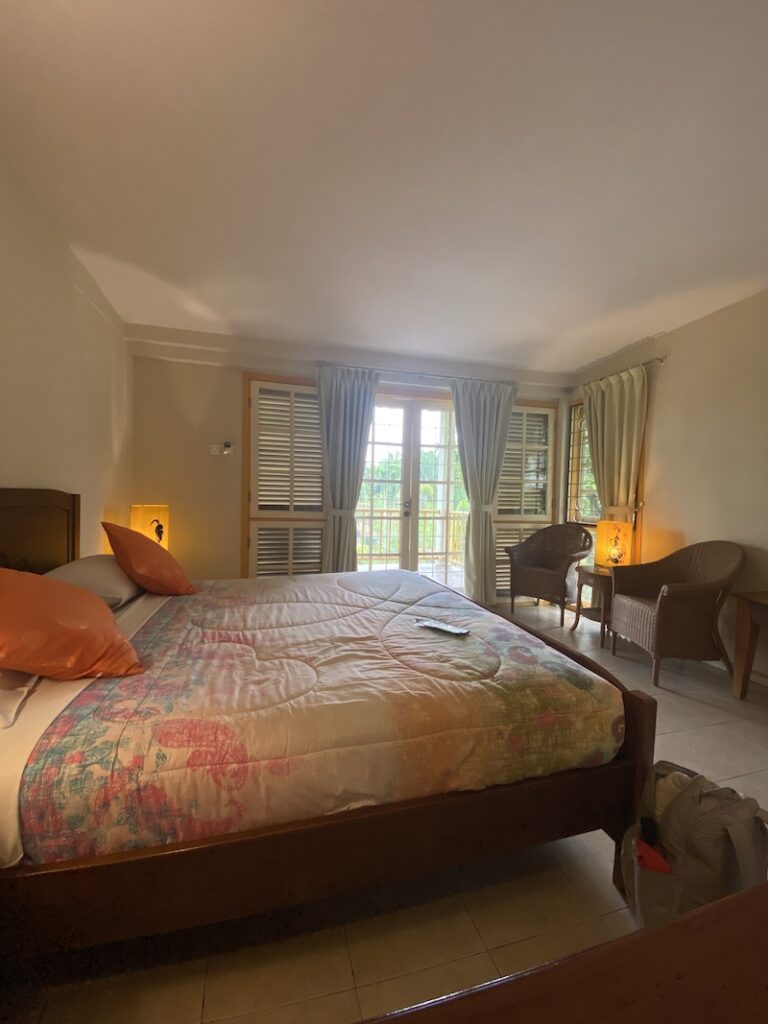
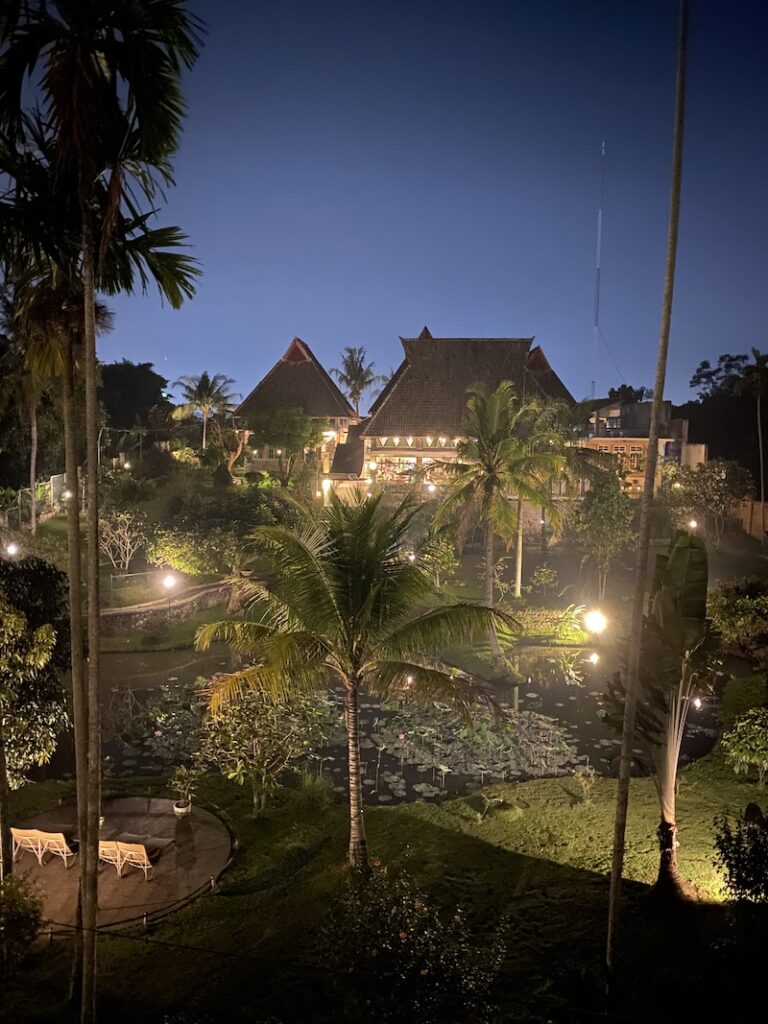
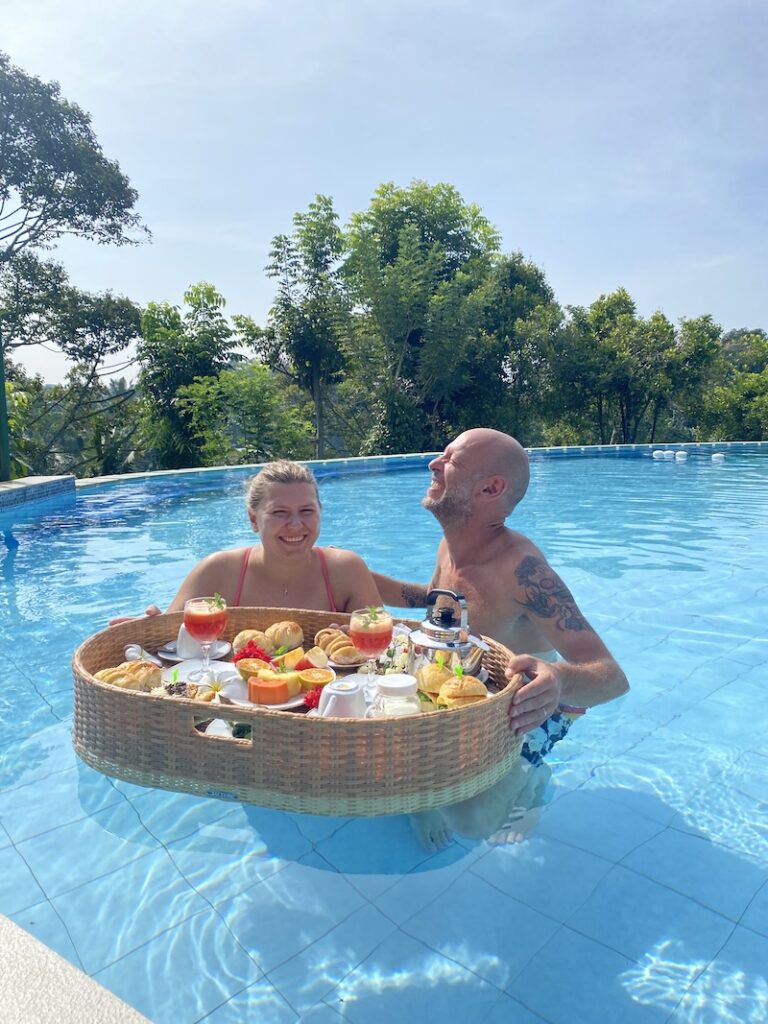
It was a really relaxing place to stay, particularly after travelling. There’s a pool, plenty of space to unwind and we even had a floating breakfast served in the pool.
Rather than trying to squeeze the journey between Bukit Lawang and the airport around a flight, spending a night or two here made the journey much more relaxed.
Is Bukit Lawang Worth Visiting?
If seeing Sumatran orangutans in the wild is something you want to experience, Bukit Lawang is an obvious addition to a Indonesia itinerary.
The orangutan trek was challenging, beautiful and incredibly rewarding, but we also really enjoyed our longer stay in Bukit Lawang, having time to simply walk beside the river, waking up surrounded by rainforest and watching an orangutan and her baby in the trees outside our room.
You can come for the orangutans.
But you might want to stay a little longer for Bukit Lawang itself.


This site is protected by reCAPTCHA and the Google Privacy Policy and Terms of Service apply.