Top Posts
How to Find the Abandoned Kurayoshi Railway Line
Kurayoshi Travel Guide: Old Town, Pears and Railway Ruins
Is China Difficult to Travel Independently? Our Honest Experience
How to Visit Zhujiajiao Ancient Town Independently: The Perfect Day Trip from Shanghai
Shanghai Travel Guide: What to Do, Where to Stay & Practical Tips
Chongqing Travel Guide: What to See, Where to Stay & Our Honest Tips
Matsue Travel Guide: Castle, Samurai Streets and Lake Shinji
How to Get to Izumo Taisha: Visit Japan’s Ancient Shrine Without the Crowds
Masuda: A Quiet Stop on Japan’s San-In Line
Is Mojiko Worth Visiting? A Retro Port Stop Before Honshu
LBSB World
  • Home
  • Destinations
    • Africa
      • Namibia
    • Asia
      • China
      • Indonesia
      • Japan
    • Europe
      • Albania
      • Bosnia-Herzegovina
      • Croatia
      • Montenegro
      • Netherlands
      • North Macedonia
      • Serbia
    • North America
      • Dominican Republic
  • Travel Itineraries
    • Our 9-Day Namibia Tour with Chameleon Safaris: An Honest Review
    • Our 2 Week Albania Itinerary
    • Bosnia and Herzegovina Itinerary: Our 1 Month Route by Bus
    • Namibia Self Drive: Everything We Learned Driving a 4×4 Across Namibia
    • Our 3-Month Balkans Itinerary: 93 Days by Bus Through Southeast Europe
    • 23 Day Japan Slow Travel Itinerary by Train
  • Plan Your Trip
    • How to Deal with Travel Burnout (And Start Enjoying Travel Again)
    • Sam’s Fulltime Travel Packing List
    • Using Trusted House Sitters to Support Your Travels
    • Trusted House Sitters Promo Code: Save on Your Membership
  • About Us
    • About Sam & Livia
    • The Story Behind Our Full-Time Travel Life
    • abearcalledpaddington
Tag:

Guide

China

Chengdu Travel Guide: The Perfect Introduction to China

by Livia July 3, 2026
written by Livia

Chengdu was our first introduction to China, after which we visited Chongqing and Shanghai. China had been on our travel wish list for years, but between visa requirements and uncertainty about how difficult it would be to travel there, we kept putting it off. When China introduced visa-free entry for our passports, we finally decided it was time.

Arriving in Chengdu, we were nervous. Immigration took around an hour as officials carefully checked our documents and even called our hotels to confirm our bookings. Nobody smiled, nobody explained what was happening, and we spent the entire time wondering whether we would actually be allowed into the country.

As soon as we cleared customs, our assumptions about China started to unravel. A security guard warned us away from an unofficial taxi driver, and while walking towards the train station two young men approached us with a camera. They asked if they could drive us into the city for free in exchange for filming a short interview for their YouTube channel.

My first instinct was that something felt suspicious. Sam’s first instinct was to jump in the car.

Thankfully, it turned out to be completely genuine. Interviewing foreign visitors is a popular type of content on Chinese social media, and what started as a chance encounter became one of our favourite memories from Chengdu. We ended up spending more time with them during our stay and it completely changed our first impression of China.

Looking back, Chengdu was the perfect introduction to the country. Relaxed, welcoming and full of surprises, it quickly became one of our favourite cities in China.

It was also the least touristy place we visited in China. Compared to Shanghai and even Chongqing, we saw very few foreign visitors during our time there. Most of the people we met were Chinese tourists or locals going about their daily lives. For us, that made the experience feel much more authentic and gave us a glimpse of a side of China that many international visitors never see.

Why Visit Chengdu?

Chengdu is one of the homes of the giant panda, and visiting the pandas is undoubtedly the city’s most famous attraction. It’s well worth doing and one of the highlights of any trip to China.

However, the pandas aren’t the main reason we enjoyed Chengdu so much.

What stood out most to us was the atmosphere and the people. Chengdu felt noticeably more relaxed than the other Chinese cities we visited. We were invited by complete strangers to share food and drinks despite us speaking no Chinese and them speaking very little English. Time and time again people went out of their way to help us, making us feel genuinely welcome.

We loved the mix of old and new. In the same day, you can explore modern shopping districts, visit historic temples and spend hours wandering through traditional neighbourhoods. Despite being a city of more than 20 million people, we were always able to find quieter corners away from the crowds.

One thing that made us smile was how much Chengdu embraces its giant pandas. They aren’t just found at the Chengdu Research Base, but throughout the city. We spotted panda statues, murals, souvenirs and artwork around almost every corner, with the giant panda climbing the side of the IFS shopping centre becoming one of the city’s most iconic landmarks.

In the evenings, locals gathered in parks and public squares to dance, play games and socialise. There was a sense of community and everyday life that made Chengdu feel different from what we experienced in Shanghai and Chongqing.

Food is another reason to visit Chengdu. The city is famous for its Sichuan cuisine, from hot pot and mapo tofu to countless street food stalls and local restaurants. Even if you’re not usually a fan of spicy food, trying the local dishes is a big part of the experience.

Chengdu is equally well positioned for exploring the surrounding area. Whether you’re visiting the giant pandas, heading to nearby ancient towns or continuing deeper into Sichuan Province, the city makes a convenient and enjoyable base.

Where to stay in Chengdu

Chengdu offers everything from luxury hotels to budget-friendly guesthouses, but for most visitors, staying around People’s Park, Tianfu Square or Kuanzhai Alley provides the best balance of sightseeing, restaurants and transport. We stayed at The Hidden House (Cheng Du Kuanzhai Alley People’s Park Subway Station Branch), a peaceful boutique hotel tucked away on a quiet street just a 5 to 10-minute walk from People’s Park, Kuanzhai Alley and the nearest metro station. It’s a great hotel to stay in the city, combining a tranquil courtyard setting with an excellent location for exploring the city on foot. 

Things to Do in Chengdu

Visit the Chengdu Research Base of Giant Panda Breeding

If there’s one attraction you shouldn’t miss in Chengdu, it’s the Chengdu Research Base of Giant Panda Breeding. Seeing giant pandas was the main reason we travelled to Chengdu, and it completely lived up to our expectations. Alongside the giant pandas, you’ll also have the chance to see the playful red pandas, which were just as entertaining.

Best time to visit: Arrive when the park opens. The pandas are most active during the cooler morning hours before settling down for a long nap. It’s also the least busy time of day. We arrived at opening, and it was still busy, especially by the “famous” panda enclosures and the baby pandas, which we skipped completely due to the queue.

How long to spend there: Allow around 3 to 4 hours to explore the park without rushing.

👉 Read our complete Chengdu Panda Base Guide for everything you need to know, including tickets, transport, opening times, the best route around the park and our top tips for making the most of your visit.

Relax in People’s Park

If you want to experience everyday life in Chengdu, spend a couple of hours exploring People’s Park. We visited on a Saturday and it was full of local families enjoying the weekend together, giving the park a lively and welcoming atmosphere.

The park itself is beautiful, with tree-lined paths, lakes and traditional gardens, but it was the people that made it memorable. As we wandered around, we came across dance performances, groups exercising, musicians, people playing mahjong and friends relaxing over tea. Everywhere we looked, there was something happening.

We’d recommend allowing 1 to 2 hours to explore the park at a relaxed pace. It’s one of the best places in Chengdu to slow down, people-watch and experience the city’s famously laid-back culture.

Visit Wuhou Shrine

Wuhou Shrine was one of our favourite places in Chengdu. Dedicated to the famous strategist Zhuge Liang and the Three Kingdoms period, it’s one of the city’s most important historical sites, but you don’t need to know much about Chinese history to appreciate it.

The entrance was quite busy when we arrived, but as we wandered further into the complex, the crowds quickly disappeared. We found ourselves strolling through peaceful courtyards, beautiful gardens and pathways lined with towering cypress trees. The combination of traditional architecture, colourful red buildings and quiet surroundings made it one of the most relaxing places we visited in Chengdu.

We’d recommend allowing 2 hours to explore the shrine and its gardens. Whether you’re interested in history or simply looking for a beautiful place to escape the city’s busy streets, Wuhou Shrine is well worth adding to your Chengdu itinerary.

Explore Chunxi Road – shopping

For a completely different side of Chengdu, head to Chunxi Road. This is the city’s modern shopping district, filled with huge shopping malls, international brands, restaurants and towering skyscrapers. It’s a great contrast to the historic temples and traditional parks found elsewhere in the city.

Even if shopping isn’t your thing, Chunxi Road is worth visiting for the atmosphere alone. The streets are busy from morning until late at night, with street performers, colourful billboards and plenty of places to stop for food or a coffee.

One of the biggest highlights is the IFS shopping centre, where you’ll find the city’s famous giant panda climbing the side of the building. It’s become one of Chengdu’s most recognisable landmarks and is a popular photo spot. If you’re feeling adventurous, you can also visit the rooftop terrace behind the panda for a different perspective.

Wander Around the Guihua Lane Neighbourhood (桂花巷)

Just around the corner from where we stayed, the streets surrounding Guihua Lane became one of our favourite areas to explore in Chengdu. While it isn’t home to any major tourist attractions, it’s the perfect place to wander and experience a quieter, more local side of the city.

We loved walking through the surrounding streets, discovering independent cafés, local restaurants and small shops tucked away between the tree-lined avenues. Compared to the busy shopping district around Chunxi Road, this neighbourhood felt much more relaxed and gave us a glimpse into everyday life in Chengdu.

If you have a couple of spare hours, we’d recommend putting away the map and simply exploring the area at your own pace. Some of our favourite moments in Chengdu came from wandering these streets without any particular destination in mind.

Where to eat in Chengdu

Chengdu is the birthplace of Sichuan cuisine, and after our visit it’s become one of our favourite cuisines in the world. The bold flavours, fragrant spices and famous numbing Sichuan pepper make every meal an experience. While there are countless dishes to try, some of the local specialities we think you shouldn’t miss include Sichuan Hot Pot, Dan Dan Noodles, Mapo Tofu, Kung Pao Chicken, and street snacks such as Tang You Guo Zi, Bo Bo Ji, Bing Fen and Dan Hong Gao. Even if you’re not usually a fan of spicy food, trying the local cuisine is an essential part of visiting Chengdu.

Be prepared for the spice! Sichuan pepper creates a unique tingling, numbing sensation that’s just as memorable as the heat.

Explore Wangping Street

One of our favourite food experiences in Chengdu was spending an evening exploring Wangping Street, one of the city’s best-known snack streets. Rather than wandering on our own, we had a local show us around, introducing us to dishes we almost certainly wouldn’t have ordered ourselves.

We sampled everything from freshly fried Tang You Guo Zi (sweet fried dough balls) and Dan Hong Gao (egg cakes) to Bing Fen (a refreshing herbal jelly dessert with brown sugar), cold noodles and cold jelly, traditional tea drinks, and sticky rice desserts served with rice wine and brown sugar. One of our stops was Simei Benben Chicken, where we tried Bo Bo Ji, a Chengdu speciality of cold skewers served in a spicy, aromatic broth. It wasn’t our favourite bite of the evening, but that’s part of travelling. You won’t love every local dish, and trying Chengdu’s famous specialities was an experience we wouldn’t have wanted to miss. Every stop offered something different, giving us a fantastic introduction to the flavours that make Chengdu one of China’s great food cities.

Explore the Yulin Neighbourhood

If you’re looking to venture beyond the main tourist sights, head to Yulin. This lively neighbourhood is one of Chengdu’s best food districts, packed with traditional Sichuan restaurants, hot pot, barbecue, cafés and late-night eateries. It was the same guy who gave us a lift from the airport when we arrived who later took us here, introducing us to one of his favourite neighbourhoods. We ended up having one of our favourite meals in all of China at a tiny dumpling restaurant, but despite our best efforts, we’ve never managed to find its name again. Sometimes the places without a name on your map become the ones you remember most.

How Many Days Do You Need in Chengdu?

We spent 3 nights in Chengdu, which gave us enough time to visit the city’s highlights, including the Giant Panda Base, People’s Park, Wuhou Shrine and several of Chengdu’s fantastic food districts. We could easily have stayed longer. Chengdu has a wonderfully relaxed atmosphere, incredible food and plenty of attractions both in the city and nearby, making it somewhere that’s easy to slow down and enjoy.

2 Days

If you’re short on time, two days is enough to see the Giant Panda Base and explore Chengdu’s historic centre, including People’s Park, Kuanzhai Alley and a few of the city’s famous food streets.

3 Days

We think 3 days is the sweet spot for most visitors. It gives you enough time to see the main attractions, enjoy Chengdu’s incredible food scene, and experience the city’s relaxed atmosphere without feeling like you’re constantly on the move.

4+ Days

If you have four days or more, there’s plenty to keep you busy. We would have loved to spend a day exploring Dujiangyan, visit the Dujiangyan Panda Base, and check out Dongjiao Memory, Chengdu’s creative arts and cultural district. With extra time, Chengdu also makes an excellent base for exploring more of Sichuan Province, whether you’re taking day trips or heading further afield to places like Mount Qingcheng, Leshan or Jiuzhaigou.

Practical Tips for Visiting Chengdu

Getting Around Chengdu

Getting around Chengdu is affordable and relatively straightforward. We mostly walked, caught local buses and used Didi, but the city also has a metro system.

Metro

Chengdu has an extensive metro network that connects most of the city’s major attractions. We didn’t end up needing it during our stay, but it’s widely regarded as one of the easiest and most convenient ways to get around the city, especially for longer distances.

Bus

We used the local buses several times during our stay. They took a little more planning than using Didi, but were inexpensive and a good way to get around. We set up a Chengdu Transport Card in Alipay, which allowed us to simply scan our phone on the bus.

Didi

For longer journeys or when we wanted the easiest option, we used Didi, China’s equivalent of Uber. It was affordable, reliable and simple to book through the Alipay or WeChat app.

Walking

Many of Chengdu’s attractions are close together, making the city enjoyable to explore on foot. We especially enjoyed wandering around People’s Park, Kuanzhai Alley, Wangping Street and the quieter streets around our hotel.

Best Time to Visit Chengdu

We visited Chengdu in September and found it hot and humid, although it certainly didn’t stop us from enjoying the city. If you’re planning to spend a lot of time exploring on foot, spring (March to May) and autumn (October to November)generally offer the most comfortable temperatures. That said, Chengdu is a year-round destination, with each season offering a different experience.

Internet, Payments and Apps

China is largely cashless, and Alipay and WeChat quickly became one of the most useful apps on our trip. Along with paying in shops and restaurants, you can also set up a local transport card for buses and the metro, allowing you to simply scan your phone when travelling instead of buying individual tickets. This worked seamlessly across several cities we visited in China.

Our hotel offered free Wi-Fi, but without a VPN we still couldn’t access many of the websites and apps we normally use. We used an eSIM with built-in access to blocked services, which meant we could browse as normal throughout our trip.

We also recommend downloading Didi for taxis and Google Translate (or your preferred translation app) before you arrive. For a full breakdown of the apps we found most useful, including maps, payments, transport and VPNs, read our complete guide to the best apps for travelling in China.

Final Thoughts on Visiting Chengdu

Chengdu was our first stop in China, and we couldn’t have asked for a better introduction to the country. We arrived expecting giant pandas, spicy food and a culture very different from our own, but what stayed with us most was the warmth of the people. Everywhere we went, people were welcoming, curious and happy to help, making us feel at home from the very beginning.

Of the three cities we visited in China, Chengdu ended up being our favourite. We loved its relaxed atmosphere, incredible Sichuan cuisine and the way modern city life blends seamlessly with peaceful parks, historic temples and traditional neighbourhoods. Despite being one of China’s largest cities, it never felt overwhelming.

We only spent three nights here, but left wishing we’d planned a longer stay. Next time, we’ll definitely use Chengdu as a base to explore more of Sichuan Province, and we wouldn’t hesitate to recommend adding it to any China itinerary.

July 3, 2026 0 comments
FacebookTwitterPinterestLinkedinRedditStumbleuponWhatsappTelegramThreadsOpenAIChatGPTEmail
China

How to Visit the Chengdu Panda Base: Tickets, Tips & Our Experience

by Sam June 24, 2026
written by Sam

Visiting the giant pandas at Chengdu Research Base of Giant Panda Breeding was one of the main reasons we wanted to visit China, so we wanted to plan it properly. If you’re wondering how to visit Chengdu Panda Base independently, it helps to know how tickets work, when to go, how to get there and what to expect once you arrive. We visited during our time in Chengdu, and while it was busy, seeing giant pandas in China was absolutely worth it.

When China introduced visa-free entry for our passports, we finally had the chance to make the trip happen. We only had 10 days in the country, so every stop had to count. After flying into Chengdu from Bangkok, there was one attraction at the very top of our China bucket list: the giant pandas.

And honestly, they didn’t disappoint.

There’s something about pandas that is impossible not to love. They’re goofy, clumsy, surprisingly expressive and seem permanently confused by their own existence. Seeing them up close for the first time was one of the highlights of our entire China trip.

One thing we quickly learned: pandas spend a lot of time eating

One thing we quickly learned: pandas spend a lot of time eating

What surprised us most wasn’t the pandas themselves. It was the sheer number of people visiting the Chengdu Research Base of Giant Panda Breeding. The queues to enter were long, the weather was hot and some of the most famous pandas attracted crowds far bigger than we expected.

Fortunately, there are ways to avoid the worst of the crowds and still have a fantastic experience.

The crowds outside the Chengdu Research Base of Giant Panda Breeding surprised us. Arriving before opening time is one of the best ways to beat the queues

The crowds outside the Chengdu Research Base of Giant Panda Breeding surprised us. Arriving before opening time is one of the best ways to beat the queues

Quick Verdict: Is the Chengdu Panda Base Worth Visiting?

Yes. Absolutely.

Chengdu is panda crazy. During our stay it felt like every second shop, billboard, souvenir stand and tourist brochure featured a panda somewhere. The giant panda is the symbol of Chengdu and visiting the Chengdu Research Base of Giant Panda Breeding is one of the most popular things to do in the city.

Unlike many famous attractions around the world, we didn’t leave feeling disappointed.

The enclosures were larger and more natural than we expected, we saw plenty of active pandas and watching the red pandas turned out to be one of the highlights of our visit.

Our biggest piece of advice is simple: arrive early.

By late morning the temperatures had increased significantly, many of the pandas had retreated indoors and the crowds were noticeably larger. Getting there before opening time made a huge difference to our experience.

How to Buy Tickets for the Chengdu Panda Base

We bought our tickets through Trip.com the day before our visit and had no problems at all.

For most international visitors, we think Trip.com is the easiest way to book tickets for the Chengdu Research Base of Giant Panda Breeding. The website and app are available in English, accept international payment methods and make the whole process very straightforward.

When booking your ticket, you’ll need to enter your passport details. Don’t worry about printing anything afterwards. Your passport effectively becomes your ticket.

Your passport is your ticket. Once you've booked online, simply scan the passport used for the reservation at the entrance.

Your passport is your ticket. Once you’ve booked online, simply scan the passport used for the reservation at the entrance.

When we arrived at the panda base, we simply scanned our passports at the entrance and walked straight in.

👉 Book Chengdu Panda Base tickets on Trip.com here

If you’re travelling independently in China, we would strongly recommend downloading Trip.com before you arrive. We used it for attraction tickets, train bookings and general travel planning throughout our trip.

💡TOP TIP:

Bring the same passport you used when booking your ticket. You’ll need it to enter the Chengdu Research Base of Giant Panda Breeding.

Opening Hours

Opening hours vary depending on the season:

  • March to October: 7:30am to 6:00pm
  • November to February: 8:00am to 5:30pm

While those are the official opening times, our advice is to arrive at least 30 to 60 minutes before the gates open.

It might seem excessive, but you’ll quickly understand why once you see the queues.

Essential Apps for Visiting the Chengdu Panda Base

If this is your first time visiting China, we strongly recommend setting up a few key apps before you arrive.

We booked our panda tickets through Trip.com, ordered taxis using WeChat and used Alipay for payments throughout our trip. Having these apps installed before landing in China made travelling around Chengdu much easier.

If you’re planning a trip to China, make sure to read our guide:

Best Apps for Visiting China in 2026
https://lbsbworld.com/best-apps-for-visiting-china-2026-guide/

It covers everything you need to know about payments, transport, bookings and navigating China as a foreign visitor.

Our Top Tips for Visiting the Chengdu Panda Base

Arrive Before Opening Time

This is by far the most important tip.

The pandas are most active during the cooler morning hours, particularly around feeding time. Arriving early means you’ll see more active pandas and avoid some of the worst crowds.

Enter Through the South Gate

We entered through the South Gate and headed straight towards the Panda Villa area.

This seemed to work well and allowed us to get ahead of many visitors heading towards the most famous enclosures.

Don’t Feel Like You Have to Queue for Hua Hua

Hua Hua is currently one of the most famous giant pandas in China.

When we visited, the queue was already enormous shortly after opening. We decided not to join it and instead spent our time exploring the quieter enclosures.

Honestly, we don’t regret that decision at all.

There are plenty of pandas throughout the park and we were able to enjoy our visit without spending a huge chunk of the morning standing in line.

Crowds gathered around most of the  panda enclosures, Hua Hua has her own building. We found it much more enjoyable to explore the quieter enclosures instead.

Crowds gathered around most of the panda enclosures, Hua Hua has her own building. We found it much more enjoyable to explore the quieter enclosures instead.

Bring Water and Wear Comfortable Shoes

The panda base is much larger than it looks on a map.

There is a surprising amount of walking involved and by 11am we were definitely feeling it. Comfortable shoes and plenty of water will make the experience much more enjoyable.

Our Experience Visiting the Chengdu Panda Base

We visited the Chengdu Research Base of Giant Panda Breeding on our second day in China.

The evening before, we booked our tickets and planned an early start. At around 6:30am we hailed a taxi using WeChat and headed towards the panda base.

Despite Chengdu being a huge city, the roads were surprisingly quiet at that time of day and the journey took around 30 minutes.

When we arrived, we were immediately surprised by the crowds.

Even before opening time, there were already long queues forming outside the entrance. Vendors lined the streets selling panda hats, panda ears and every other panda-themed souvenir you could imagine.

Once inside, we headed straight for the Panda Villa area.

The queue for Hua Hua was already huge, so we decided to skip it and focus on the less crowded enclosures instead.

For us, this turned out to be the right decision.

We watched pandas eating bamboo, climbing trees, rolling around and generally behaving exactly how you’d expect a panda to behave. Slightly clumsy, completely unbothered and endlessly entertaining.

One of the highlights was seeing the red pandas being fed.

The enclosures themselves were much larger and more natural than we expected. In many places only a low wall separated visitors from the pandas, making it easy to get a good view.

By around 11am, the heat was beginning to build and many of the pandas had retreated indoors. Combined with the amount of walking involved, it felt like the perfect time to leave.

Looking back, arriving early was easily the best decision we made.

A China bucket-list moment. Visiting the pandas was one of the main reasons we wanted to come to Chengdu

A China bucket-list moment. Visiting the pandas was one of the main reasons we wanted to come to Chengdu

Why Are the Pandas in Chengdu?

The giant panda is native to Sichuan Province, making Chengdu one of the most important places in the world for panda conservation.

The Chengdu Research Base of Giant Panda Breeding was established to help protect and breed giant pandas and has become one of the leading panda conservation centres in the world.

Today, visitors can see giant pandas and red pandas while also supporting important conservation and research programmes.

Can You See Red Pandas in Chengdu?

Yes.

In fact, the red pandas were one of the highlights of our visit.

While most visitors focus on the giant pandas, the red pandas are often more active and playful. We spent far longer watching them than we expected and would strongly recommend making time to visit their enclosure.

The red pandas ended up being one of the highlights of our visit. They were far more active than many of the giant pandas and seemed to have endless energy.

The red pandas ended up being one of the highlights of our visit. They were far more active than many of the giant pandas and seemed to have endless energy.

Is the Chengdu Panda Base Ethical?

From our observations, yes.

The Chengdu Research Base of Giant Panda Breeding is first and foremost a conservation and breeding facility rather than a traditional zoo.

The enclosures were spacious, heavily vegetated and designed to resemble the pandas’ natural environment. The pandas appeared relaxed and had plenty of space to retreat from visitors when they wanted to.

While everyone will have their own views on wildlife attractions, we felt comfortable visiting and were encouraged by the centre’s focus on conservation.

Final Thoughts

Visiting the Chengdu Research Base of Giant Panda Breeding was one of the highlights of our time in China.

If you’re visiting Chengdu, we think it’s an essential stop.

Arrive early, don’t stress about seeing every famous panda, make time for the red pandas and wear comfortable shoes.

Most importantly, enjoy it.

After all, there aren’t many places in the world where you can spend a morning watching giant pandas casually munch bamboo while looking completely unconcerned about the thousands of people who have travelled across the world to see them.

Save the pins

June 24, 2026 0 comments
FacebookTwitterPinterestLinkedinRedditStumbleuponWhatsappTelegramThreadsOpenAIChatGPTEmail
Serbia

Subotica: Serbia’s Most Beautiful Surprise

by Livia June 13, 2026
written by Livia

Updated June 2026, visited December 2018

Our final stop in Serbia was Subotica, a city close to the Hungarian border that felt completely different from anywhere else we visited during our Balkan trip.

We arrived during the festive season, with the Christmas market still taking place in the city centre. On our first afternoon we wandered around town and were immediately struck by the colourful architecture and elegant buildings. After travelling through much of the Balkans, Subotica felt surprisingly Central European, with strong Hungarian influences visible throughout the city.

Unfortunately, both of us became quite sick shortly after arriving. As a result, we spent far less time exploring than we had planned, including spending New Year’s Eve in bed instead of celebrating.

Even though we only had a short time to properly experience the city, Subotica still left a lasting impression on us and remains one of the most beautiful places we visited in Serbia.

This is our short guide to Subotica.

Admire the Architecture

The reason to visit Subotica is the architecture.

Unlike Belgrade or Novi Sad, Subotica feels much more Central European than Balkan. The city has strong Hungarian influences, and many of the buildings are beautiful examples of Art Nouveau architecture.
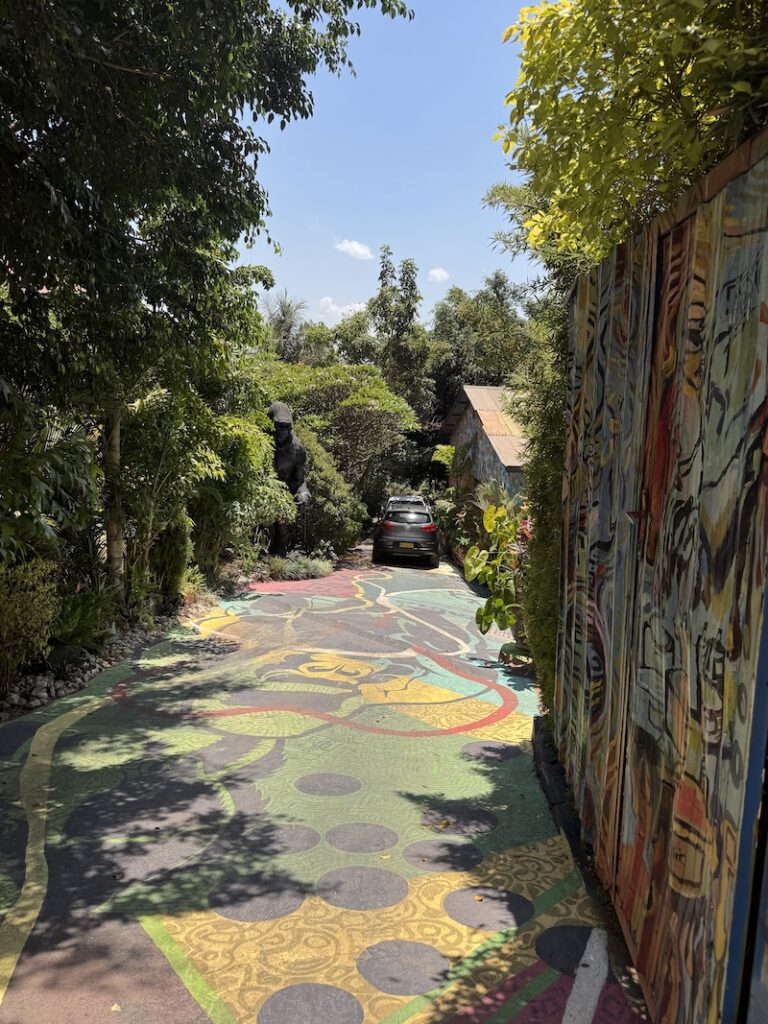
Simply walking around the city centre was one of our favourite activities. Colourful façades, decorative details and elegant public buildings can be found throughout the old town, making it a fantastic place for photographers and architecture lovers.

Almost every street seemed to reveal another beautiful building.

 Art Nouveau architecture of Subotica
 Art Nouveau architecture of Subotica
 Art Nouveau architecture of Subotica

Explore the City Centre

Subotica’s centre is compact and easy to explore on foot.

The main square is surrounded by some of the city’s most impressive buildings and serves as the heart of local life. Even during our short time in the city, we enjoyed wandering through the streets, admiring the architecture and taking in the atmosphere.

Compared to the larger cities we had visited earlier in the trip, Subotica felt calm, relaxed and easy to navigate.

Subotica's centre
Subotica's centre
Subotica's centre

A Different Side of Serbia

What surprised us most about Subotica was how different it felt from the rest of Serbia.

The architecture, culture and atmosphere felt noticeably influenced by neighbouring Hungary. In many ways, it felt more like a Central European city than a Balkan one.

That contrast made it one of the most memorable stops on our journey through the region.
Final Thoughts

We only got to experience a small part of Subotica before illness put our plans on hold, but what we did see left us wanting to return one day.
The beautiful architecture, relaxed atmosphere and Central European character made it one of the most distinctive places we visited in Serbia. If you’re travelling between Serbia and Hungary, it’s well worth spending a day or two here.

For us, Subotica was an unexpected surprise and a memorable final stop before crossing into Hungary and continuing our travels.

June 13, 2026 0 comments
FacebookTwitterPinterestLinkedinRedditStumbleuponWhatsappTelegramThreadsOpenAIChatGPTEmail
Serbia

A Short Guide to Novi Sad

by Livia June 13, 2026
written by Livia

After spending over two weeks in Belgrade, we headed north to Novi Sad, Serbia’s second-largest city. Located on the banks of the Danube, Novi Sad offers a more relaxed atmosphere than the capital and makes for an enjoyable stop while travelling through northern Serbia.

We only spent a few days here, but enjoyed exploring the old town, visiting Petrovaradin Fortress and discovering some great cafés and restaurants along the way.

This is our short guide to Novi Sad.

Visit Petrovaradin Fortress

Petrovaradin Fortress is Novi Sad’s most famous landmark and definitely worth a visit. Perched above the Danube, it offers fantastic views across the river and over the city.

We visited during winter, when the fortress was quiet and easy to explore. The grounds are large enough to spend a couple of hours wandering around, and there are plenty of viewpoints where you can stop and take in the scenery.

Today the fortress is best known as the home of the EXIT Festival, but even outside festival season it’s one of the highlights of Novi Sad.

View from Petrovaradin Fortress
Where's the rave?
Novi Sad Streets

Explore the Old Town

Novi Sad’s old town is compact, walkable and easy to explore in a day.

The city centre is filled with cafés, restaurants, churches and attractive squares, making it a pleasant place to wander around without any particular destination in mind. We spent much of our time simply walking through the centre, stopping for coffee and enjoying the slower pace of life.

Compared to Belgrade, Novi Sad felt quieter and more laid-back, making it a nice change of pace after the Serbian capital.

Novi Sad old town
ice cream colors of Novi Sad old town

Where to Eat in Novi Sad

Loft Downtown, Coffee & Food Bar

Loft Downtown is a great café in Novi Sad. Located in the heart of the city, it’s a great place to stop for coffee, breakfast or a light lunch while exploring the old town.

The atmosphere is modern and relaxed, making it easy to spend an hour or two watching the world go by.

Restoran Kafanica

For traditional Serbian food, we can recommend Restoran Kafanica.

The restaurant serves generous portions of local dishes in a welcoming setting and was one of our favourite meals in Novi Sad. If you’re looking to try Serbian cuisine before leaving the country, this is a great place to do it.

Restoran Kafanica
Restoran Kafanica
Loft Downtown
Loft Downtown

Final Thoughts

While Novi Sad may not have the energy or size of Belgrade, we really enjoyed our time here. The combination of a relaxed city centre, good food and impressive fortress makes it a worthwhile stop while travelling through Serbia.

For us, Novi Sad was a pleasant place to slow down for a few days before continuing our journey north.

June 13, 2026 0 comments
FacebookTwitterPinterestLinkedinRedditStumbleuponWhatsappTelegramThreadsOpenAIChatGPTEmail
Serbia

Belgrade: Our Favourite City in Serbia

by Livia June 13, 2026
written by Livia

Updated June 2026. Originally visited in December 2018.

Belgrade ended up being one of our favourite stops during our travels through the Balkans. We originally planned to stay for a couple of weeks and quickly found ourselves settling into a comfortable routine of cafés, walks, good food and exploring different neighbourhoods.

We visited in December and even experienced a snowstorm while we were there, before celebrating Christmas with visiting family in the Serbian capital. The combination of lively streets, historic architecture, excellent food and welcoming atmosphere made it a city we genuinely enjoyed spending time in.

Belgrade’s food scene deserves its own article. If you’re looking for restaurant recommendations, have a look at our guide to where to eat in Belgrade.

Where to stay in Belgrade

Belgrade is a large city, but most visitors will probably want to stay somewhere close to the city centre. We found that being within walking distance of Knez Mihailova, Dorćol and Belgrade Fortress made it easy to explore much of the city without relying on public transport.

If you’re planning to stay for a few days, we’d recommend looking for accommodation in the city centre or nearby neighbourhoods such as Dorćol, Savamala or Vračar. Each area has its own character and gives easy access to restaurants, cafés and many of Belgrade’s main attractions.

We booked our accommodation through Booking.com, where you’ll find plenty of options throughout Belgrade, from budget apartments to boutique hotels.

Explore Belgrade’s Different Neighbourhoods

One of the things we enjoyed most about Belgrade was simply wandering around its different districts.

Knez Mihailova, the city’s main pedestrian street, quickly became one of our favourite places for a walk. Lined with shops, cafés and historic buildings, it acts as the heart of the city centre and connects many of Belgrade’s major attractions.

We also spent plenty of time in Skadarlija, Belgrade’s bohemian quarter and Dorćol, a neighbourhood filled with cafés, bars, restaurants and creative spaces. It felt slightly more relaxed than the city centre and quickly became one of our favourite parts of Belgrade.

For a completely different side of the city, we crossed the river to Novi Beograd. The wide boulevards, large apartment blocks and socialist-era architecture create a very different atmosphere. While there, we made a point of seeing the famous Genex Tower, one of the most iconic examples of Yugoslav brutalist architecture.

Dorćol
Skadarlija
Genex Tower
Genex Tower

Visit Belgrade Fortress

No visit to Belgrade is complete without spending some time at Belgrade Fortress.

Located where the Sava and Danube rivers meet, the fortress offers fantastic views across the city and is one of the most important historical sites in Serbia. The surrounding park is also a pleasant place for a walk, especially on a clear winter day.

Temple of Saint Sava

The Temple of Saint Sava is one of the largest Orthodox churches in the world and is impossible to miss when visiting Belgrade.

The building dominates the skyline and is impressive both inside and out. Even if you’re not particularly interested in religious sites, it’s worth visiting simply to appreciate the scale of the architecture.

House of Flowers

One of the more interesting places we visited was the House of Flowers, the mausoleum of former Yugoslav leader Josip Broz Tito.

Whether you’re interested in Yugoslav history or not, the museum provides a fascinating glimpse into a period that shaped much of the Balkans. It also helps explain some of the history and politics that continue to influence the region today.

Markets, Cafés and Everyday Life

We always enjoy visiting local markets when travelling, and Kalenić Market was one of our favourite places in Belgrade. It’s a lively market where locals shop for fresh fruit, vegetables, cheese and other produce.

Belgrade also has a fantastic café culture. Some of our favourite places included Pržionica D59B, Café Amelie, Hotel Moskva and Zaokret. We often found ourselves stopping for coffee between sightseeing, especially on cold winter days.

For an evening drink, Blaznavac was one of our favourite bars, with a fun atmosphere and plenty of character.

Hotel Moskva
Zaokret

A Strange Visit to BIGZ

One of the more memorable places we explored was BIGZ, a huge former publishing house that had partially transformed into an artists’ and creative space.

At the time of our visit, much of the building felt semi-abandoned. There was security at the entrance and we were told before arriving that visitors are not supposed to enter, but we walked in confidently and somehow found ourselves exploring the building without any problems.

It was one of those slightly surreal travel experiences that you remember long after the more famous attractions have faded from memory.

Final Thoughts

Belgrade isn’t the prettiest city in Europe, but it has an energy that’s difficult to describe until you’ve spent some time there.

The mix of history, café culture, food, architecture and neighbourhood life makes it a city that’s easy to settle into. What started as a two-week stop became one of the highlights of our Balkan trip, and it’s a city we’d happily return to one day.

June 13, 2026 0 comments
FacebookTwitterPinterestLinkedinRedditStumbleuponWhatsappTelegramThreadsOpenAIChatGPTEmail
De Jordaan old houses
Netherlands

Visiting the Jordaan: Amsterdam’s Most Beautiful Neighbourhood

by Sam June 11, 2026
written by Sam

When most people think of Amsterdam, they picture canals, bicycles and narrow houses leaning slightly towards the water. What many don’t realise is that some of the city’s most charming streets, best cafés and hidden corners are all tucked away in one neighbourhood: the Jordaan.
Originally built as a working-class district in the 17th century, the Jordaan has transformed into one of Amsterdam’s most desirable neighbourhoods while somehow managing to retain much of its local character. Wander through the area today and you’ll find quiet canals, independent cafés, historic pubs, hidden courtyards and some of the prettiest streets in the city.

If you’re visiting Amsterdam, make sure you set aside at least half a day to explore the Jordaan properly.

Start at the Anne Frank House

No visit to the Jordaan is complete without seeing the Anne Frank House.

Located on the Prinsengracht canal, this is one of Amsterdam’s most important historical sites. The museum tells the story of Anne Frank and her family during the Second World War and includes the famous secret annex where they spent more than two years in hiding.

Tickets often sell out weeks in advance, so book ahead if visiting is a priority.

Even if you don’t go inside, the surrounding canals are worth exploring and provide a good starting point for discovering the rest of the neighbourhood also you can spot the Anne Frank Monument outside the Westerkerk.

Anne Frank Monument

The Anne Frank Monument

The Westerkerk and One of Amsterdam’s Best Photo Spots

Just around the corner stands the impressive Westerkerk, one of Amsterdam’s most recognisable churches.

The church tower dominates the skyline and can be seen from all over the city. Rembrandt is believed to be buried here, although the exact location of his grave remains unknown.
For photographers, one of our favourite viewpoints is the junction of Eerste Leliedwarsstraat and Nieuwe Leliestraat. Looking towards the church from here creates a classic Amsterdam scene, with bicycles, canal houses and the Westerkerk tower framed perfectly at the end of the street.
It’s one of those places that somehow feels more Amsterdam than Amsterdam itself.

Westerkerk Toren is visible all over the Jordaan

Wander the Canals and Hidden Streets

The best way to experience the Jordaan is simply to get lost.

The neighbourhood is packed with narrow streets, tiny bridges and beautiful canals. Around almost every corner you’ll find flower-covered bicycles, historic facades or small cafés tucked into old buildings.

One of our favourite spots is the bridge at the intersection of Bloemgracht and Eerste Bloemdwarsstraat.

The Bloemgracht is often called one of the most beautiful canals in Amsterdam, and standing on the bridge here gives you a perfect view of the canal stretching away between rows of traditional Dutch houses.

If you’re into photography, this is one location you definitely shouldn’t miss.

Keep an eye out for the area’s street art as well. The Jordaan isn’t known as a graffiti district like Amsterdam Noord, but you’ll still find murals, stickers and small pieces of urban art hidden throughout the neighbourhood.

Typical Amsterdam views

Visit Rembrandt’s Final Home

Many visitors know about the famous Rembrandt House Museum in the city centre, but fewer realise that the painter spent the final years of his life in the Jordaan.

After financial difficulties forced him to sell his grand residence, Rembrandt moved to a more modest house on Rozengracht.

Today the building remains a private residence, but a memorial plaque marks the location and offers a small glimpse into the artist’s later years.

It’s an easy stop while exploring the neighbourhood and a nice reminder that some of Amsterdam’s greatest history is hidden in plain sight.

Where to Eat in the Jordaan

One of the best things about the Jordaan is the food.

Unlike some parts of central Amsterdam, the neighbourhood still has plenty of places that cater to locals rather than tourists.

Kessens

If you’re looking for breakfast or lunch, make your way to Kessens.

Known for excellent sandwiches, fresh ingredients and great coffee, it’s one of our favourite places to eat in the area. The atmosphere is relaxed, the food is consistently good and it feels very much like a neighbourhood spot rather than a tourist attraction.

Kafenion

For coffee, head to Kafenion.

This small Greek-inspired café serves excellent coffee and is the kind of place where you can easily lose an hour watching local life drift by outside the window.

Have a Drink at Amsterdam’s Oldest Pub

If you’re in the mood for a beer, make your way to Café Chris.

Founded in 1624, it is often considered Amsterdam’s oldest pub.

Despite its age, it remains refreshingly unpretentious. You’ll find locals chatting at the bar, traditional Dutch beers on tap and an atmosphere that feels a world away from the city’s more touristy drinking spots.

It’s one of those places that reminds you Amsterdam was a living city long before it became a popular destination.

Great food and Drink in the Jordaan

Visit One of Amsterdam’s Original Coffeeshops

No guide to the Jordaan would be complete without mentioning Paradox Coffeeshop.

Located just a short walk from the canals, Paradox is one of Amsterdam’s original local coffeeshops and has been part of the neighbourhood for decades.

Unlike some of the larger tourist-focused coffeeshops in the city centre, Paradox has always maintained a more local atmosphere.

If you’re lucky, you’ll meet Ludo. He’s a walking encyclopedia of Jordaan history and can tell you stories not only about the coffeeshop itself but also about the building, the surrounding streets and how the neighbourhood has changed over the years.

Even if you’re simply curious about Amsterdam’s coffeeshop culture, it’s worth stopping by for a chat.

The best (and most authentic) Coffeeshop in the Jordaan

Why We Always Return to the Jordaan

The Jordaan isn’t home to Amsterdam’s biggest attractions or busiest shopping streets, and that’s exactly why we love it.

This is where you’ll find the Amsterdam of canals lined with bicycles, hidden courtyards, historic pubs, local cafés and quiet streets that seem untouched by time.

Whether you’re visiting the Anne Frank House, photographing the Westerkerk, enjoying lunch at Kessens or simply wandering along the Bloemgracht, the Jordaan offers a side of Amsterdam that many visitors never properly discover.

If you only have time to explore one neighbourhood in Amsterdam, make it the Jordaan.

June 11, 2026 0 comments
FacebookTwitterPinterestLinkedinRedditStumbleuponWhatsappTelegramThreadsOpenAIChatGPTEmail
Namibia

Namibia Self Drive Safari vs Guided Tour: Which Is Better?

by Sam June 2, 2026
written by Sam

What’s the best way to travel around Namibia?

One of the most common questions we get after travelling in Namibia is whether it’s better to join a guided safari tour or rent a 4×4 and drive yourself.

The short answer?

We’ve done both, and honestly, neither is better. They’re just different.

What We Actually Did

Before comparing costs, comfort and flexibility, it’s worth looking at what we actually did on each trip. Although both adventures took place in Namibia, they ended up being very different experiences. The Cameleon Safaris tour covered ALOT of ground and it would be extremely tiring to drive the distances they did, if you want to see as much as possible, we would highly reccommend taking one of their tours.

Our 9-Day Chameleon Safaris Tour

The guided tour focused on many of Namibia’s most famous highlights. Over nine days we visited:

  • Etosha National Park
  • Swakopmund
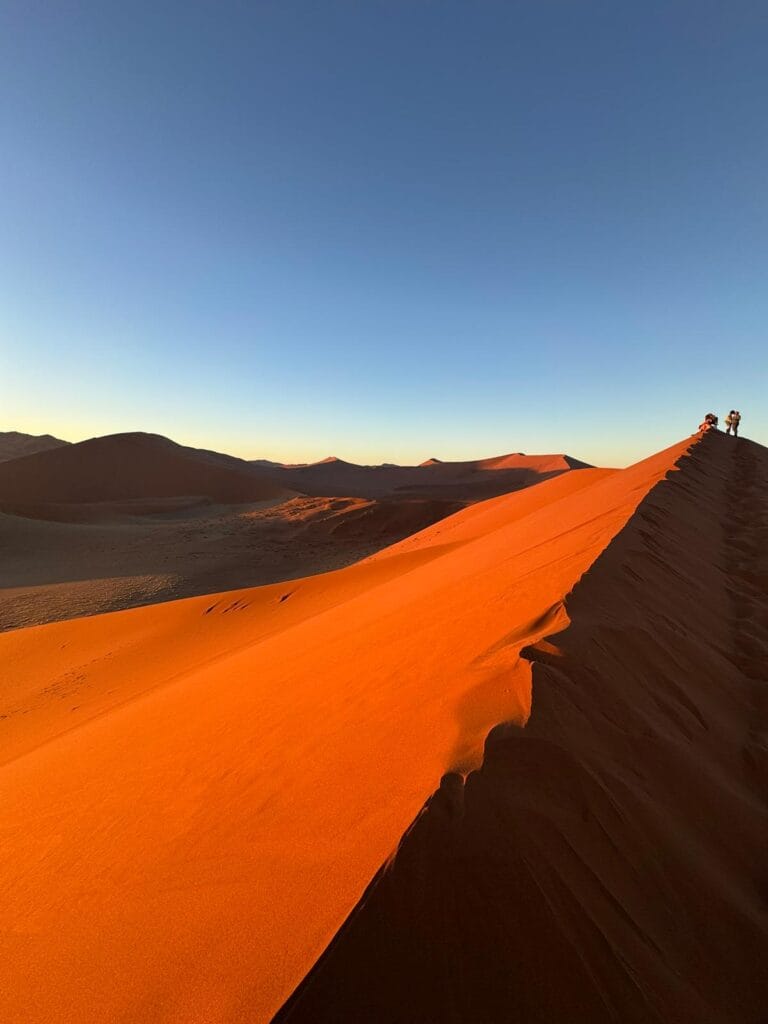
  • Dune 45
  • Sossusvlei
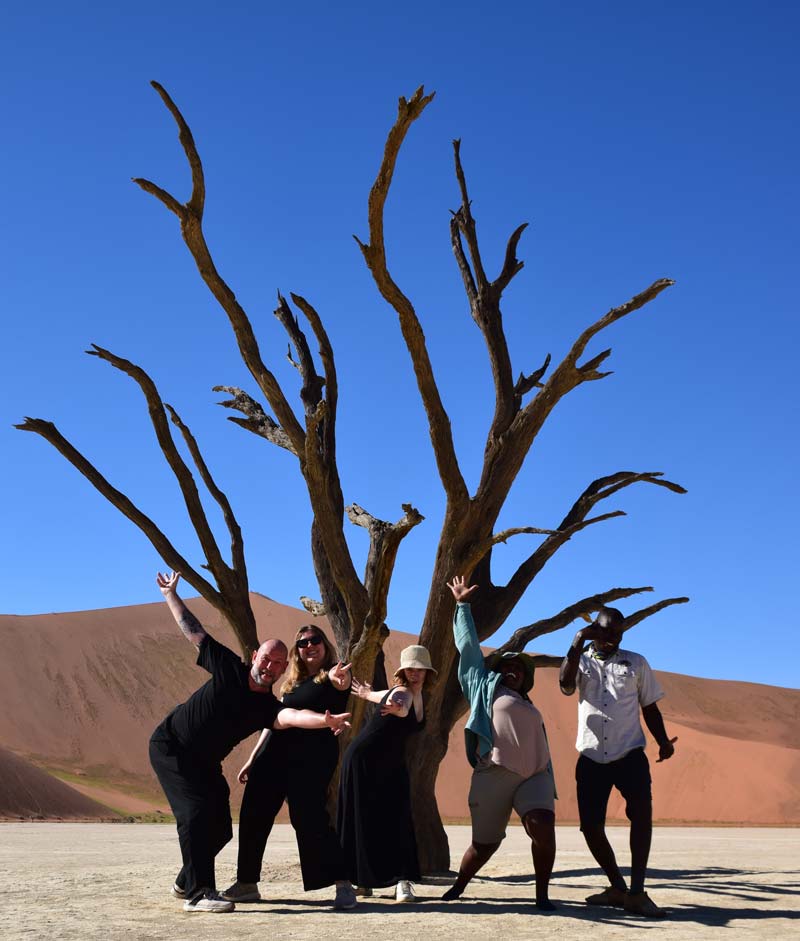
  • Dead Vlei
  • Sesriem Canyon
  • Klein-Aus Vista
  • Kolmanskop Ghost Town
  • Lüderitz
  • Fish River Canyon
  • Quiver Tree Forest

This trip was very much about seeing Namibia’s headline attractions. The biggest surprise for us was just how much ground we covered in such a short amount of time. Looking back, it’s hard to believe everything that was packed into nine days.

We expected Dead Vlei and Sossusvlei to be impressive, but they completely exceeded our expectations. Dead Vlei in particular is one of the most extraordinary places we’ve ever visited.

The biggest surprise of the entire guided tour was Kolmanskop. Before arriving, we thought it would be a quick stop to photograph an abandoned town. Instead, it became one of the highlights of our time in Namibia. The combination of history, abandoned buildings and drifting desert sand creates an atmosphere unlike anywhere else we’ve visited. If you’re interested in photography, history or unusual places, Kolmanskop alone is worth the journey.

📌 We booked our Nambia Tour directly with Chameleon Safaris and we think you should too. We even have a discount code you can use if you want 10% off any of their tours, just use code PADDINGTON10 at checkout.

Our 8-Day Namibia Self Drive Safari

After the guided tour, we rented a fully equipped 4×4 and headed off on our own adventure. Rather than revisiting places we’d already seen, we focused on areas we had missed during the tour:

  • Spitzkoppe
  • Brandberg Mountain
  • The White Lady hike
  • Vingerklip
  • Ugab Terraces
  • Waterberg

This trip felt completely different. Instead of trying to see as much as possible, we slowed down and spent more time in fewer places.

The biggest surprise was Spitzkoppe. We had heard good things about it beforehand, but neither of us expected it to become one of our favourite places in Namibia. The granite peaks, hiking trails, rock formations and night skies were absolutely incredible.

Waterberg was another surprise. We booked the rhino tracking experience hoping to see a few rhinos from a vehicle. We certainly didn’t expect to be walking alongside them only a few metres away.

Here’s our full itinerary of our Namibia Self Drive with all the best tips / do’s and don’t

If you’re trying to decide between a Namibia self drive safari and a guided tour, here’s our honest take.

Cost Comparison

Let’s start with the big one.

The Chameleon Safaris tour cost approximately N$48,000 (€2,592) per person and included transport, accommodation, camping, meals, guides, park fees and activities.

At first glance, that’s a lot of money and our 8-day self drive safari was significantly cheaper. But you are paying for comfort, zero stress and not having to book lodges and camp grounds.

The 4×4 rental cost us approximately N$20,650 (€1,100) for two people. Adding fuel, campsites, food and a couple of lodge stays brought our total to roughly €2,100 for two people, depending on how many restaurant meals and upgrades you choose.

Financially, the self drive option wins comfortably. On first glance for the price of one guided tour, two people can complete a substantial self drive adventure.

Wildlife Viewing: Guided Tour Wins

This one wasn’t even close.

When we visited Etosha National Park with Chameleon Safaris, our guide seemed capable of spotting animals from another continent.

Within minutes, they were finding lions, elephants, giraffes, birds and creatures we would never have noticed ourselves.

Later, while driving around Namibia, we saw plenty of self-drive tourists driving around Etosha looking slightly confused and often stopping randomly in the hope of finding wildlife.

The guides know where animals were last seen, understand behaviour patterns and communicate with other guides throughout the day.

If wildlife is your number one priority, especially in Etosha, we would strongly recommend paying for a local guided safari. They will pick you up at the lodge in an open sided raised 4×4 and take you around the park while you take photos.

You can’t beat sitting in the back of an open sided 4×4 taking photos while the guides do the spotting.

Freedom: Self Drive Wins

The biggest advantage of renting your own 4×4 is freedom.

Want to spend an extra hour photographing a sunset? Go for it.

Found a campsite you love and want to stay another night? No problem.

Fancy stopping every ten minutes for photos? Nobody is going to complain.

With a self drive safari, you completely control the pace.

Some of our favourite moments in Namibia happened simply because we decided to take a random gravel road or stop somewhere unexpected. That being said our Chameleon Safaris guide told us we only have to ask if we want to stop. They also know great photo spots and how far it is to the next toilet.

That spontaneity doesn’t really exist on an organised tour.

Freedom and the open road.

Stress Levels: Guided Tour Wins

Driving in Namibia isn’t difficult, but it does require concentration.

  • Distances are huge.
  • Fuel stations can be hundreds of kilometres apart.
  • Gravel roads demand attention.
  • Tyres puncture.
  • Equipment breaks.
  • Water containers leak.

Trust us, we experienced some of these ourselves.

On the guided tour, somebody else handled all of that. We could sit back, watch the scenery and enjoy the experience without worrying about navigation, campsite bookings or whether we had enough fuel to reach the next town.

For many travellers, particularly first-time visitors to Africa, that’s worth paying for.

With a guided tour everything is organized, your food, tours and accommodation.

Accommodation and Comfort

This one depends on your travel style.

On the guided tour, we stayed in a mix of lodges, hotels and campsites. Everything was organised for us and meals were prepared by our guides.

The self drive trip required more effort.

We had to set up camp, cook, clean and organise ourselves every day.

That said, we also had complete freedom to choose where we stayed.

Some nights we camped under spectacular star-filled skies, while other nights we upgraded ourselves into comfortable lodges.

Call this one a draw.

Cooking for youself can be a pain if the BBQ doesn’t get hot enough, but having a nice hotel with a pool has a lot going for it.

Which Trip Saw More of Namibia?

For us the Chameleon Safaris Guided tour covered more ground and our Self Drive was a much slower pace.

In just nine days, we visited Etosha, Swakopmund, Sossusvlei, Dead Vlei, Sesriem Canyon, Fish River Canyon, Kolmanskop and the Quiver Tree Forest.

That’s an enormous amount of Namibia packed into a relatively short time and personally I wouldn’t want to drive those distances AND have the energy to hike up dunes, worry about toilets and gas stations. It’s nice to sit back and relax and have someone else do the work for you.

Our self drive trip was slower and more focused. Instead of trying to see everything, we concentrated on Spitzkoppe, Brandberg, Vingerklip and Waterberg.

The result was a deeper experience in fewer places.

Neither approach is wrong. It simply depends on whether you prefer breadth or depth.

Out on your own, or enjoying a group trip, it’s really down to your own travel style.

Who Should Choose a Guided Tour?

We would recommend a guided tour if:

  • It’s your first visit to Namibia
  • Wildlife is your main priority
  • You don’t want to drive long distances
  • You enjoy meeting other travellers
  • You want everything organised for you
  • You have limited time

The Chameleon tour showed us some of the most spectacular places we’ve ever visited and removed virtually all of the planning and logistics. It’s also more social, so for solo travelers that can be really nice if you want to meet other people.

Who Should Choose a Self Drive Safari?

A self drive safari is probably better if:

  • You enjoy road trips
  • You like travelling independently
  • You want maximum flexibility
  • You want to choose your own accommodation
  • You’re travelling on a tighter budget

There is something incredibly satisfying about driving your own vehicle across Namibia’s vast landscapes and creating your own adventure.

What We’d Change Next Time

Having now experienced both a guided safari and a self-drive adventure in Namibia, there are a few things we’d do differently.

If we were booking the guided tour again, we’d probably choose one with an extra day in Etosha or Swakopmund and perhaps skip Fish River Canyon. While it was certainly impressive, the long detour didn’t quite justify the time investment for us. We’d happily trade that day for more time exploring the coast or the desert landscapes around Sossusvlei. That being said, Chameleon Safaris offers a broad spectrum of safari experiences, someting for everyone if you like.

📌 We booked our Nambia Tour directly with Chameleon Safaris and we think you should too. We even have a discount code you can use if you want 10% off any of their tours, just use code PADDINGTON10 at checkout.

For the self-drive safari, we’d definitely allow more time. Eight days was enough to see some incredible places, but we often felt like we were arriving somewhere just as it was time to leave again. Namibia is enormous, and the distances between destinations are much greater than they appear on a map.

We’d also book our vehicle and accommodation earlier. Leaving things until the last minute limited our options and meant we had to be more flexible with our route than we’d originally planned.

If someone asked us how to travel Namibia, we’d recommend exactly what we ended up doing. Start with a guided safari to visit places like Etosha, Sossusvlei and Dead Vlei, where local knowledge makes a huge difference. Then rent a 4×4 and spend a week exploring some of the country’s quieter corners at your own pace.

Looking back, the guided tour and self-drive safari weren’t competing experiences. They complemented each other perfectly and together gave us a much more complete picture of Namibia than either trip could have done on its own.

Our Verdict

If we had to choose just one?

We honestly couldn’t. The guided safari gave us access to incredible wildlife encounters, expert local knowledge and many of Namibia’s most famous attractions. The self drive safari gave us freedom, flexibility and some of our most memorable moments on the open road.

If your budget allows, we genuinely think the perfect Namibia itinerary combines both.

Use a guided tour to experience places like Etosha and Sossusvlei, then rent a 4×4 afterwards and explore some of the country’s quieter corners at your own pace.

That’s exactly what we did.

And looking back, we wouldn’t change a thing.

June 2, 2026 0 comments
FacebookTwitterPinterestLinkedinRedditStumbleuponWhatsappTelegramThreadsOpenAIChatGPTEmail
Indonesia

Best Satay in Yogyakarta: Where to Eat Sate in Jogja

by Sam February 28, 2023
written by Sam

Latest update: June 2026

Yogyakarta, also know as Jogja, was one of our favourite food destinations in Indonesia. From street food stalls to family-run restaurants, we ate incredibly well during our time in the city.

One dish we kept coming back to was satay (or sate), grilled skewers of meat cooked over charcoal and served with a variety of sauces and seasonings. If you’re looking for the best satay in Yogyakarta, these are the places we would recommend.

Ingredients used in Yogyakarta’s Satay

In Yogyakarta you’ll find satay made from chicken, beef, goat and lamb. Many restaurants brush the meat with kecap manis, Indonesia’s sweet soy sauce, while it cooks over charcoal, giving it a slightly smoky and caramelised flavour.

Best Places to Enjoy Satay in Yogyakarta

There are many places to enjoy satay in Yogyakarta, but some of the best places include:

1. Warung Sop & Sate Sapi Pak Bayu

Warung Sop & Sate Sapi Pak Bayu was our favourite satay restaurant in Yogyakarta and the one we’d return to without hesitation. Located around 30 minutes north of the city in the Sinduharjo area, it is best known for its excellent beef satay and a huge dish they call the “Dinosaur Ribs”.

Everything is cooked over charcoal and served with a rich sauce made from the meat juices and kecap manis. The food is fantastic, the service is quick and friendly, and the atmosphere feels genuinely local. It’s well worth the short taxi ride from the city centre.

2. Satay Klathak Pak Pong

Satay Klathak Pak Pong serves various types of satay, including chicken, beef, goat, and lamb. The meat is grilled over charcoal and served with a special sauce made from coconut milk, lemongrass, and other herbs and spices. The restaurant is located in the Klathak area, about 30 minutes south from the city center.

3. Ayam Goreng Jawa Mbah Cemplung

Ayam Goreng Jawa Mbah Cemplung is located in the Prawirotaman area, this restaurant is known for its delicious chicken and goat satay. The meat is marinated in a special blend of spices and grilled over charcoal. The peanut sauce served with the satay is made from roasted peanuts, chili, and other spices, giving it a rich and savory flavor.

4. Sate Kambing Sari Cempe Neng Lia

Sate Kambing Sari Cempe Neng Lia is famous for its lamb satay, which is grilled to perfection and served with a spicy sauce made from peanuts and chili. The restaurant is located in the Tegalrejo area, not far from the city center.

Tips for Eating Satay in Yogyakarta

One thing we quickly learned in Yogyakarta is that no two satay restaurants are exactly the same. Some specialise in beef, others in goat or chicken, and the sauces can vary just as much as the meat. If you’re a fan of grilled food, don’t stop at just one restaurant.

Many of the best satay places are local restaurants rather than tourist attractions, so carrying some cash is a good idea. We also found that satay is often best enjoyed in the evening, when the charcoal grills are firing and the restaurants are full of local families and groups of friends.

Final thoughts

In our opinion, the best satay in Yogyakarta has to be Pak Bayu, not just because of the quality of the food, but also the traditional atmosphere and friendly staff.

That said, Yogyakarta has no shortage of excellent places to eat satay, whether you prefer chicken, beef, goat or lamb. If you’re visiting the city, trying satay should be high on your food list, and hopefully this guide helps you find a new favourite.

If you want to read more about food in Yogyakarta see our previous post ‘Where to eat in Yogyakarta‘

February 28, 2023 0 comments
FacebookTwitterPinterestLinkedinRedditStumbleuponWhatsappTelegramThreadsOpenAIChatGPTEmail
Dominican Republic

How to Hike to Salto El Limón Without a Guide

by Sam April 19, 2022
written by Sam

Hiking to Salto El Limón waterfall in the Dominican Republic is one of the best things to do near Las Terrenas, and you absolutely do not need to join a tour to do it.

This guide shows exactly how to hike to Salto El Limón without a guide, using a local guagua to reach Casa Nega and follow a quieter back route that avoids crowds, saves money, and gives you a better overall experience of this famous Dominican Republic waterfall.

In simple terms, the route is: Las Terrenas → guagua to Casa Nega → hike down to Salto El Limón → exit via the standard El Limón trail → guagua back to Las Terrenas.

Salto El Limón hike quick facts

  • Route type: one-way / loop-style route
  • Start point: Casa Nega
  • Finish point: El Limón village
  • Nearest town: Las Terrenas / El Limón
  • Guide needed: No, but the route is easier with offline maps
  • Difficulty: Moderate
  • Best time to arrive: Early morning
  • Can you swim: Yes
  • Transport: Guagua from Las Terrenas and back

Quick Overview: Hiking to Salto El Limón from Las Terrenas

  • Location: Samaná Peninsula, Dominican Republic
  • Distance: ~8–10 km
  • Time: ~4 hours
  • Difficulty: Easy to moderate

Suggested Itinerary

  • 07:15 Guagua from Las Terrenas
  • 07:45 Start hiking
  • 08:30 Arrive at Salto El Limón waterfall
  • 08:30–09:30 Swim and explore
  • 09:30–10:30 Hike out
  • 10:30 Return

What You Need for the Hike

  • Phone with offline maps
  • ~500 DOP cash
  • Water + snacks
  • Swimwear + towel
  • Sun protection
  • Light rain jacket

Save These Map Points Before You Go

When hiking to Salto El Limón, mobile signal is unreliable.

Use Google Maps:

  • Search Salto El Limón
  • Download offline map

Optional: Mapy.cz for better hiking trails.
It shows smaller trails that Google often misses.
Mapy.cz for iPhone
Mapy.cz for Android

The Route

Salto El Limón hiking route without a guide from Casa Nega

This is the route to the waterfall from the drop off point (2)
Download this route as GeoJSON

1. Guagua Pickup in Las Terrenas

The ‘Parrada Guagua El Limón‘ outside La Bodega, opposite the cemetery
https://goo.gl/maps/agc9ze4kxdeFFSZC9

Guagua times
Guagua times
Parrada Guagua
This is where you get the guagua from in Las Terrenas

2. Guagua to Casa Nega (Start of the Hike)

Casa Nega drop-off
https://goo.gl/maps/p8r7F2u2yHnzwojv6
Approx. 4km after the town of El Limón. Known as ‘Casa Nega‘ at the 19km road marking

From Las Terrenas:

  • Take the early guagua
  • Cost: ~150 DOP
  • Ask for: Casa Nega after El Limón

This drop-off sets you up for a mostly downhill hike to Salto El Limón waterfall, which is far easier than the standard route.

Tell the driver:
“Casa Nega, después de El Limón.”

You’ll be dropped about 4 km past El Limón village, near a roadside sign and a dirt track.

Casa Nega
Casa Nega

3. Hiking to the Waterfall (Back Route)

From the main road:

  1. Cross the road carefully and walk in the same direction as the guagua
  2. You will see the signs for “Cascada El Limón” and “Casa Nega”
  3. Follow the signs and take a left up the dirt road uphill

At the top of the hill:

  • Spot a small wooden house
  • Look for a fence crossing (stile)
  • Enter the field and follow the worn trail

Bonus: First Viewpoint

Climb slightly to the ridge for a wide, cinematic view over the rainforest. Worth the 2-minute detour.

From here, the trail becomes clear:

  • Descend gradually
  • Follow the main path
  • Cross a shallow river

Turn left shortly after → waterfall entrance.

First Viewpoint over the subtropical rainforest of El Limón in Samaná

Walk directly down to the path and keep following it all the way until you hit your first river crossing. It’s shallow and has a small path across it. Immediately after you can turn left and head to the waterfall entrance.

4. Arrive Early and Beat the Crowds

Salto El Limón waterfall
https://maps.app.goo.gl/SnEFrwcGc4mhbfjf6

If you took the 07:15 guagua, you might arrive before ticket staff.

  • Early arrival: often free entry
  • Later arrival: ~50 DOP

Arriving early has advantages:

  • Fewer tourists at the waterfall
  • Cooler temperatures for hiking
  • Sometimes no entrance fee

Pro tip

Before heading down:

  • Walk behind the souvenir stand
  • You’ll get a direct top-down view of the waterfall

Then descend to the base.

Swimming at Salto El Limón Waterfall

The payoff: a 40-metre cascade crashing into a natural pool.

The highlight of hiking to Salto El Limón is reaching the waterfall itself.

  • Height: ~40 metres
  • Natural pool for swimming
  • You can swim directly under the waterfall

This is one of the most scenic waterfalls in the Dominican Republic, and arriving early makes a huge difference.

  • Expect strong spray and slippery rocks
  • Water is cool, refreshing, and deep enough for a proper dip

This is the moment the effort pays off.

Salto El Limon
Salto El Limón the 40m high waterfall with natural pool

5. The Exit Route (Standard Path Out)

Instead of going back the same way:

  1. Cross the wooden bridge
  2. Follow the path to the right downstream
  3. Pass a smaller waterfall
  4. Begin a steady uphill climb

You will see people walking the opposite direction, don’t be worried.
You’ll then reach:

  • A clearing with views over the falls on your left
  • A gift shop area
  • Mule parking zone

From here:

  • Continue forward and descending, you will see poeple on mule back riding the opposite direction
  • Cross the river
  • Follow the water line briefly (~100 m)

You’ll exit near:

  • The river crossing – A water pump and pipe and a dirt track leading to the left
  • Keep walking past the official entrance road
  • Keep walking past houses to the main road
  • Turn right → walk back downhill to El Limón village on the main road
View over Salto El Limon in the Dominican Republic
View over Salto El Limón on the walk OUT!

6. Return to Las Terrenas

Return guagua stop in El Limón
https://maps.app.goo.gl/RxGRoHNB7UkJjFUW8

Catch a guagua from El Limón:

  • Same route back
  • Similar cost (~150 DOP)
  • Frequency: regular but not fixed

Guagua Dropoff in Las Terrenas
https://maps.app.goo.gl/u73v4h4f5SdVys8B9

Why This Route Works Better

Most people:

  • Start in El Limón
  • Ride horses
  • Climb uphill both ways

You:

  • Descend into the jungle
  • Arrive early
  • Avoid crowds
  • Pay less
  • Get better views

It’s the same waterfall, just approached intelligently.

FAQ: Hiking to Salto El Limón

Is it safe to hike without a guide?

Yes. The trail is clear, well-used, and easy to follow with offline maps.

Do I need good fitness?

Moderate fitness is enough. One uphill section on the way out is the only challenge.

Can you swim at the waterfall?

Yes. Swimming is one of the highlights.

Is it worth it without a tour?

Absolutely. You save money, avoid crowds, and control your pace.

Do You Need a Guide for Salto El Limón?

No, not for this route if you’re confident with offline maps.
A guide may be useful if you’re nervous, travelling solo, or uncomfortable navigating rural trails.
You do not need to take a horse tour.Go early and be respectful around local access points.

Final Take

This isn’t just a hike. It’s a small logistical puzzle that rewards initiative.

We’re not saying tours are wrong, but if you prefer walking independently, this quieter route gives you a completely different experience.

And for a brief window, Salto El Limón feels like it belongs to you.

April 19, 2022 0 comments
FacebookTwitterPinterestLinkedinRedditStumbleuponWhatsappTelegramThreadsOpenAIChatGPTEmail
Serbia

Where We Ate in Belgrade

by Livia January 15, 2020
written by Livia

Latest updated: June 2026

We spent just over two weeks in Belgrade and absolutely loved the city. One of the main reasons was the food.

Belgrade has a surprisingly diverse food scene. You’ll find everything from traditional Serbian restaurants and street food stalls to excellent Asian cuisine and more upscale European dining. No matter your budget or taste, there’s plenty to choose from.

It’s also a great city to explore on foot, stopping for coffee, pastries or a meal as you go. During our stay, we tried quite a few places, and these were some of our favourites.

Here’s our guide to where to eat in Belgrade.

Where to Eat Traditional Serbian Food in Belgrade

Zavičaj

This was one of our favourite places in Belgrade for traditional Serbian food. Located in the Savamala district, close to the bus station, it’s easy to reach and conveniently situated near many of the city’s attractions.

The atmosphere is lively and welcoming, and the food was consistently delicious. One detail we particularly liked was that the beer was served in traditional clay mugs, which added a nice local touch to the experience.

It may be a little more touristy than some other restaurants in Belgrade, but the quality of the food was excellent and the prices remained very reasonable.

Znak Pitanja (Question Mark)

This is said to be the oldest restaurant in Belgrade and is well worth a visit for the atmosphere alone. While it attracts plenty of tourists, we still had a very enjoyable meal here.

The setting feels historic and full of character, making it a great place to experience a piece of Belgrade’s past while enjoying traditional Serbian cuisine.

Prices were a little higher than at Zavičaj, but still reasonable by Western European standards. It’s also conveniently located just off the main pedestrian street, making it an easy stop while exploring the city centre.

Tri Šešira

This is one of the more famous restaurants in Skadarlija and, as a result, quite touristy. Despite that, we enjoyed the food and thought it was a good place to try some traditional Serbian dishes.

One thing to keep in mind is that several nearby restaurants have very similar names, so double-check that you’re heading to the right one before sitting down. It’s a popular spot for a reason, and while it’s firmly on the tourist trail, we still had a good meal here.

Where to Find Great Asian Food in Belgrade

中华食府 X.WANG’S KITCHEN

This was our favourite restaurant in Belgrade, and we lost count of how many times we ate here during our stay.

Run by a Chinese family, the restaurant specialises in authentic Sichuan cuisine and serves some of the best Chinese food we’ve had outside of China. Our favourite dish was the Sichuan beef, a generous portion that’s easily large enough to share. Add a bowl of rice and a couple of side dishes, and you have a fantastic meal.

It’s located in the Savamala district, making it easy to reach from most parts of the city. If you enjoy Chinese food, this would be one of our top recommendations in Belgrade.

Wok Republic

This is technically a fast-food restaurant, but it has a comfortable seating area and a fun atmosphere that makes it a great place to stop for a quick meal.

If you’re looking for affordable and tasty noodles in Belgrade, this is an excellent choice. The portions are generous, the prices are low and the food is packed with flavour.

We enjoyed it so much that we ended up coming back several times during our stay.

The cool Asian street style interior at Wok Republic
Sichuan beef at 中华食府 X.WANG’S KITCHEN

MOON Sushi & Fusion Food

Our server told us that this was the first sushi restaurant in Belgrade, and whether that’s true or not, it’s certainly one of the city’s more established Asian restaurants.

The menu features a mix of sushi and Asian fusion dishes, all served in a stylish setting by friendly and attentive staff.

Prices are on the higher side compared to many restaurants in Belgrade, but if you’re craving good sushi or a break from Balkan cuisine, it’s definitely worth considering.

Great Western Food in Belgrade

Homa Bistrot

Located close to Saint Sava Church, this restaurant serves a mix of Serbian and Western European dishes, making it a good choice if you’re dining with people who have different tastes.

Everything we tried was well prepared and full of flavour, and the quality of the food was consistently high.

It was particularly popular with local families, especially at weekends. If you’re planning to visit on a Saturday, it’s worth making a reservation or arriving outside the busy lunch hours.

Fat Boys Food co.

If you’re craving a good burger, this is the place to go. The burgers aren’t the cheapest in Belgrade, but they’re definitely worth the price. Portions are huge, and you’ll almost certainly leave feeling full.

The restaurant is located in the Dorćol neighbourhood, one of our favourite parts of Belgrade. The area is full of interesting cafés, bars and independent shops, making it a great place to spend a few hours before or after your meal.

January 15, 2020 0 comments
FacebookTwitterPinterestLinkedinRedditStumbleuponWhatsappTelegramThreadsOpenAIChatGPTEmail
Newer Posts
Older Posts

Recent Posts

  • Kurayoshi Travel Guide: Old Town, Pears and Railway Ruins

  • Is China Difficult to Travel Independently? Our Honest Experience

  • How to Visit Zhujiajiao Ancient Town Independently: The Perfect Day Trip from Shanghai

We use Safetywing

We use THS

Trusted House Sitters

Here’s 25% off your annual membership to TrustedHousesitters - thanks to your pet loving pals at LBSBWorld.

Join now with 25% Off!

We use NordVPN

NordVPN

Get 3 months of NordVPN right now!


The best VPN service for a free, open internet

Get NordVPN!

We use Wise

Wise

Get Zero Fees on a transfer up to €500


Spend in 150+ countries like a local with Wise card

Get Wise!

Follow us on Instagram

A Bear Called Paddington abearcalledpaddington 🌍 7 years full-time travel
Follow on Instagram
©2026 LBSBWorld - All Right Reserved - Designed and Developed by Livia & Sam
LBSB World
  • Home
  • Destinations
    • Africa
      • Namibia
    • Asia
      • China
      • Indonesia
      • Japan
    • Europe
      • Albania
      • Bosnia-Herzegovina
      • Croatia
      • Montenegro
      • Netherlands
      • North Macedonia
      • Serbia
    • North America
      • Dominican Republic
  • Travel Itineraries
    • Our 9-Day Namibia Tour with Chameleon Safaris: An Honest Review
    • Our 2 Week Albania Itinerary
    • Bosnia and Herzegovina Itinerary: Our 1 Month Route by Bus
    • Namibia Self Drive: Everything We Learned Driving a 4×4 Across Namibia
    • Our 3-Month Balkans Itinerary: 93 Days by Bus Through Southeast Europe
    • 23 Day Japan Slow Travel Itinerary by Train
  • Plan Your Trip
    • How to Deal with Travel Burnout (And Start Enjoying Travel Again)
    • Sam’s Fulltime Travel Packing List
    • Using Trusted House Sitters to Support Your Travels
    • Trusted House Sitters Promo Code: Save on Your Membership
  • About Us
    • About Sam & Livia
    • The Story Behind Our Full-Time Travel Life
    • abearcalledpaddington