Top Posts
Best Apps for Visiting China (2026 Guide)
Visiting the Jordaan: Amsterdam’s Most Beautiful Neighbourhood
Namibia Self Drive Safari vs Guided Tour: Which Is Better?
Namibia Self Drive: Everything We Learned Driving a 4×4 Across Namibia
Bosnia and Herzegovina Itinerary: Our 1 Month Route by Bus
Our 2 Week Albania Itinerary
Using Trusted House Sitters to Support Your Travels
Sam’s Fulltime Travel Packing List
Our 9-Day Namibia Tour with Chameleon Safaris: An Honest Review
Best Satay in Yogyakarta: Where to Eat Sate in Jogja
LBSB World
  • Home
  • Destinations
    • Africa
      • Namibia
    • Asia
      • China
      • Indonesia
    • Europe
      • Albania
      • Bosnia-Herzegovina
      • Croatia
      • Montenegro
      • Netherlands
      • North Macedonia
      • Serbia
  • Travel Itineraries
    • Our 9-Day Namibia Tour with Chameleon Safaris: An Honest Review
    • Our 2 Week Albania Itinerary
    • Bosnia and Herzegovina Itinerary: Our 1 Month Route by Bus
    • Namibia Self Drive: Everything We Learned Driving a 4×4 Across Namibia
  • Plan Your Trip
    • How to Deal with Travel Burnout (And Start Enjoying Travel Again)
    • Sam’s Fulltime Travel Packing List
    • Using Trusted House Sitters to Support Your Travels
    • Namibia Self Drive Safari vs Guided Tour: Which Is Better?
  • About Us
    • About Sam & Livia
    • The Story Behind Our Full-Time Travel Life
    • abearcalledpaddington
Category:

Macedonia

Macedonia

Skopje: Bizarre, Fascinating and Worth a Visit

by Livia August 16, 2019
written by Livia

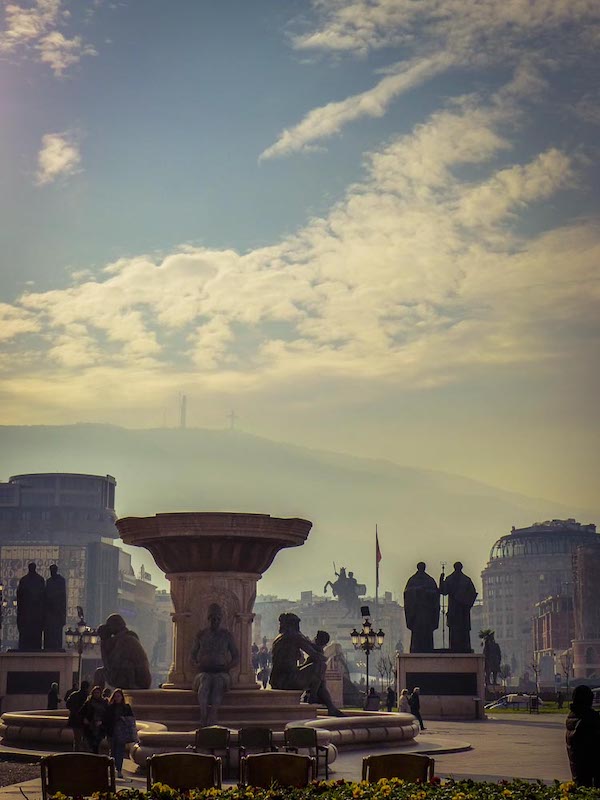
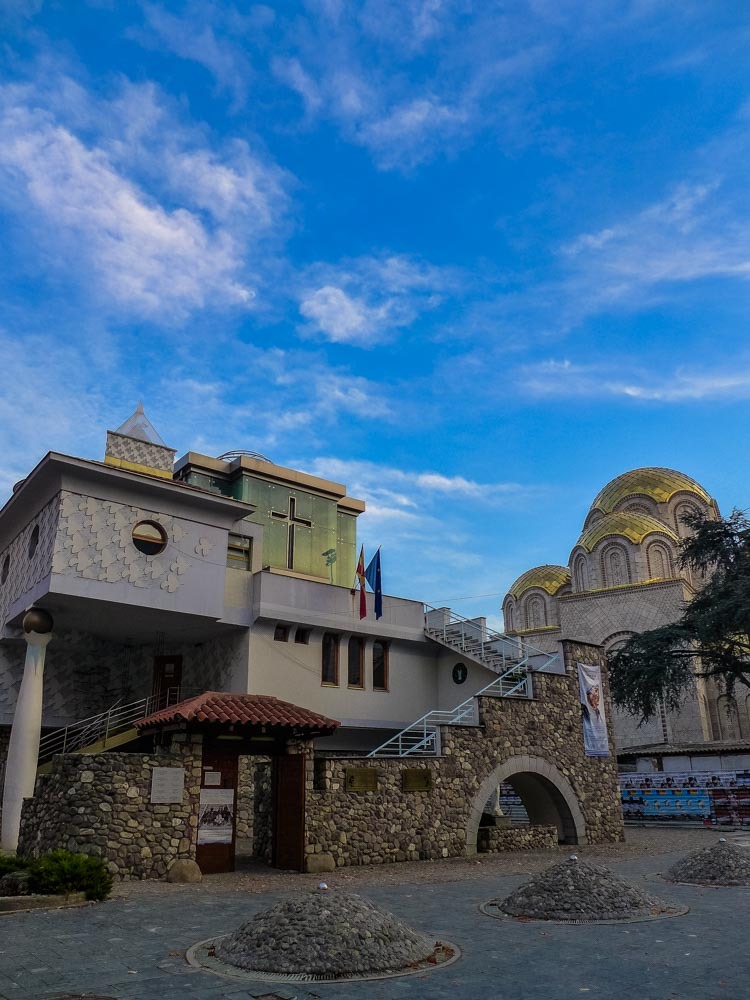
Our second and final stop in North Macedonia was Skopje. We didn’t quite know what to expect and were surprised by this eclectic capital. Skopje seems to have a bit of everything: a historic Old Bazaar, brutalist architecture, and a city centre packed with statues and monuments. And when we say packed, we mean they’re everywhere.

We spent a week in Skopje, renting an Airbnb within walking distance of the centre, and really enjoyed our time there. It was also the cheapest capital city we visited during our journey through the Balkans, making it an easy place to slow down and explore at our own pace.

You can find everything in Skopje

What to do in Skopje

Stari Grad

The Old Bazaar is one of the main attractions in Skopje and is well worth a wander. While it wasn’t our favourite old town in the Balkans, it felt more authentic and lived-in than many others we visited.

Instead of being packed with souvenir shops and tourist restaurants, much of the area is still used by locals. You’ll find cafés, bakeries and traditional restaurants alongside historic buildings and narrow streets. This may be partly because North Macedonia still receives far fewer tourists than some of its Balkan neighbours.

Go on a brutalist architecture walk

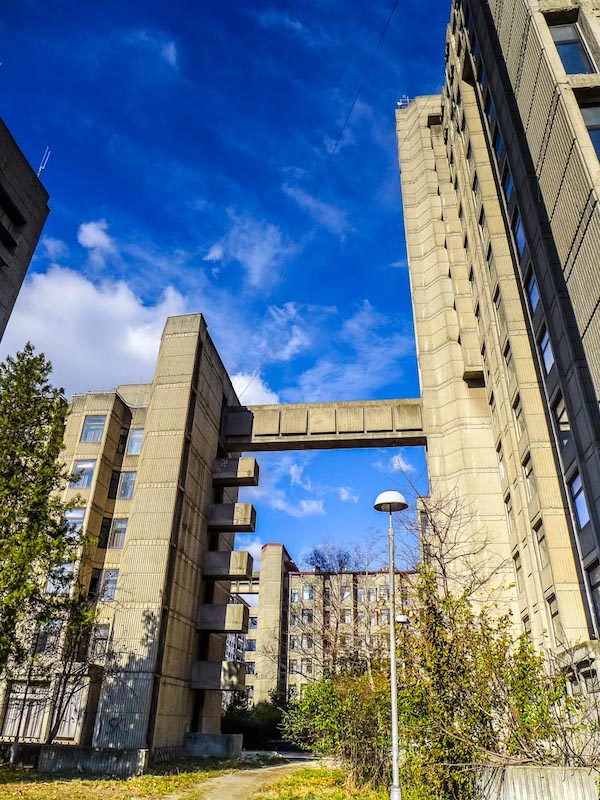
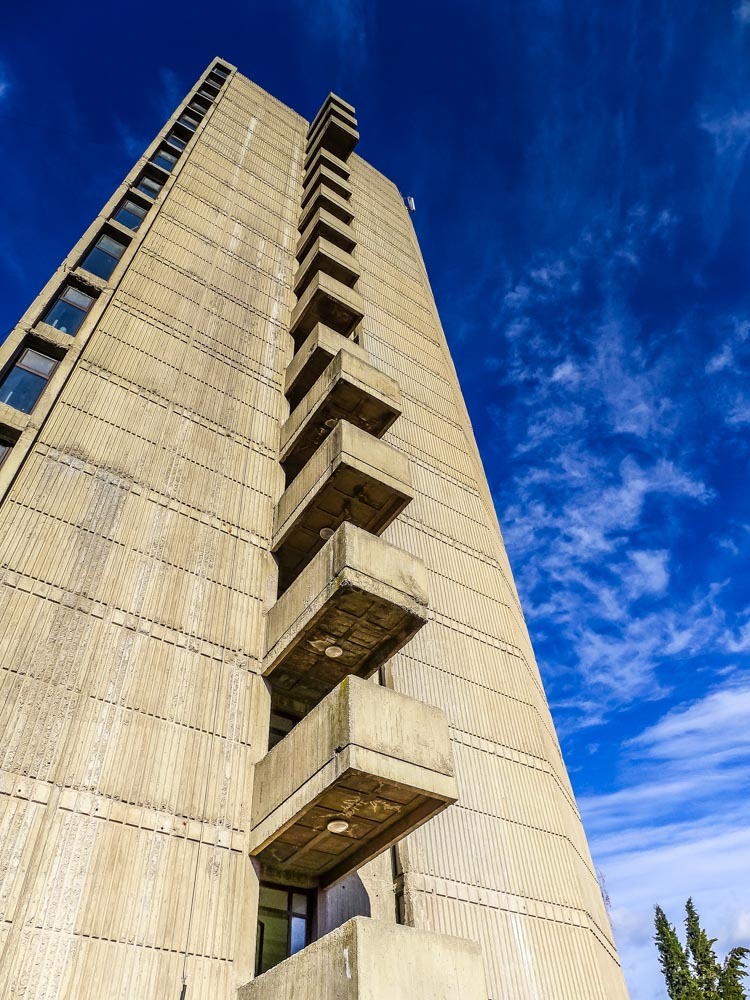
Skopje is also known for its abundance of brutalist architecture. If you’re interested in architecture, especially the bold and often unusual designs that emerged during the Yugoslav era, you’ll find plenty to explore here.

Many of these concrete structures stand in stark contrast to the city’s newer monuments and historic areas, adding to Skopje’s eclectic character. A few notable examples include:

Undergraduate Dormitories ”Goce Delcev”: student housing building:

Undergraduate Dormitories

Post office: another good example of brutalist architecture in Skopje

Beyond the well-known landmarks, we recommend simply wandering through some of the residential neighbourhoods outside the city centre. This is where you’ll find many of Skopje’s remaining examples of brutalist and socialist-era architecture.

Much of the city’s historic modernist character has already been replaced or hidden by newer developments, and many of these buildings are gradually disappearing. If you’re interested in this architectural style, now is a good time to see it before more of it is gone.

Street art

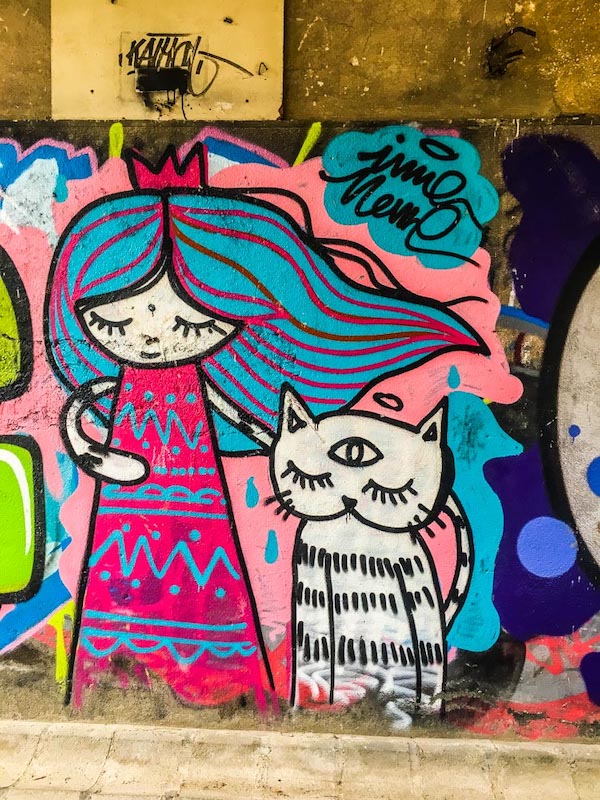
Sam is always on the lookout for street art, and Skopje turned out to be a surprisingly good city for it. While you can find murals and graffiti scattered throughout the city, there are a few areas that stand out.

One of our favourites was the area around the Autonomous Cultural and Social Center. It can be a little difficult to find, but you don’t need to locate the centre itself. Simply explore the surrounding blocks and you’ll come across plenty of interesting artwork.

We also found some great pieces between the arena and City Park, as well as along the riverside walkway, where long stretches of walls are covered in colourful murals and graffiti. If you enjoy urban art, it’s worth setting aside some time to wander and see what you discover.

Street art by the Autonomous Cultural and Social Center
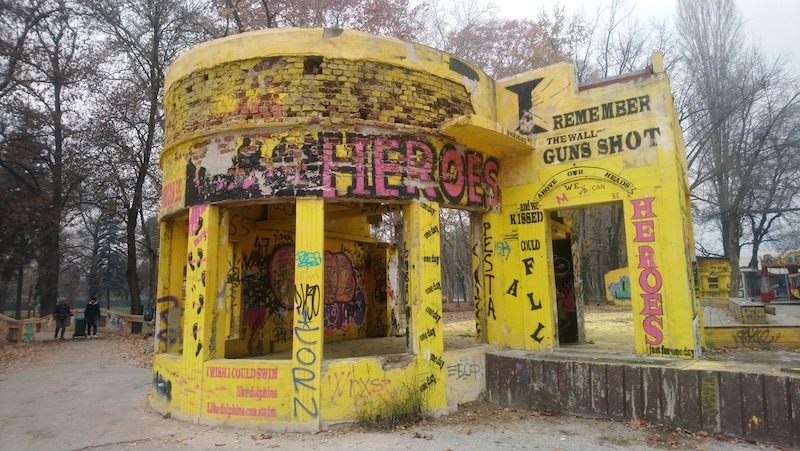
Old building filled with Graffiti by the stadium

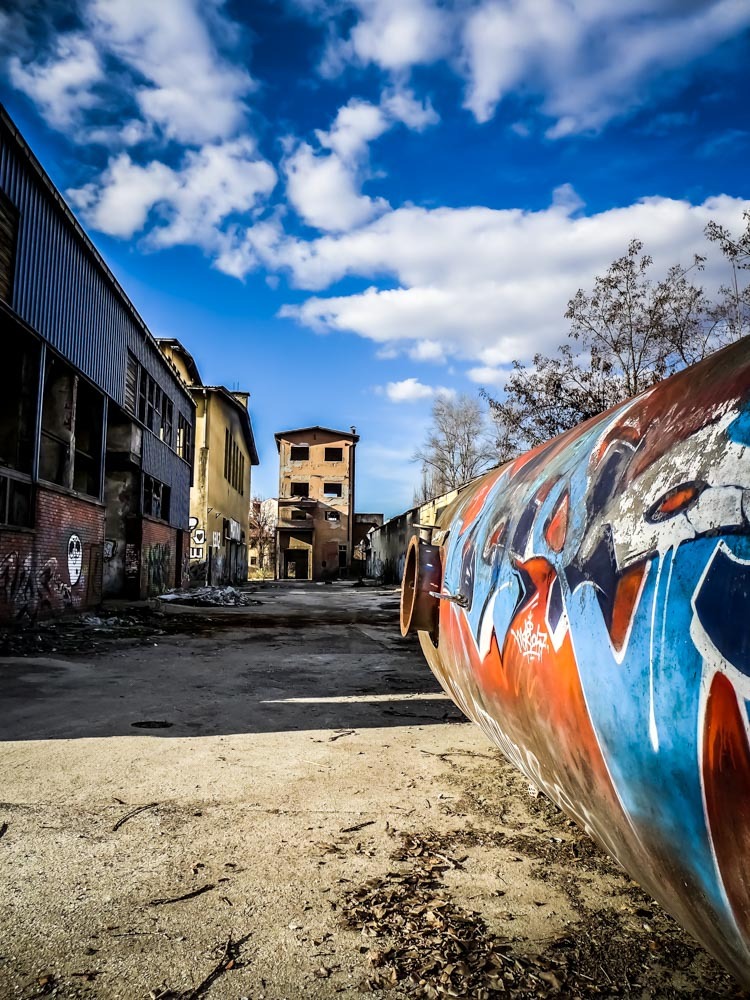
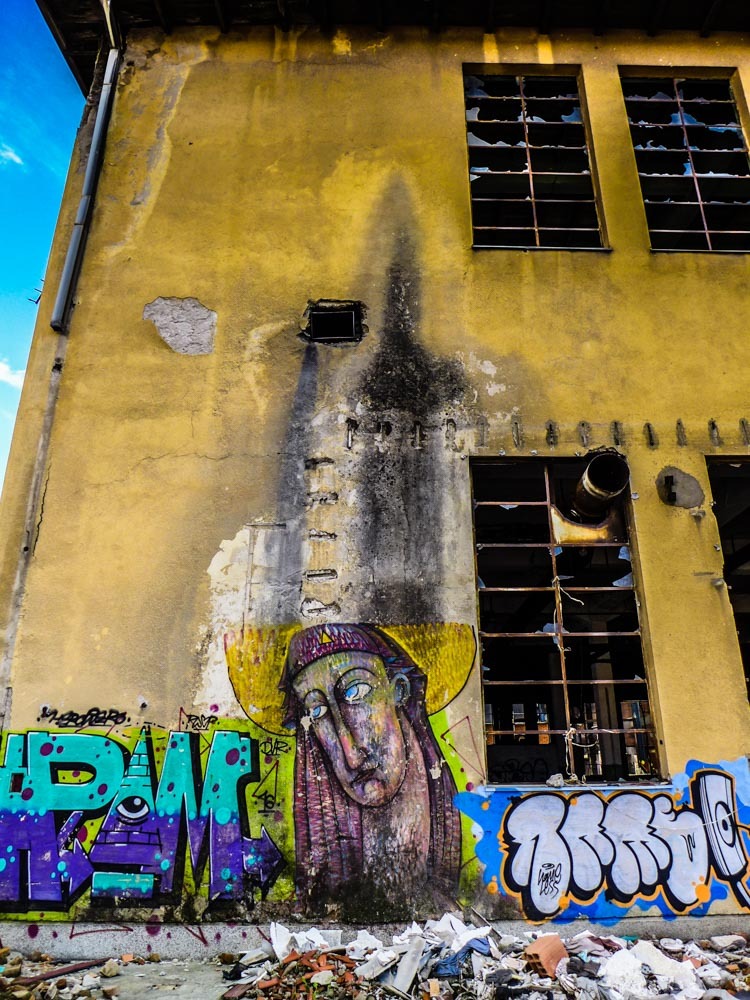
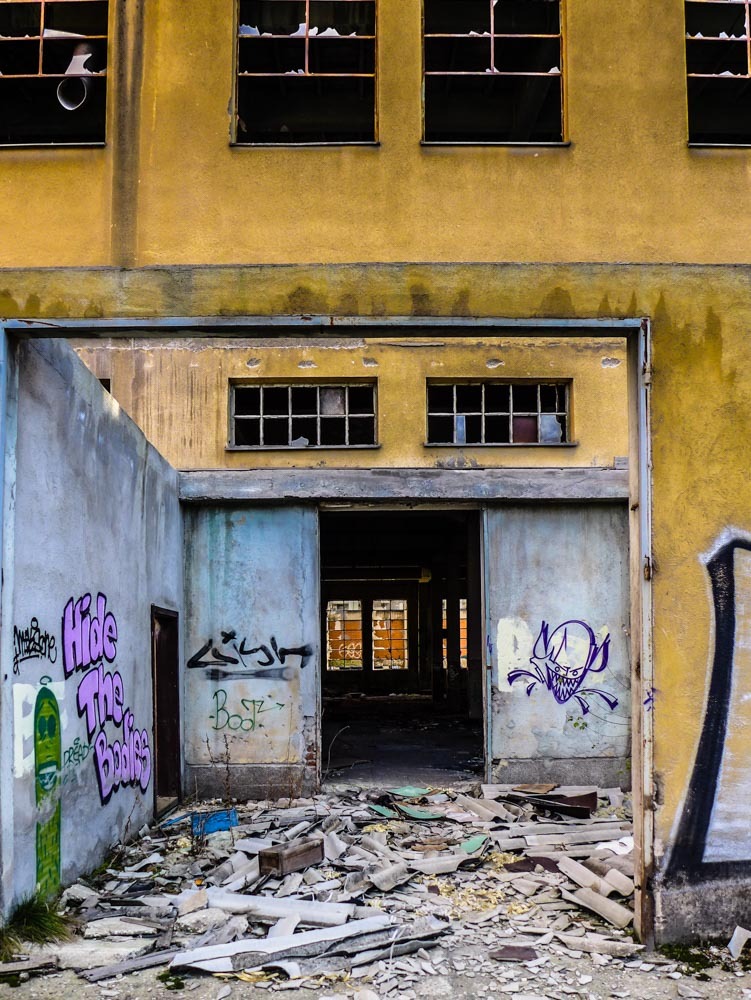
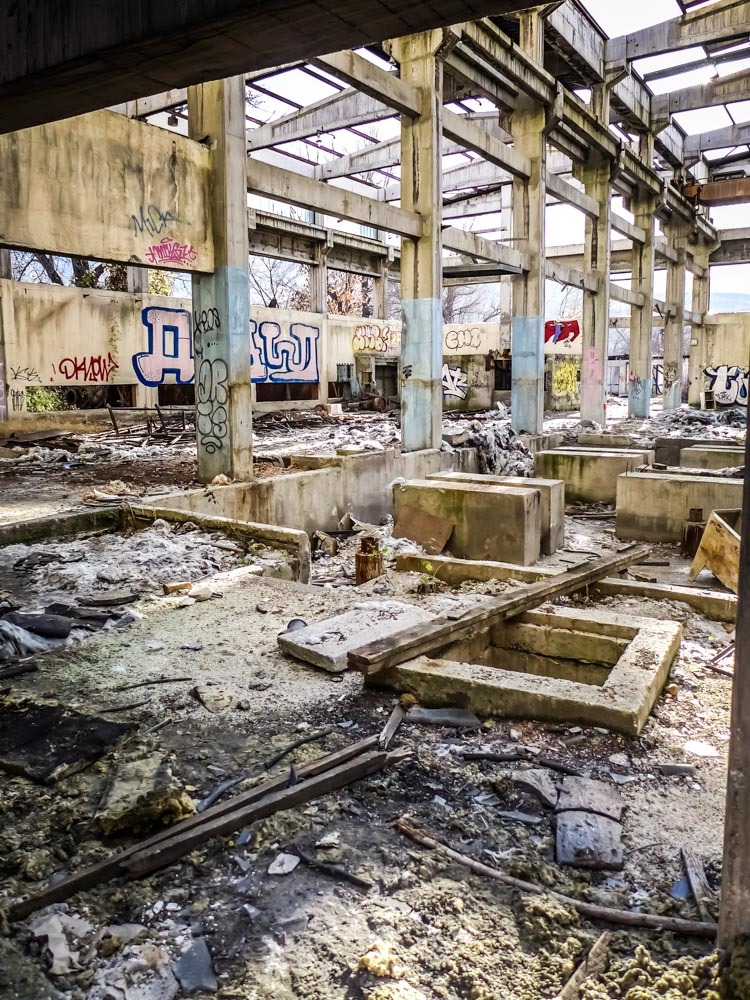
Go to an Abandoned factory

We have always been drawn to abandoned places. There’s something fascinating about seeing how nature, time and people slowly reclaim a space once it has been left behind.

A graffiti shop owner near our apartment recommended an abandoned factory on the outskirts of the city as a good place to see street art, so one afternoon we decided to check it out for ourselves.

The factory grounds were easy to access and covered a surprisingly large area. Several buildings had already partially collapsed, while others still looked relatively intact. We chose not to go inside any of them, as it was impossible to know how structurally safe they were, but even exploring the exterior was well worth the visit. The combination of decaying industrial buildings and colourful graffiti made for an interesting contrast.

It was a really interesting place to explore and offered plenty of unique photo opportunities. There’s something about abandoned places that we find strangely beautiful. The mix of decay, history and nature slowly taking over creates an atmosphere that’s hard to describe.

We weren’t completely alone, though. A man was also living on the factory grounds and, as he didn’t speak English, we couldn’t really communicate with him. We later learned from the owner of the graffiti shop that a few people were known to stay there and generally kept to themselves.

At the time, however, we had no idea who he was or what his intentions were, so we kept our distance. When he picked up an axe and started walking around the site, we decided that our visit had come to a natural end and headed back towards the city.

A quick word of caution: abandoned buildings are never completely safe. There was broken glass everywhere, unstable structures and buildings in various states of collapse throughout the site.

We chose to stay outside and did not enter any of the buildings. Access rules can also change over time, and entering abandoned properties may be illegal or considered trespassing. If you decide to visit, use common sense and do so at your own risk.

Count all the statues

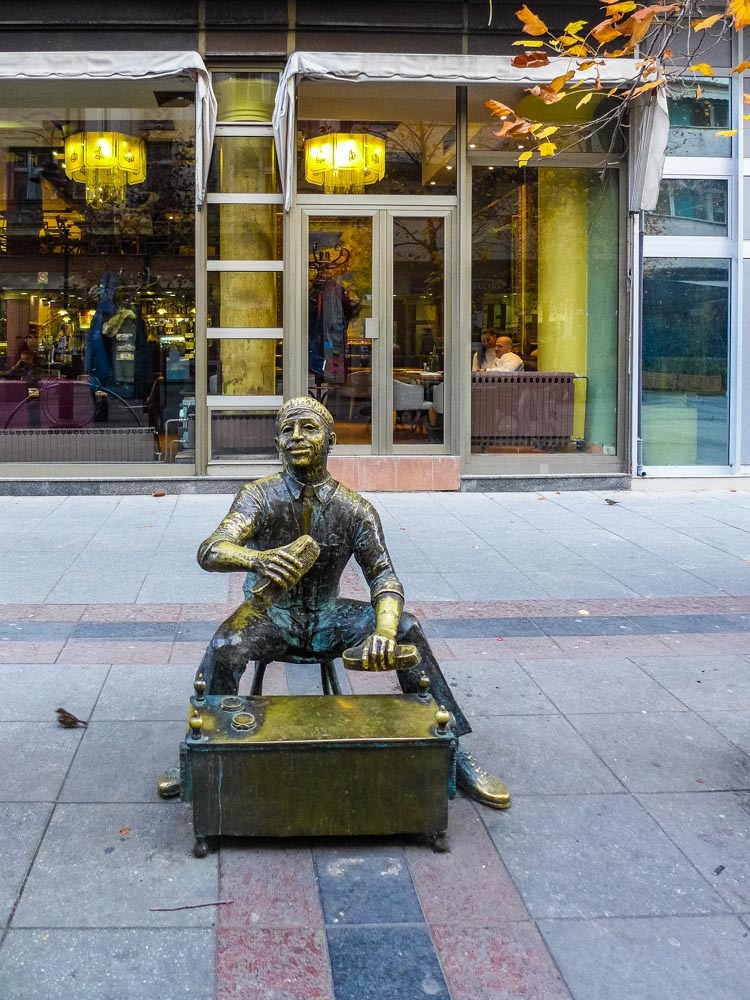
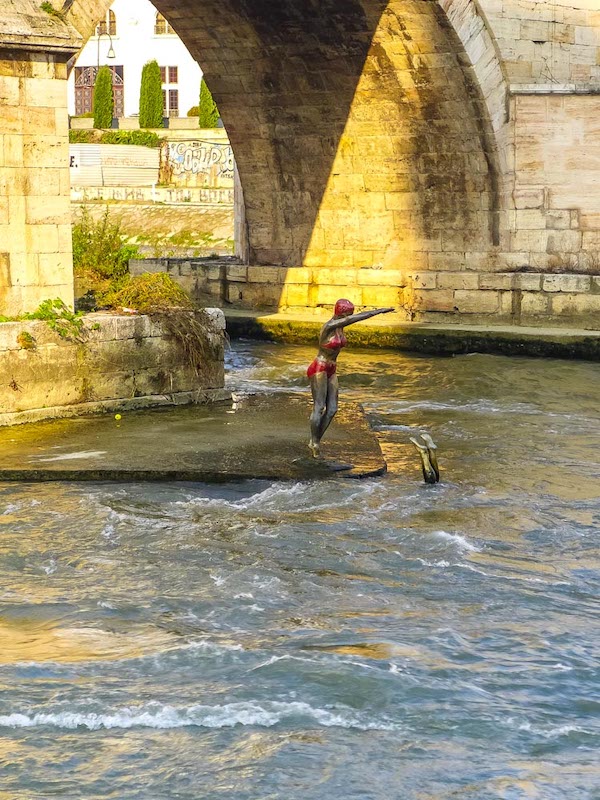
As we mentioned earlier, the city centre is absolutely packed with statues. They are impossible to miss and are one of the things that make Skopje feel so unusual.

Most of these monuments were added as part of the Skopje 2014 project, a large redevelopment initiative launched by the Macedonian government. The aim was to give the city centre a more classical appearance through the construction of new museums, government buildings and monuments. While the new buildings are certainly noticeable, it is the sheer number of statues that most visitors remember.

The project proved highly controversial and divided public opinion. Some people welcomed the redevelopment and felt it gave the city a stronger identity, while others argued that the money could have been spent on more pressing priorities. Originally budgeted at around €80 million, the final cost reportedly grew to well over €500 million, adding to the debate surrounding the project.

The exact number of statues is unclear, but there are hundreds of them scattered throughout the city centre. In many ways, they have become a tourist attraction in their own right.

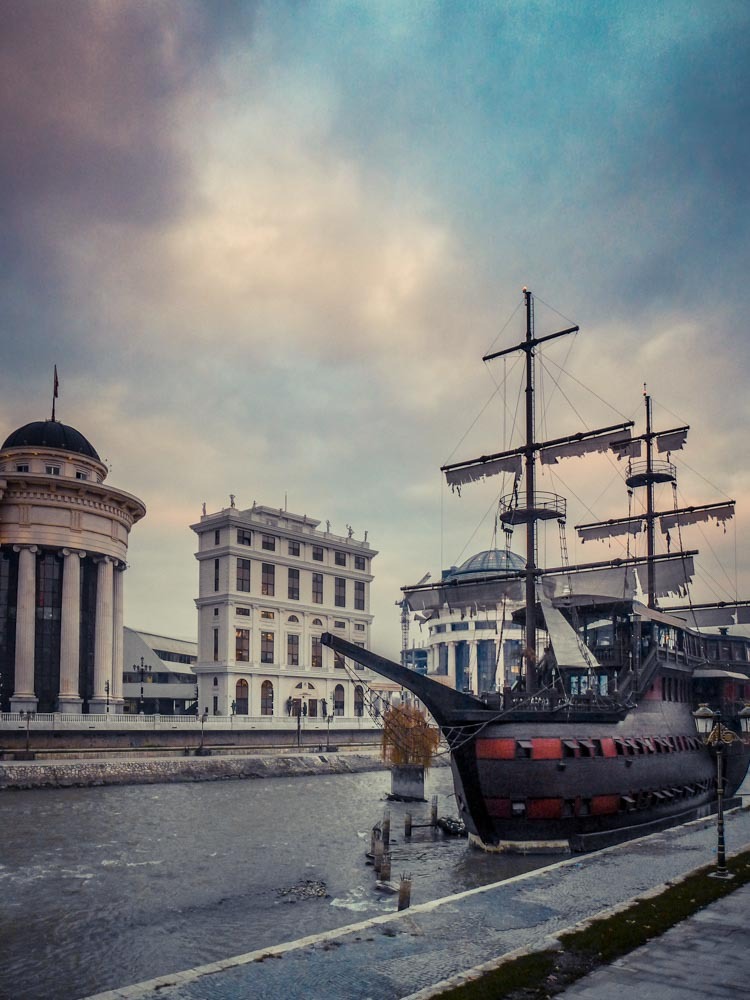
Walking through central Skopje is a surreal experience. Grand classical-style buildings, many of them relatively new, stand alongside countless statues of historical figures, national heroes and the occasional monument that simply leaves you scratching your head. To add to the atmosphere, there are even two pirate ship-style buildings floating in the river.

Whether you love it or hate it, it’s certainly memorable. For us, the city centre was fascinating to see, but we found ourselves preferring other parts of Skopje, particularly neighbourhoods beyond the main tourist area.

Where to eat in Skopje

We cooked a lot ourselves in Skopje, especially dinners. So we didn’t try that many restaurants, but we have a couple to recommend.

Kafana Gostilnica Ka

We went here a couple of times. A great little BBQ place serving traditional food for very affordable prices. This is out of the city centre (still central) so it’s a local place.

Turist Grill

Despite the name, this is a good go-to in the old town for affordable ćevapi.

August 16, 2019 0 comments
FacebookTwitterPinterestLinkedinRedditStumbleuponWhatsappTelegramThreadsOpenAIChatGPTEmail
Macedonia

Exploring Ohrid: North Macedonia’s Lakeside Gem

by Livia August 15, 2019
written by Livia

Latest update: May 2026

We initially planned to stay in Ohrid for just a couple of nights, but kept extending our stay and eventually spent a full week there. It didn’t take long for us to fall in love with this lakeside town. Staying in an apartment near the waterfront, we spent our days walking along the lake, exploring the old town and lingering over coffee while watching daily life go by.

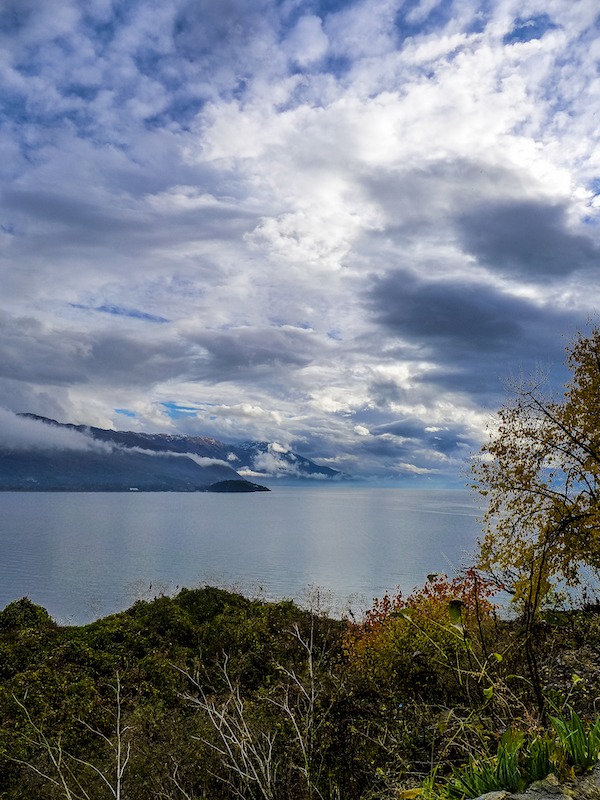
We visited in late November and early December, firmly in the off-season, and thoroughly enjoyed the experience. The crowds had disappeared, the atmosphere was relaxed, and although the weather was mixed, we still had several beautiful sunny days spent sitting outside at cafés overlooking the lake.

One downside of visiting at this time of year is that some restaurants, shops and attractions in the old town close for the season. For us, however, that wasn’t much of a drawback. Most of the closures were in the more tourist-focused areas, and visiting in winter gave us a chance to experience a quieter, more local side of Ohrid.

There really is some magical about Lake Ohrid and I would love to come back to explore more of the area around it.

What to do in Ohrid

Ohrid isn’t a large place, but between the lakeside walks, historic sights and café culture, we had no trouble filling our days.

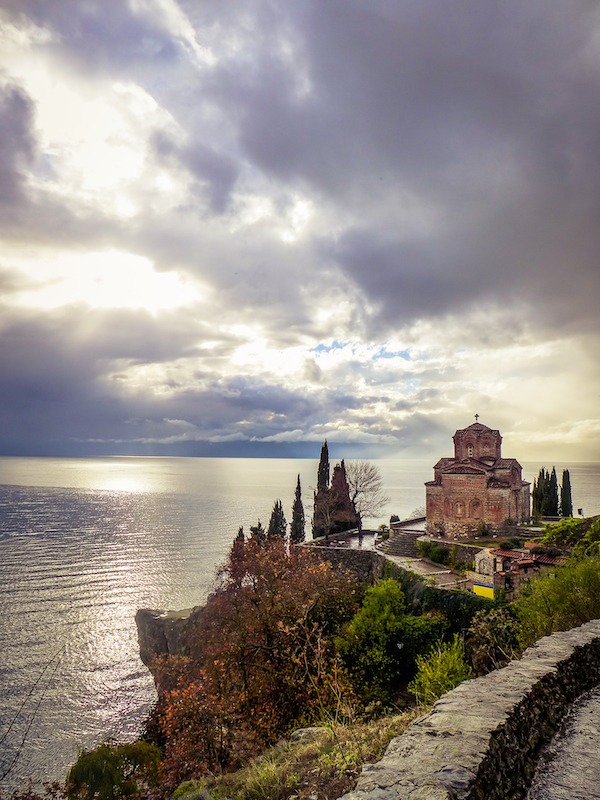
St. John church

This is probably the most famous sight in Ohrid: a beautiful church perched on a cliff overlooking the lake. It’s easy to see why it has become the town’s most photographed landmark.

We can imagine it gets very busy during the summer months, but during our visit we often had the area almost entirely to ourselves, occasionally sharing it with just another couple or two. Sitting there overlooking the lake in the quiet winter sunshine felt pretty magical.

Walking bridge

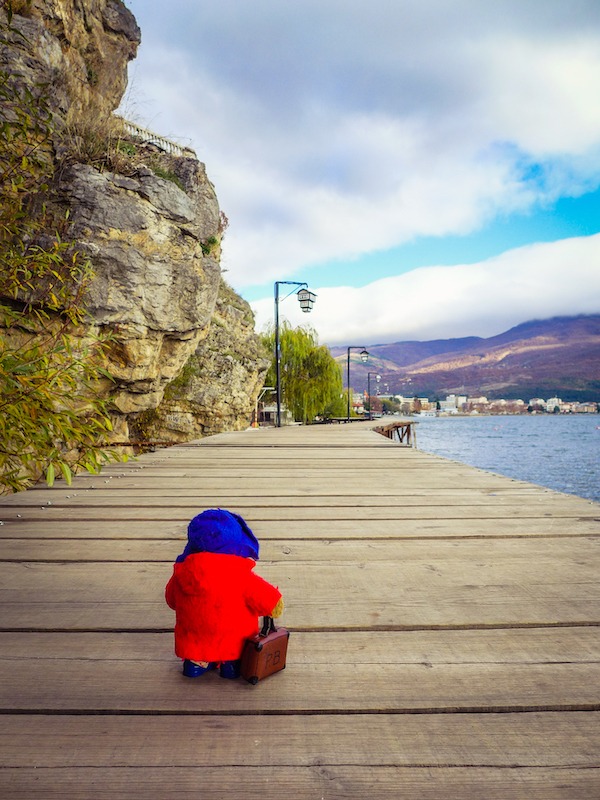
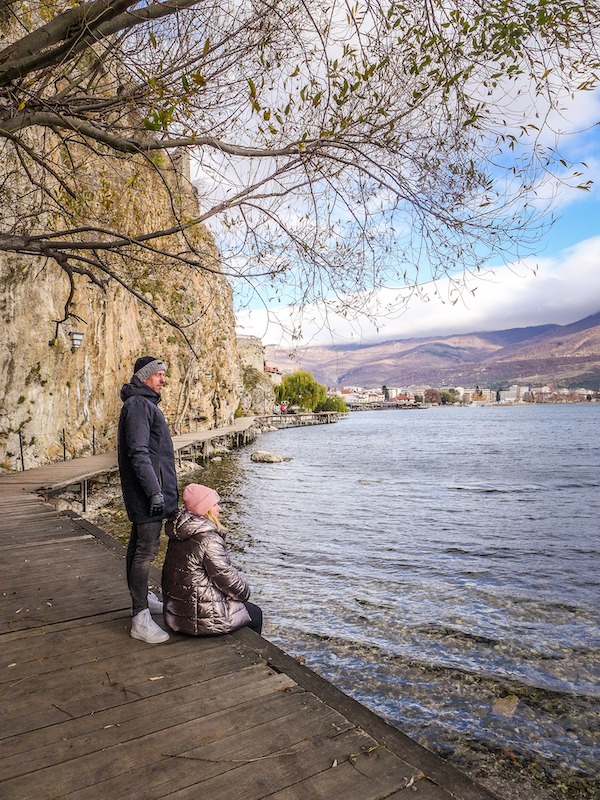
A wooden lakeside walkway connects the old town with the path leading towards St. John at Kaneo. We found ourselves returning here again and again, especially in the early morning and late afternoon when the light over the lake was at its most beautiful.

The views along this stretch are some of the best in Ohrid, and there are also a handful of cafés and restaurants where you can sit and enjoy the scenery while watching the boats drift across the water.

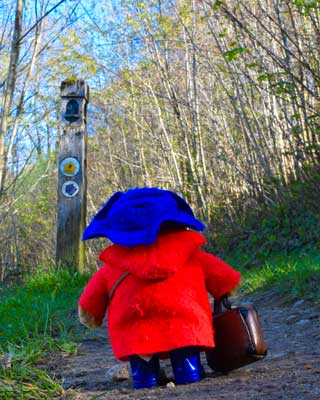
@abearcalledpaddington enjoying a walk on the bridge.
Also a good place for photos

Walk around Ohrid Old town

We didn’t spend as much time in the old town as we normally would, mainly because many of the cafés, restaurants and shops were closed for the season. Even so, it was still a lovely area to explore on foot.

The old town is home to several historic churches, narrow cobbled streets and plenty of traditional houses overlooking the lake. It’s the kind of place where it’s worth putting away the map and simply wandering around to see what you stumble across.

One of the sights in the old town is the Ancient Theatre of Ohrid. During our visit it was a peaceful place to sit for a while and take in the surroundings, although we imagine it becomes much busier during the summer months.

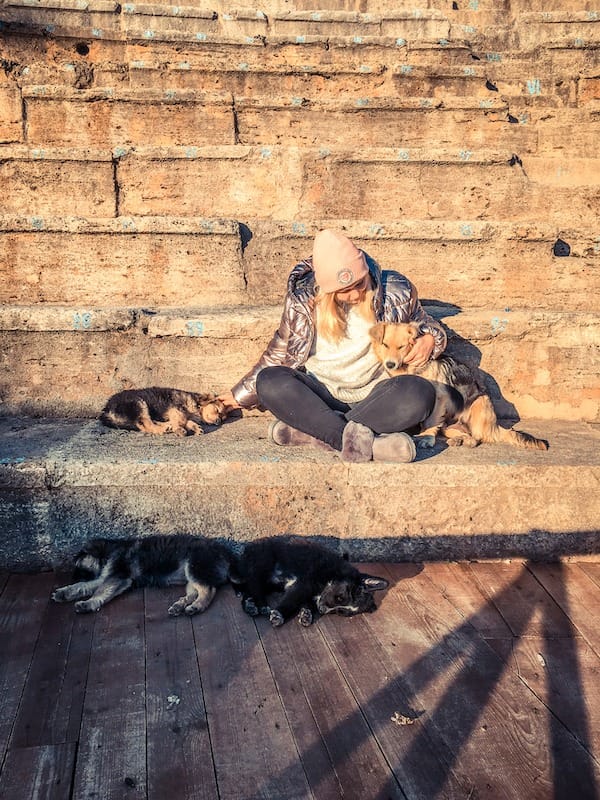
The theatre also became a regular stop for us for another reason. A small family of stray dogs had made the area their home, and we often stopped by to check on them during our stay. If they’re still around when you visit, perhaps spare a thought for them. A little kindness, some fresh water or a snack can go a long way.

Green market

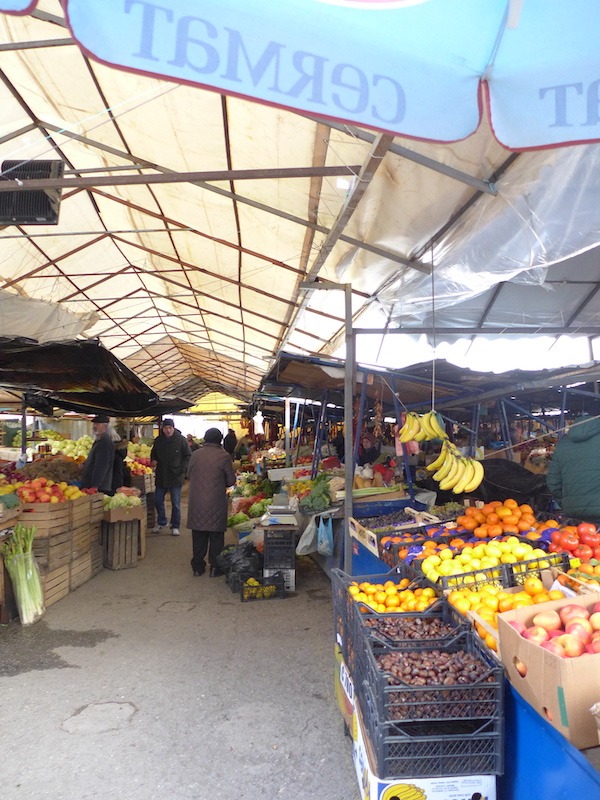
Ohrid also has a large local market that is well worth a visit. We enjoyed wandering between the stalls, sampling local produce and picking up fresh vegetables to cook back at our apartment.

It’s a great place to get a glimpse of everyday life in the city and, if you’re anything like us and enjoy visiting local markets when you travel, you’ll probably end up spending longer here than planned.

Surrounding area

There are also plenty of places to visit beyond Ohrid itself, including mountain viewpoints, historic monasteries, lakeside villages and some beautiful scenery around the lake.

We didn’t explore much of the surrounding area, mainly because we didn’t have a car and were perfectly happy spending our time in Ohrid itself. With the lakeside walks, cafés and historic sights, we never felt short of things to do.

Where to eat in Ohrid

One thing that surprised us about Ohrid was just how many restaurants there were. Despite being a relatively small town, we found plenty of places to eat and ended up having several excellent meals during our stay.

The prices were also very reasonable, making it easy to try different cafés and restaurants without worrying too much about the bill. Below are a few of the places we enjoyed and would happily recommend.

Македонска софра (Makedonska Sofra)

This was our first meal in Ohrid, and we enjoyed it so much that we returned several times during our stay. At the time, the restaurant didn’t appear to have an English name, and the staff seemed slightly surprised to see tourists walk through the door.

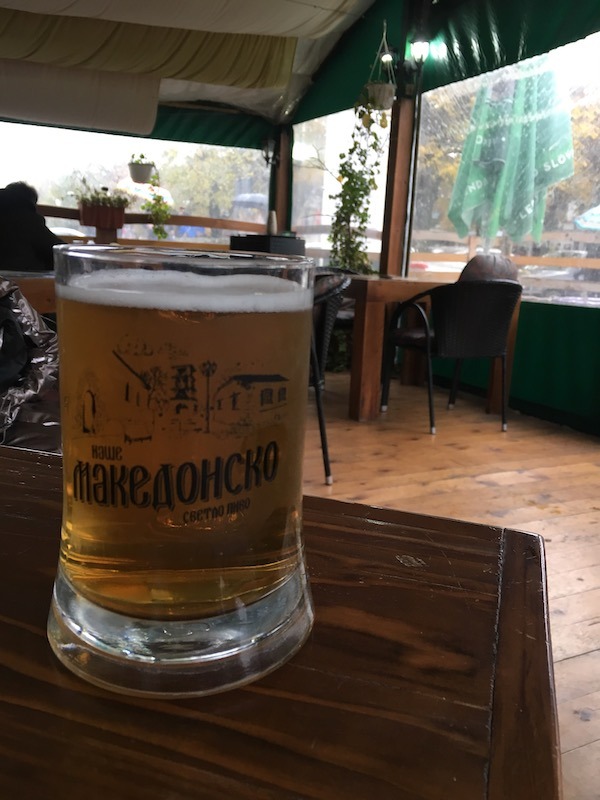
During the winter months they had a covered outdoor seating area heated by wood-burning stoves, which made it a cosy place to escape the cold. The menu featured traditional North Macedonian dishes, the portions were generous, and the prices were incredibly reasonable. It quickly became one of our favourite places to eat in Ohrid.

The BBQ street

Near the green market you’ll find a street lined almost entirely with barbecue restaurants. We ended up eating here several times, trying a few different places along the way.

Most of the restaurants serve similar Balkan grilled dishes, with generous portions and very affordable prices. If you’re looking for a good, no-frills meal, we can recommend Brioni 2008 and Кебапчиница АДАНА, both of which served tasty food at reasonable prices.

Кебапчиница АДАНА was especially busy at lunchtime on weekends, with tables full of locals enjoying grilled meat, fresh salads and long meals with family and friends. That’s usually a good sign, and it quickly became our favourite of the two restaurants.

The food was simple, tasty and inexpensive, exactly the kind of local place we enjoy finding when we travel.

Restaurant Delikates (permanently closed)

There’s a lot of Greek food in North Macedonia, especially in the areas close to the border. This little greek restaurant in Ohrid was great. We enjoyed lots of food and wine here one rainy afternoon, and the owners were super sweet and helpful. It was also very cheap.

Update May 2026: unfortunately this restaurant seems to be permanently closed now

Kaneo Restaurant

Located right by the lake near St. John at Kaneo, this restaurant enjoys one of the best settings in Ohrid. We expected it to be a bit of a tourist trap given the location, but were pleasantly surprised by the quality of the food.

It was more expensive than most of the places we ate in Ohrid, but still good value considering the location and experience. If you’re planning to treat yourself to one special meal while you’re in town, this is a great choice.

August 15, 2019 0 comments
FacebookTwitterPinterestLinkedinRedditStumbleuponWhatsappTelegramThreadsOpenAIChatGPTEmail
AlbaniaMacedonia

How to cross the land border between Albania and North Macedonia by foot

by Livia August 15, 2019
written by Livia

One of our most googled items during our travels through balkans was how to cross land borders between countries. Most of them were pretty straight forward, especially since we were on busses who knew which borders are open for foreigners etc. However, at one point we had to cross the border by foot, as there were no bus services between our to destinations. This was the border between Albania and North Macedonia. As there wasn’t a lot of updated information around we thought we’d share our story of how to cross the land border between Albania and North Macedonia by foot.

Our last stop in Albania was Korçë, and from there we wanted to go to Ohrid in North Macedonia. There are different borders to cross between these two countries, but the one that made most sense for us was the Tushemisht – St. Naum border (you can see it marked on our Albania travel map and North Macedonia travel map). We quickly realized we had to do this in steps, and also cross this border by foot.

How to cross the land border between Albania and North Macedonia by foot

Step 1: Korçë to Pogradec

From Korçë we jumped on a bus to the small town Pogradec. Which is also a quite popular place to stop for a few days, as its just on Lake Ohrid, which is shared between North Macedonia and Albania. But we had decided to head straight to Ohrid. The busride was about an hour and only cost us 150 lek each and there was a bus every hour, so this part was really easy.

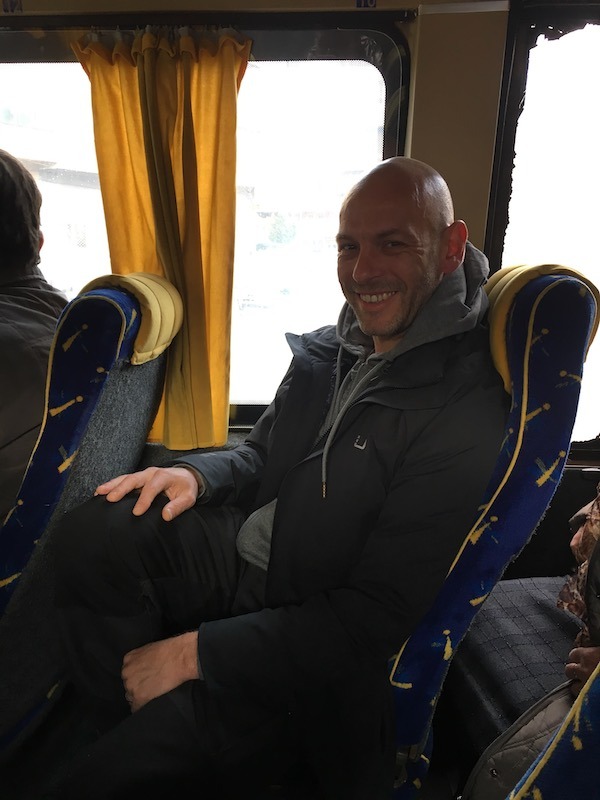
Happy Sam on the first part of our border crossing

Step 2: Pogradec to Tushemisht (Albanian border control)

From Pogradec to the actual border we had no choice than to take a taxi. You could walk, but it is quite far from the town where the bus stops and we didn’t find any busses going that way. There is probably some local bus going that way, but since the 15-20 minute taxi is only 700 lek it was just easier to catch one from the bus stop in Pogradec. Pogradec is also where you want to get rid of all your Lek (but save enough to pay the taxi!!) since there’s nothing by the border control.

Step 3: Tushemisht border control (leaving Albania)

Arriving at the border control there was a few cars asking if we wanted a taxi somewhere, but since it would be quite expensive to go all the way to Ohrid from there we had already decided to walk over the border and catch a bus on the other side.

The Albanian border control here is situated right on the lake, so you have beautiful views from here. Normally  that wouldn’t really have mattered, but when we arrived the computers were all down so we had to wait for 30 minutes or so before we could cross the border and leave Albania.

The crossing itself was really easy once the computers were running, they even had a walking lane in addition to the car lanes. It was also very quick. I’m not sure about the opening times, but during day time you won’t have any issues, and if you cross by foot you will want to do this at day time since it is quite a lot of walking included.

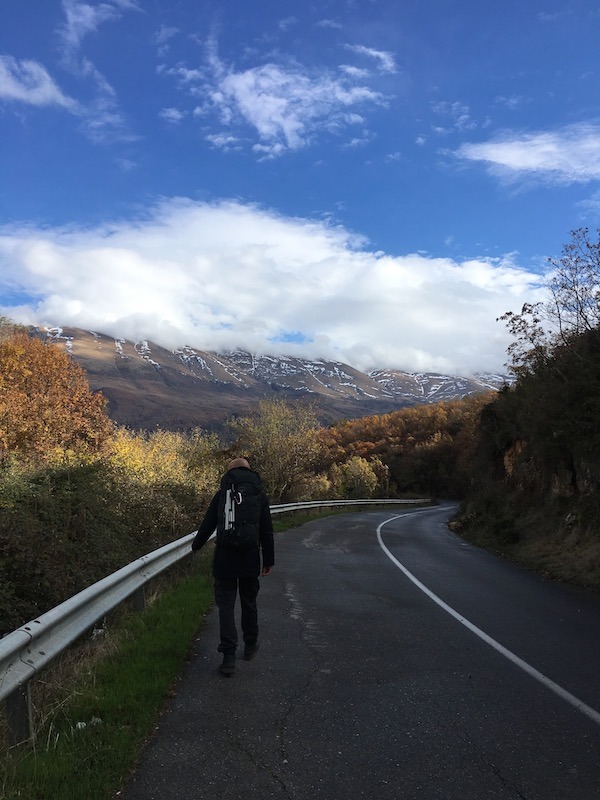
The walk in between the two border controls

Step 4:  St. Naum border control (entering North Macedonia)

This was the only border  where the two border controls were quite far from each other, we had to walk for about 10-15 minutes along a road before even coming to the North Macedonian border control. However, the walk was nice and we were lucky with the sun.

This border control was probably the hardest one of all borders we crossed in Balkans. First we had to queue up with the cars as there was no walking lane, and even if it just was 2 cars in front of us it took quite some time as they checked papers very, very throughly.

After having our passports checked we had to walk to 2 other people who asked us lots of questions. Or actually they asked Sam lots of questions, they just looked at my passport and said “ah Swedish, welcome”. However, Sam, not sure if it was because he’s Brittish, got loads of questions, such as “Why are you here?”, “How long did you spend in Albania?”, “How long will you spend in North Macedonia?”, “Where are you staying in North Macedonia?”, “Are you carrying any drugs with you?” etc. etc. It was quite a difference between how they welcomed me and Sam. But after all the questions we were allowed to enter North Macedonia.

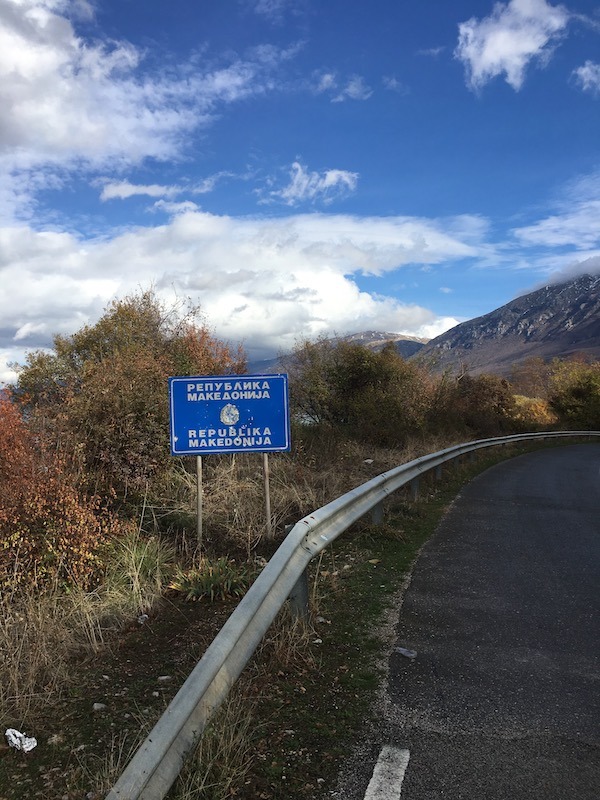
Welcome to North Macedonia

Step 5: Walking from the border to St. Naum

This bit was quite a miss on our part, we hadn’t really realized how far it was to walk from the border control to the nearest bus station in St. Naum. There is also some military zones that you’re not allowed to enter. Our biggest tip for this part is to have downloaded any type of map, as you most likely wont have internet when you’ve enterd North Macedonia and it’s not just to follow the road.

To start with you will follow the asphalt road leading from the border control, however, at one point you will want to head into a little path on the left (there is a small signpost for a church ‘✝’) through the forest/nature area as this is much closer than following the road the whole way. This little path is not really marked except for the little sign post, so this is where you will need your downloaded maps. There is also military zones in this area which you need to stay clear from.

After some discussions we did find the path. Sam has a backpack so he had no issues walking here, however, my bag is a rolling bag.. this is an issue on this road as its just a path with grass and mud. I can tranform my bag into a backpack, but it’s too heavy for me… Anyway, in the end we found the way and got to St. Naum after a 30ish minute walk.

If you don’t want to carry all your luggae it might be worth taking a taxi or cross the border on the north part of Lake Ohrid where you can go by bus.

Step 6: St. Naum to Ohrid

St. Naum is supposed to be a beautiful place for a stop. However, we skipped it as we didn’t want to carry around our bags anylonger so started walking towards the bus station, which is situated just outside the entrence to the St. Naum area.

The bus takes about 1 hour and should cost 100 denar per person. But, if an older man stops in a car and asks if you want to ride with him instead, take the oppotrunity. Not sure if more than one man does this now, but the one we went with is a retired proffessor and drives tourists between Ohrid and St. Naum for the same price as the bus, as a way to get a little bit more money. I had actually read about him on a blog before going, otherwise I’m not sure if I would have taken the offer. But we did, which was great – as it didn’t cost us more and was much quicker than the bus. He dropped us off close to our AirBnb in Ohrid, I think you can ask him to drop you anywhere as long as it’s not a detour.

August 15, 2019 0 comments
FacebookTwitterPinterestLinkedinRedditStumbleuponWhatsappTelegramThreadsOpenAIChatGPTEmail

Recent Posts

  • Best Apps for Visiting China (2026 Guide)

  • Visiting the Jordaan: Amsterdam’s Most Beautiful Neighbourhood

  • Namibia Self Drive Safari vs Guided Tour: Which Is Better?

We use Safetywing

We use THS

Trusted House Sitters

Here’s 25% off your annual membership to TrustedHousesitters - thanks to your pet loving pals at LBSBWorld.

Join now with 25% Off!

We use NordVPN

NordVPN

Get 3 months of NordVPN right now!


The best VPN service for a free, open internet

Get NordVPN!

We use Wise

Wise

Get Zero Fees on a transfer up to €500


Spend in 150+ countries like a local with Wise card

Get Wise!

©2026 LBSBWorld - All Right Reserved - Designed and Developed by Livia & Sam

LBSB World
  • Home
  • Destinations
    • Africa
      • Namibia
    • Asia
      • China
      • Indonesia
    • Europe
      • Albania
      • Bosnia-Herzegovina
      • Croatia
      • Montenegro
      • Netherlands
      • North Macedonia
      • Serbia
  • Travel Itineraries
    • Our 9-Day Namibia Tour with Chameleon Safaris: An Honest Review
    • Our 2 Week Albania Itinerary
    • Bosnia and Herzegovina Itinerary: Our 1 Month Route by Bus
    • Namibia Self Drive: Everything We Learned Driving a 4×4 Across Namibia
  • Plan Your Trip
    • How to Deal with Travel Burnout (And Start Enjoying Travel Again)
    • Sam’s Fulltime Travel Packing List
    • Using Trusted House Sitters to Support Your Travels
    • Namibia Self Drive Safari vs Guided Tour: Which Is Better?
  • About Us
    • About Sam & Livia
    • The Story Behind Our Full-Time Travel Life
    • abearcalledpaddington