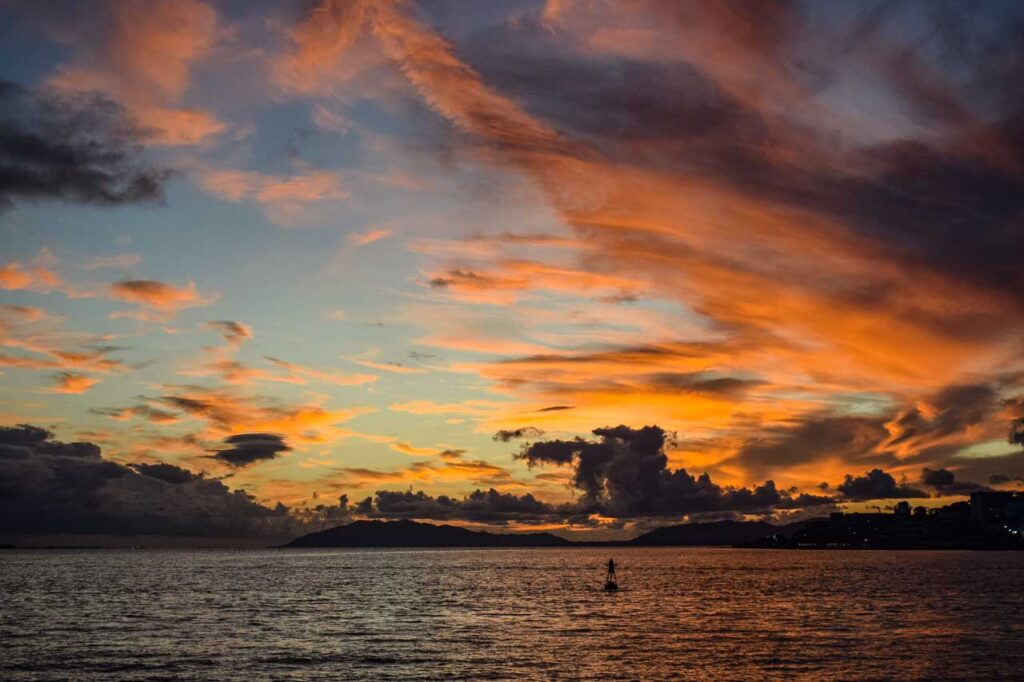
North Sumatra was one of the most varied parts of our Indonesia trip. Within a relatively short distance, we went from trekking through rainforest looking for orangutans to climbing an active volcano for sunrise and relaxing beside the enormous Lake Toba.
We spent around two weeks travelling through the region, but we were moving slowly and stayed much longer in some places than you need to. If you’re short on time, this same North Sumatra route could easily be done in around one week.
Our North Sumatra Route
We travelled between the main stops by taxi or private/shared transfer, which made this route very straightforward without needing to hire a car.
We flew into Medan, travelled directly to Bukit Lawang and then continued south through Berastagi to Lake Toba before returning to Medan.
If you’re following the same route, we’d recommend travelling in this direction rather than returning to Medan between each destination.
Our route looked like this:
Medan → Bukit Lawang → Berastagi → Lake Toba & Samosir Island → Medan
Bukit Lawang: 8 Nights
For a shorter trip: 3 nights
Bukit Lawang was our first stop and also where we spent the most time.
Most people visit for just a couple of days to go orangutan trekking in Gunung Leuser National Park, but we stayed for eight nights and were very happy that we did.
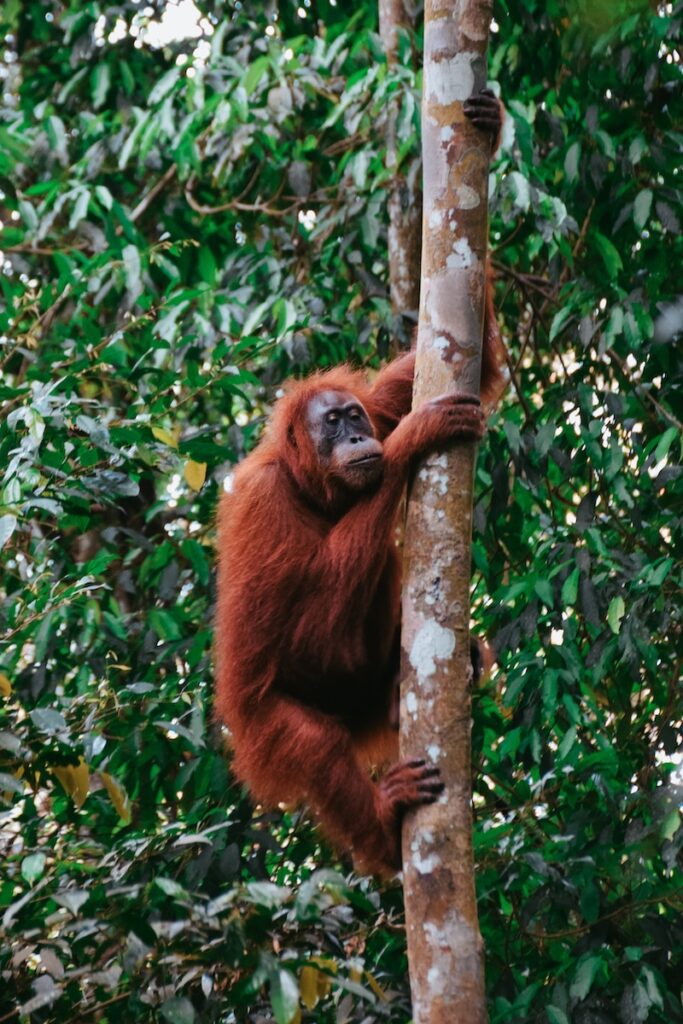
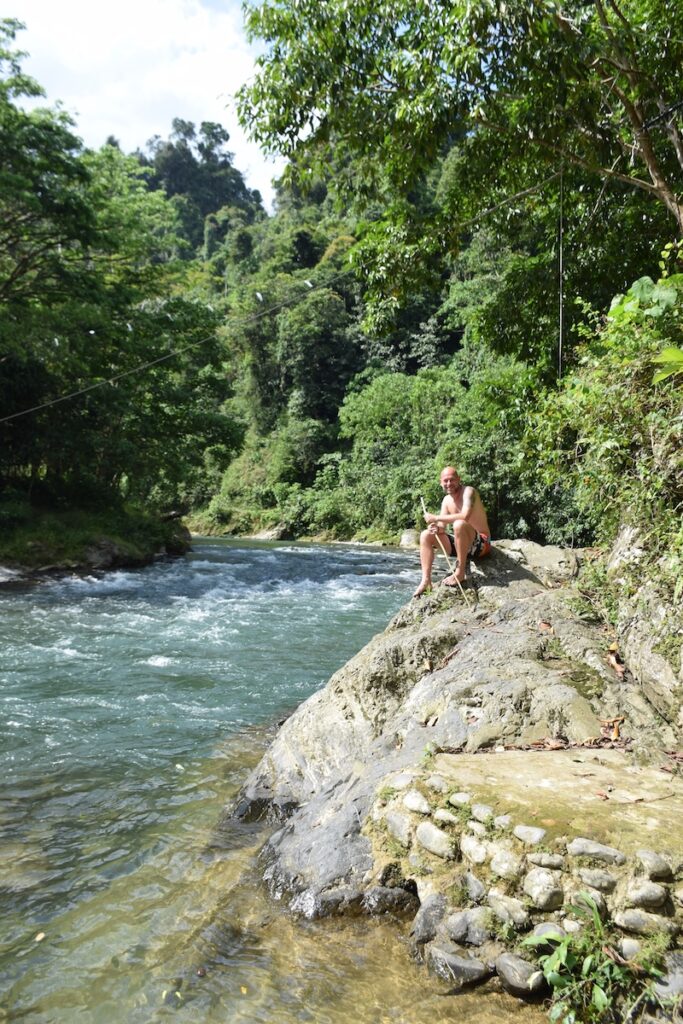
The orangutan trek was the main event. We did a one-day trek with a guide from Green Hill, climbing up and down through the rainforest before returning to Bukit Lawang by river on a raft made from large inner tubes.
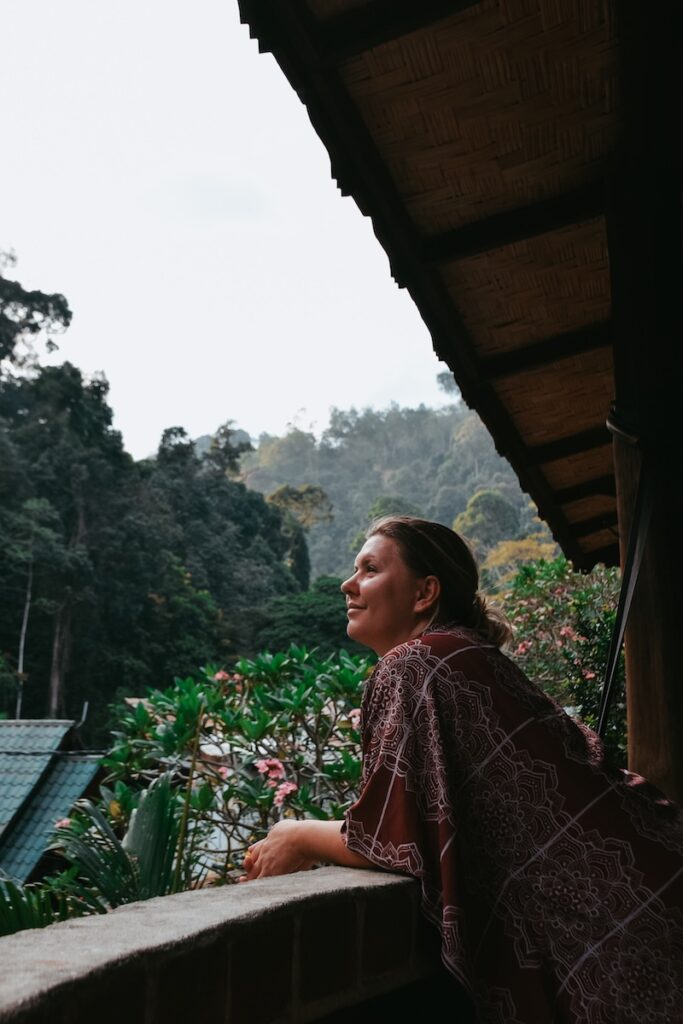
But Bukit Lawang was also somewhere we enjoyed simply being. We walked along the river, explored the village and market and spent plenty of time doing very little surrounded by rainforest.
We stayed at three different places during our time here: Sam’s Bungalows, Garden Inn and On The Rocks. On The Rocks was our favourite, right on the edge of the rainforest, where we even had an orangutan and her baby nesting outside our room.
If you’re travelling North Sumatra in one week, we’d give Bukit Lawang three nights. That gives you time to arrive, do a full-day orangutan trek and still have some time to enjoy the village.
Read our full Orangutan Trekking and Bukit Lawang Travel Guide.
Berastagi: 1 Night
From Bukit Lawang, we travelled by taxi to Berastagi.
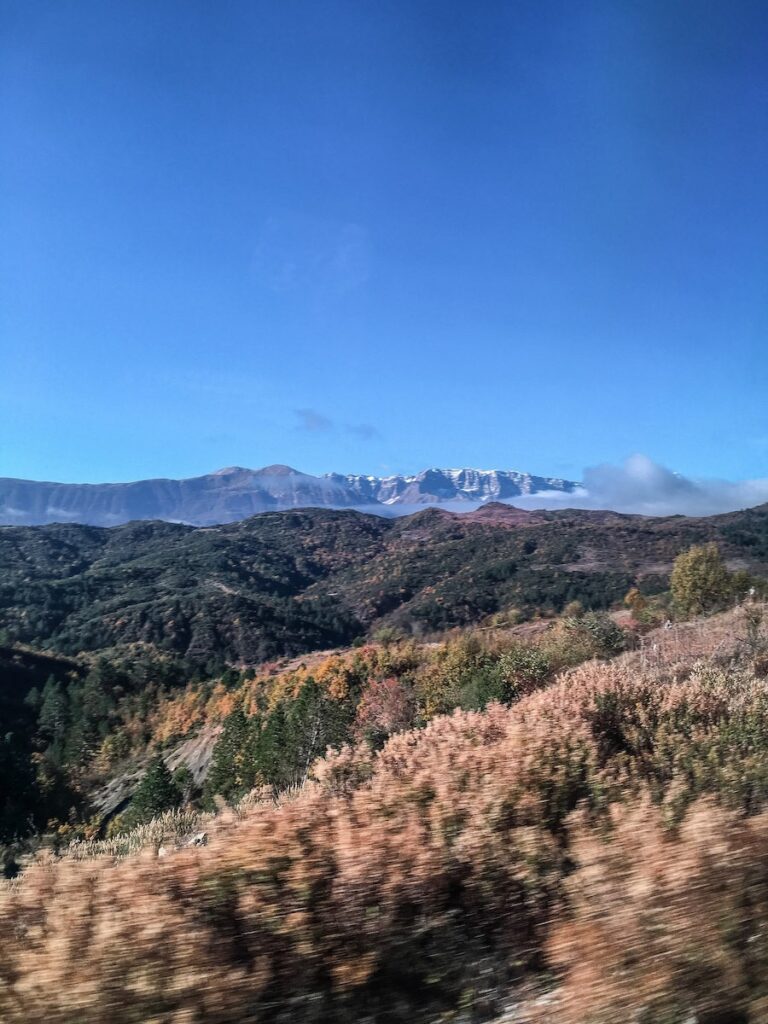
The journey itself was beautiful, taking us through the increasingly mountainous landscape of North Sumatra.
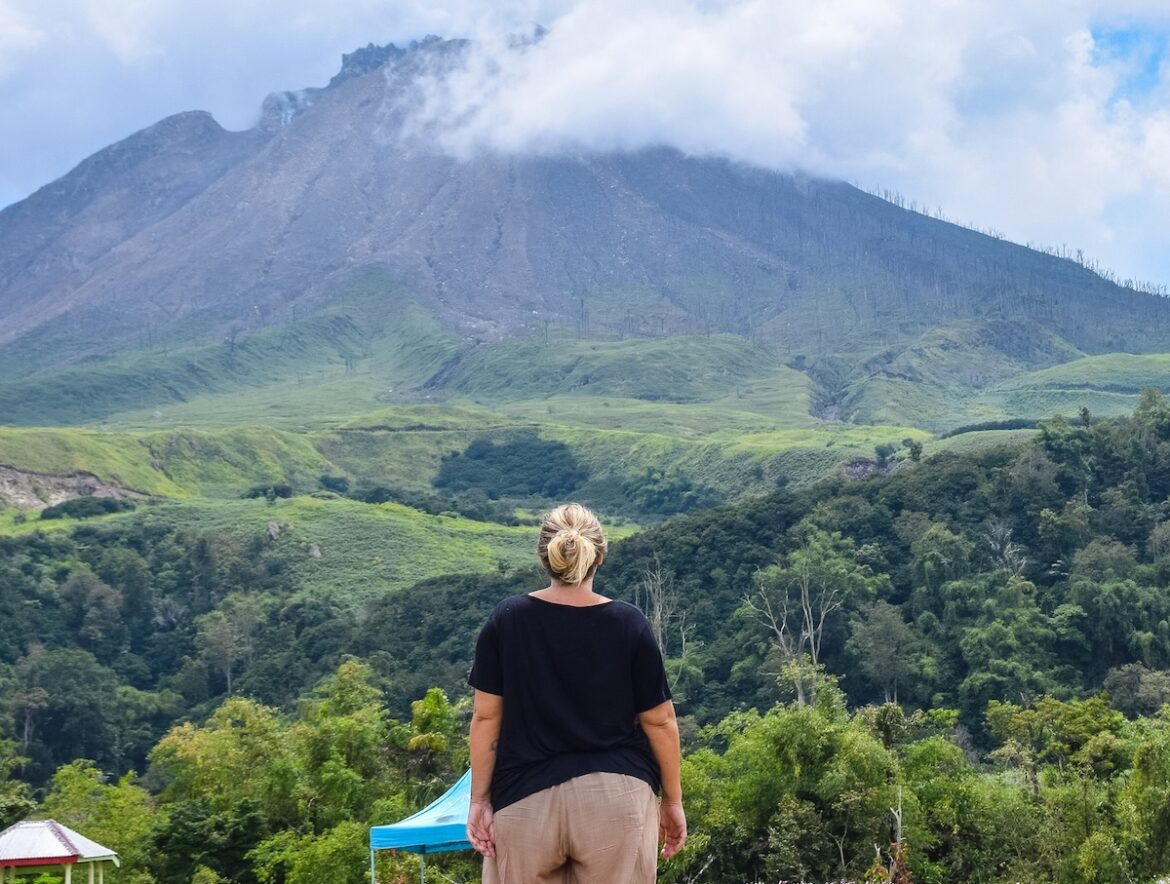
We stayed for just one night at Nachelle Homestay, where the lovely owners also arranged our Mount Sibayak sunrise hike.
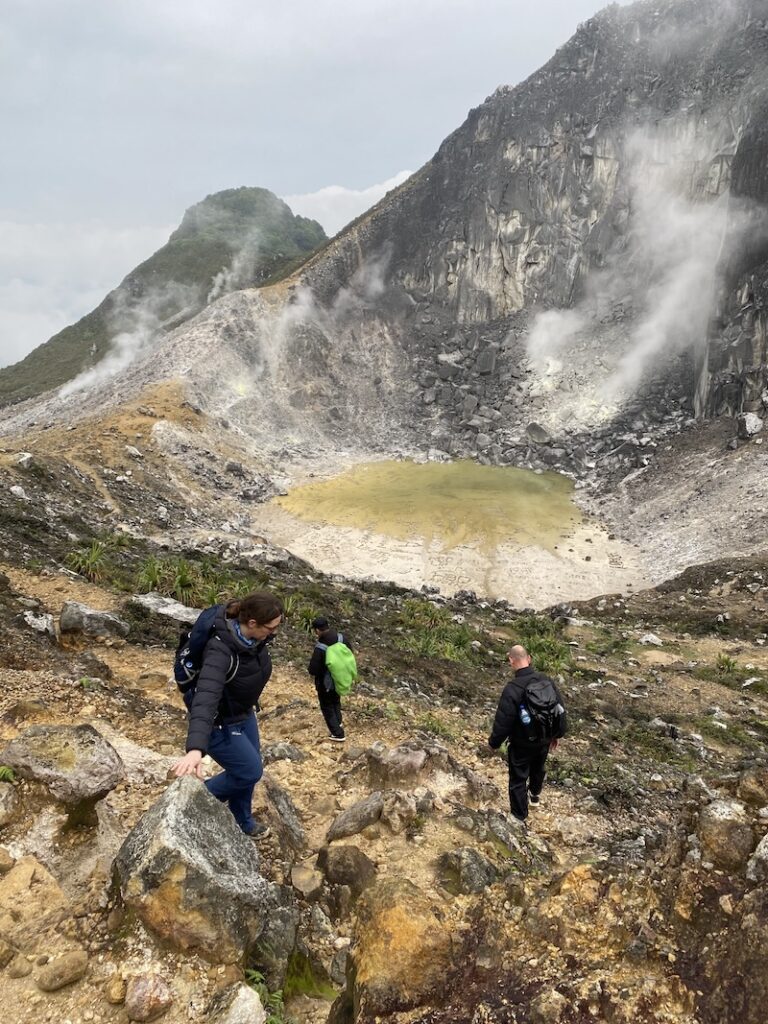
We left while it was still dark and reached the top of Mount Sibayak at around 6:15 am. The hike wasn’t particularly difficult, and at the top we were surrounded by volcanic rock, steam rising from the crater and views across the mountains.
It was surprisingly chilly before sunrise, so our thin puffer jackets came in very handy.
After hiking back down, we stopped at the sulfur hot springs before returning to Berastagi.
One night worked perfectly for what we wanted to do, although you could easily add another if you want to explore more of the surrounding area.
Read about our Mount Sibayak Sunrise Hike and stay in Berastagi.


Lake Toba & Samosir Island: 5 Nights
For a shorter trip: 2–3 nights
From Berastagi, we travelled to Parapat, where we caught the ferry across Lake Toba to Samosir Island.
We stayed for five nights at Tabo Cottages in Tuk Tuk.
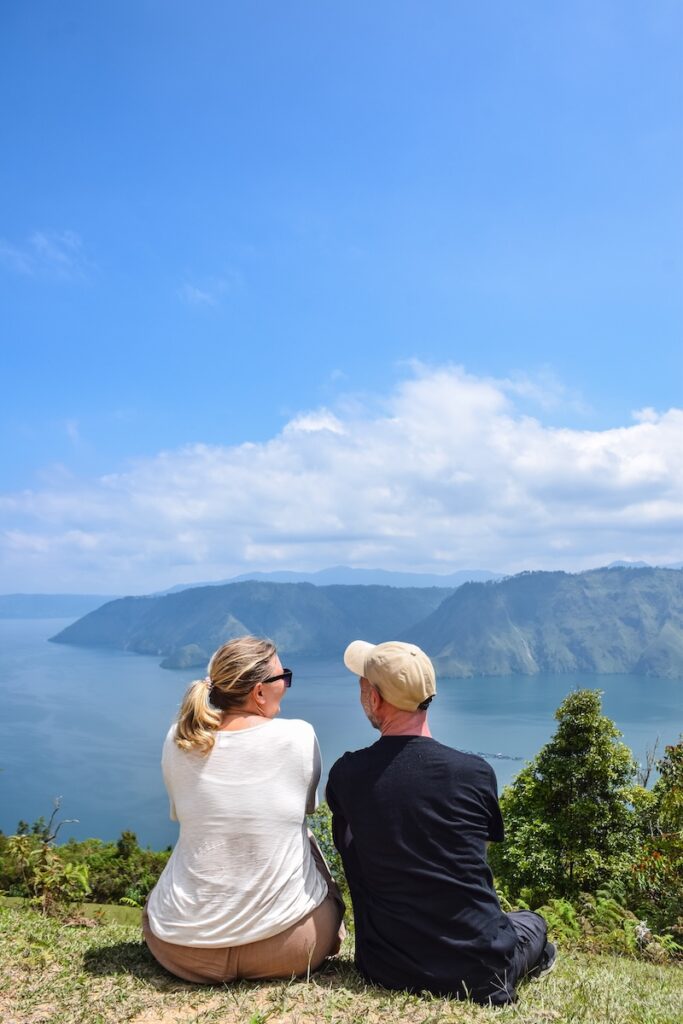
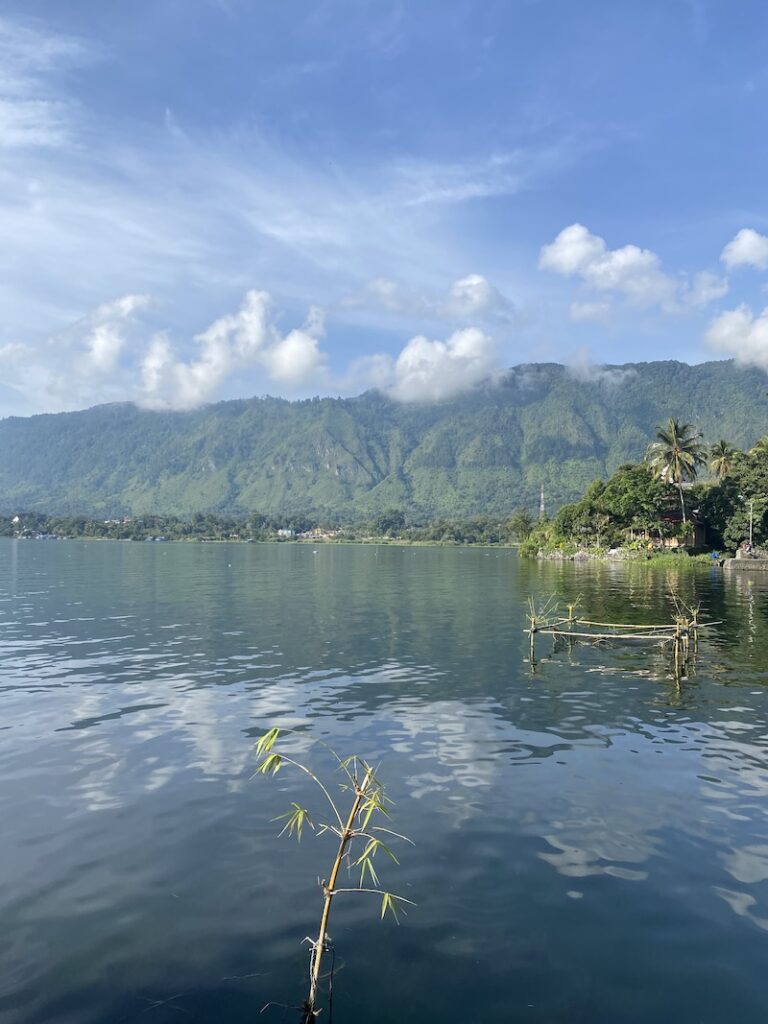
Lake Toba is spectacularly beautiful, and we spent one day taking a tour up into the hills of Samosir for views across the lake and surrounding landscape.
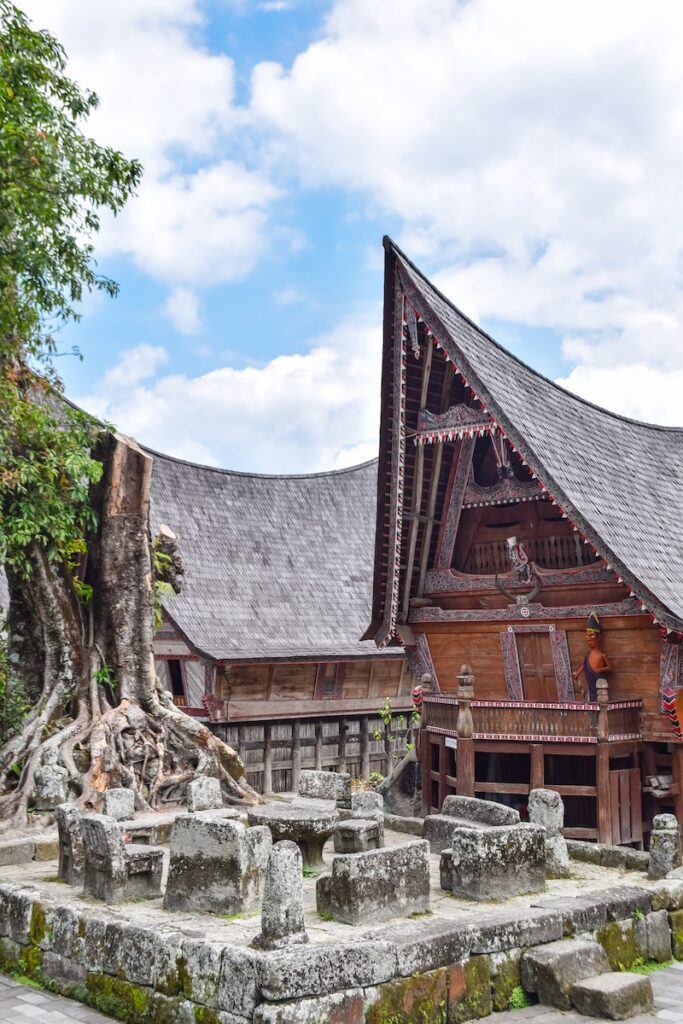
Another day, we walked from Tuk Tuk towards Huta Siallagan in Ambarita, where you can see traditional Batak houses and the ancient stone chairs associated with the village’s history. Along the way, we also passed some of the elaborate Batak tombs found across the island.
Despite the scenery, Lake Toba was the place we connected with least on this route. The atmosphere felt a little off to us, and we generally found interactions less warm than we’d experienced elsewhere in Indonesia.
We’re still glad we visited. The landscape and Batak culture make Samosir very different from the other stops on this itinerary, but if we did the trip again, we’d probably spend three nights rather than five.
Read more about our experience in Lake Toba & Samosir Island: Is It Worth Visiting?.
Returning to Medan
From Lake Toba, we returned towards Medan for our onward journey.
We didn’t actually spend time exploring Medan itself, so we can’t give you recommendations for the city based on our own experience.
However, if you have an extra day or two, you could easily add Medan at either the beginning or end of this itinerary.
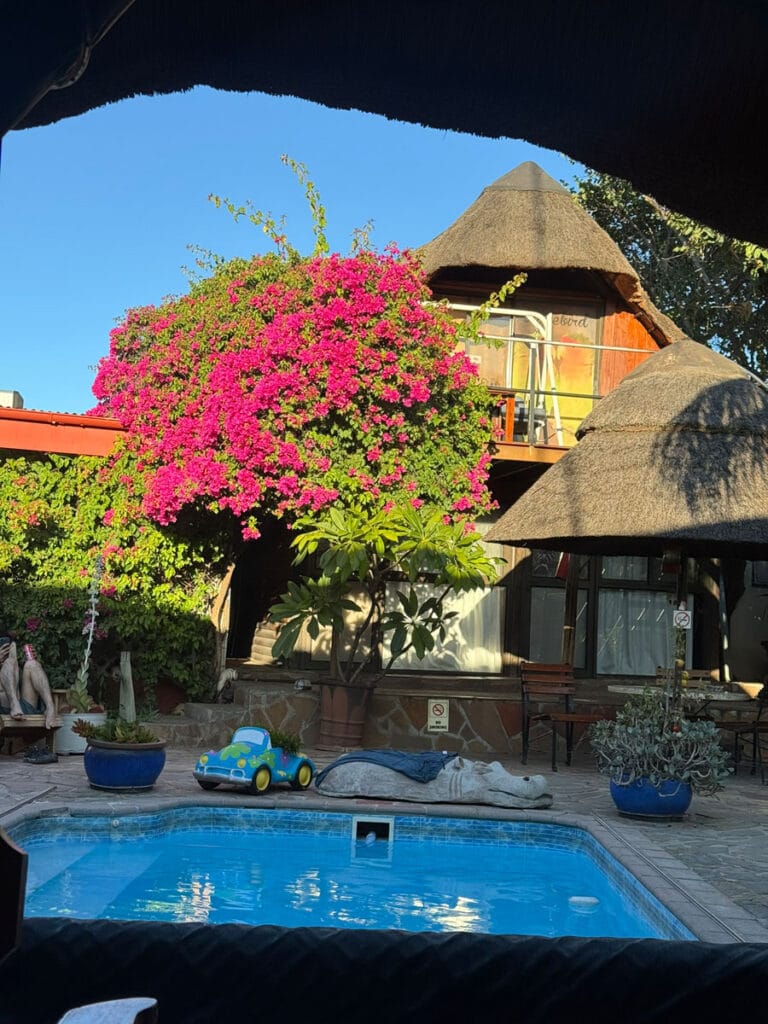
We did spend a couple of nights at Hotel Deli River and Restaurant Omlandia when we needed to be closer to Medan airport. It was a very relaxing place to stay, with a pool and even a floating breakfast, and worked well when we didn’t want to head straight into another journey. It’s a bit outside the city and we only used it as a place to relax for a couple of days before leaving. So if you want to explore Medan city, this hotel might be a little far out.
How to Travel Around North Sumatra
We travelled between the main destinations by taxi or shared/private transfer.
This was more expensive than using local buses, but with our luggage it made the route very easy. We could travel directly from Bukit Lawang to Berastagi and then from Berastagi towards Lake Toba without having to return to Medan. It’s easy to arrange with your accommodation.
For Lake Toba, we travelled to Parapat and then took the ferry across to Samosir Island.
Once we’d arrived at each destination, we mostly walked, joined locally organised tours or used local transport when needed.
Don’t judge travel times purely by the distances on Google Maps. Journeys around North Sumatra can take longer than you might expect, so we wouldn’t plan tight connections on travel days.
Can You Do This North Sumatra Itinerary in One Week?
Yes.
Although we spent around two weeks travelling this route, you could comfortably see the main highlights in seven days.
A shorter version could look something like:
Day 1: Medan → Bukit Lawang
Day 2: Orangutan trekking
Day 3: Bukit Lawang → Berastagi
Day 4: Mount Sibayak sunrise hike → Lake Toba
Day 5: Explore Samosir Island
Day 6: Lake Toba / Huta Siallagan
Day 7: Return to Medan
Would we personally travel this quickly? Probably not.
One of the things we enjoyed most about our trip was having time to slow down, particularly in Bukit Lawang. But if you only have one week in North Sumatra, you don’t need to choose between the orangutans, Mount Sibayak and Lake Toba.
If You Have 10 Days or Two Weeks
With more time, we’d keep the same route and simply slow it down.
We wouldn’t necessarily add more destinations.
For 10 days, we’d add a couple of extra nights in Bukit Lawang and another night at Lake Toba.
With two weeks, you can travel at a similar pace to us, although knowing what we know now, we’d redistribute our nights slightly.
We’d happily spend five or more nights in Bukit Lawang, keep Berastagi at one or two nights and spend around three or four nights at Lake Toba.
You could also add a night or two in Medan if you want to explore the city.
What We’d Change
The route itself worked really well.
If we did it again, the main thing we’d change would be how we divided our time.
We’d still stay longer than most travellers in Bukit Lawang. Having several days there beyond the orangutan trek gave us time to enjoy the river, rainforest and village without constantly having something planned.
We’d keep Berastagi as a short stop. One night was enough for us to hike Mount Sibayak and visit the sulfur hot springs.
We’d probably shorten Lake Toba from five nights to around three. We’re glad we visited, but it wasn’t somewhere we felt we needed as much time.
We would add some beach time onto this itinerary, we were thinking of it, but it was quite far and our visa permitted time in Indonesia was running out. But there are many beautiful islands around North Sumatra to visit.
Is North Sumatra Worth Visiting?
Definitely.
The three main stops on this route couldn’t have felt more different.
In Bukit Lawang, we trekked through dense rainforest looking for Sumatran orangutans. In Berastagi, we stood beside the steaming crater of Mount Sibayak as the sun came up. And at Lake Toba, we explored traditional Batak villages surrounded by one of Indonesia’s most impressive landscapes.
You can experience all three in a week, but if you have longer, North Sumatra is also a great place to slow down.
For us, Bukit Lawang was the place we’d happily have stayed even longer, Berastagi was the perfect short stop, and Lake Toba was beautiful even though we didn’t connect with it in quite the same way.
If we were planning the trip again, we’d follow almost exactly the same route. We’d just move a couple of those Lake Toba nights back to the rainforest.